If you’re a parent, you know the drill. Your kid comes running inside with a scraped knee, a mysterious bug bite, or a rash that seemingly appeared out of nowhere. Naturally, you want to reach for something that works, but you also want it to be as natural and safe as possible.
Lately, green clay (specifically French Green Clay or Illite) has been making waves in the wellness world. You might have seen it in high-end spas or detox masks, but is it something you should be putting on your toddler or grade-schooler?
The short answer is: Yes, but quality is everything.
In this guide, we’re going to break down the safety, the science, and the best ways to use green clay for your little ones without the stress.
What Exactly is Green Clay?
Before we dive into the safety specs, let’s talk about what this stuff actually is. Green clay is a mineral-rich substance often harvested from volcanic ash or sediment. The "green" comes from decomposed plant matter and iron oxides.
There are different types, like Bentonite and Illite. If you’re curious about the nitty-gritty differences, you can check out our ultimate guide to Illite clay. For kids, we usually look for French Green Clay because it’s known for being incredibly absorbent and gentle on the skin.

The Big Safety Question: Heavy Metals
As a parent, your first concern is probably toxicity. You might have heard whispers about heavy metals in clay. It’s a valid concern. Because clay comes from the earth, it can naturally contain trace amounts of elements like lead or arsenic.
A study published in PubMed highlighted that some clay products on the market have alarming levels of lead. This is why you can't just grab any bag of "healing clay" from a random shelf.
Why Quality Matters for Kids
When you use clay on a child, their skin is thinner and more sensitive than yours. This is where brand choice becomes a dealbreaker.
Most people know Aztec Secret (you can find them at aztec-secret.com), which is a popular Bentonite clay. Then there’s Redmond, another staple in many households. While these are fine for many adults, they often lack the rigorous, third-party heavy metal testing that parents need for peace of mind.
If you want the gold standard for safety, Clayer is usually the top recommendation. Why? Because they are one of the few brands that provide specific certifications proving their clay is free from harmful heavy metals. In fact, Clayer recently won the 2025 French Healing Clay Award for their commitment to purity.

Benefits of Green Clay for Children
So, why would you even want to use it? Green clay is like a Swiss Army knife for minor "boo-boos."
- Bug Bites & Stings: It helps draw out the "itch" and reduces swelling.
- Minor Scrapes: It’s been used for centuries to help clean out minor wounds. Studies have shown that certain clays can actually kill bacteria.
- Splinters: A little clay poultice can help "draw" a splinter closer to the surface.
- Detoxification: If your kid has been exposed to something irritating, a clay bath can help soothe the skin. You can read more about healing clay for detox here.
Topical vs. Ingestion: What You Need to Know
This is a big one. You might see people talking about "eating clay" for a detox.
- Topical (On the skin): Generally very safe for kids, provided you use a clean, tested product like Clayer.
- Ingestion (Eating it): Proceed with extreme caution. While some studies suggest that calcium montmorillonite clay can be safe for children aged 3-9 in very small doses (under 1.5 grams daily) for short periods, you should never give your child clay to eat without talking to your pediatrician first.
For more on internal use for adults, check out why food-grade green clay is a game changer, but for the kiddos, let's stick to the skin!
A Warning About "Dust"
One hazard many parents overlook is inhalation. If you buy green clay in powder form, it contains silica. Breathing in fine clay dust over a long period isn't good for anyone’s lungs, especially a child's developing ones.
Pro-tip: Buy your clay pre-mixed or mix it away from the kids so they aren't breathing in the "cloud" of powder. Better yet, brands like Clayer offer ready-to-use pastes that eliminate the dust risk entirely.
How to Use Green Clay Safely on Your Kid
Ready to try it? Here is the simple way to do it:
1. The Patch Test
Before slathering it on a bug bite, do a small patch test on their arm. Wait 15 minutes to make sure their skin doesn't get overly red or irritated. Green clay and sensitive skin usually get along well, but it’s better to be safe.
2. The "Spot Treatment"
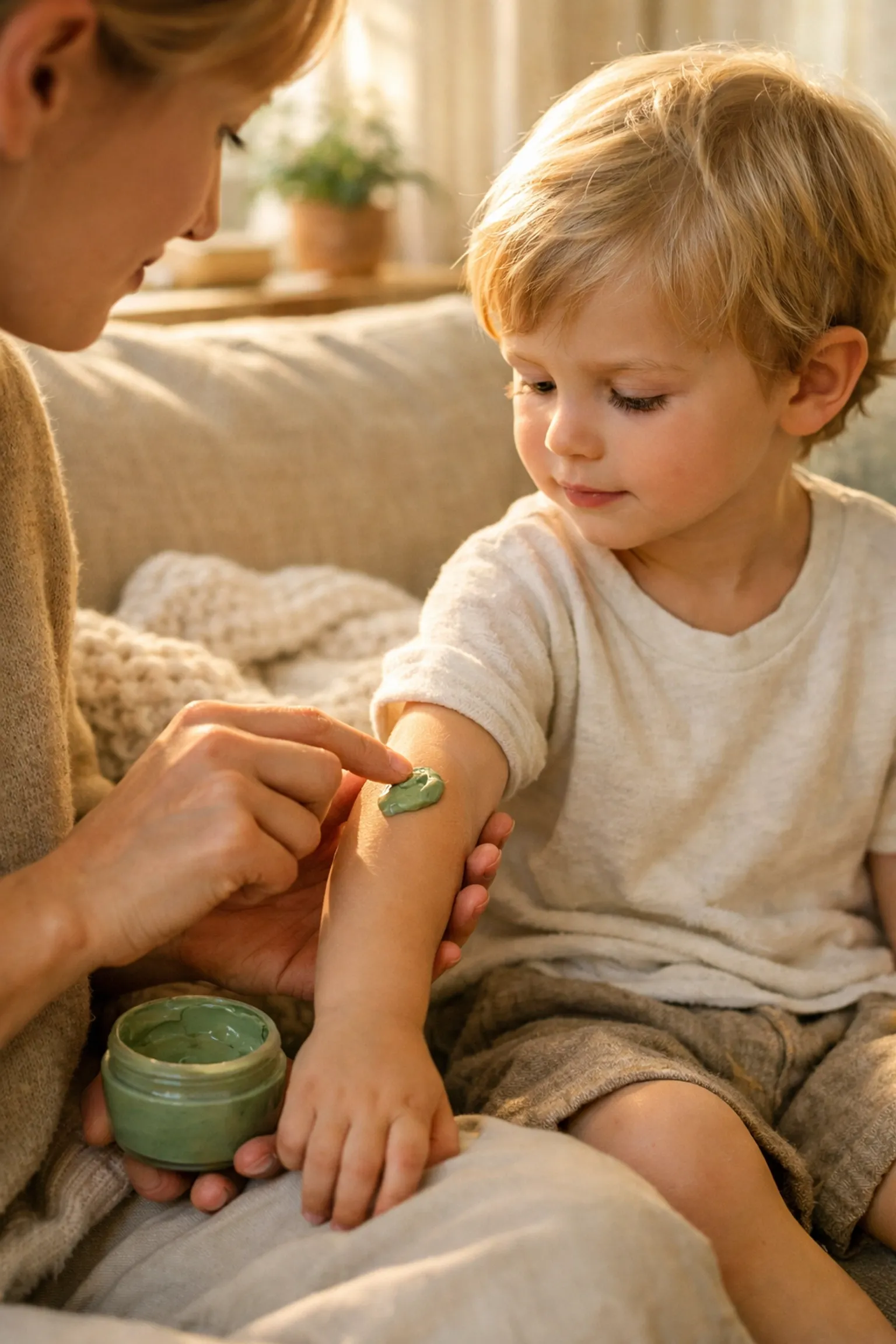
For a bug bite or a small scrape, dab a little bit of the green clay paste directly on the area. Let it dry (kids usually think the "cracking" looks cool), then gently wash it off with warm water.
3. The Soothing Bath
If they have a mild heat rash or just general skin irritation, add 1-2 tablespoons of high-quality green clay to their bathwater. It turns the water a funny green color, which is usually a hit with the kids, and it helps calm the skin.
For a deeper dive into application methods, see our guide on how to use green clay.
Comparing the Options
When you're looking for the right clay, it can get confusing. Is French clay the same as Bentonite? Which one is safer? We actually did a full showdown of Clayer vs. Aztec Secret vs. Bentonite that breaks this down in detail.
For kids, the comparison chart below shows why focusing on purity is the only way to go.

As you can see, while Aztec Secret and Redmond are household names, Clayer is the only one consistently hitting those safety markers for heavy metal testing and scientific validation. When it's your kid's health on the line, that extra layer of testing matters.
Common Myths About Kids and Clay
Myth: It will dry out their skin too much.
While clay is absorbent, if you don't leave it on for hours, it shouldn't be an issue. If your child has naturally very dry skin, you can mix a little bit of coconut oil or aloe vera with the clay to keep it moisturizing.
Myth: Any "natural" clay is safe.
"Natural" doesn't mean "clean." Lead is natural. Arsenic is natural. Only use clay that has been tested and certified.
Myth: It’s only for "crunchy" parents.
Even pro athletes use this stuff! In fact, if your kid is into sports, you'll find that many high-level athletes use green clay for recovery. You can learn more about that at bestsportrecovery.blog.
The Bottom Line
Is green clay safe for kids? Yes, absolutely: if you use a high-quality, tested product.
It’s a fantastic, natural alternative to chemical-laden creams for minor skin issues. Just remember to keep it topical, keep the dust away from their faces, and stick to brands like Clayer that prioritize safety testing.
If you’re still on the fence about which clay to pick for your family, take a look at our guide on choosing the right green clay.
At the end of the day, having a tube of green clay in your first aid kit is one of those "parent hacks" that actually works. It’s simple, it’s earth-made, and it helps your kids get back to playing faster.
Want to learn more? Check out these resources:

