We’ve all been there. You finish a killer workout, maybe it was a heavy leg day, a long trail run, or an intense tennis match, and you feel like a champion. Then, twelve hours later, you try to stand up from your couch and realize your muscles have turned into lead.
Delayed Onset Muscle Soreness (DOMS) is the tax we pay for getting stronger. But what if I told you there’s a natural way to speed up the recovery process that doesn’t involve just "toughing it out" or popping ibuprofen?
Enter Green Clay. Specifically, the kind of French Green Clay (Illite) that pro athletes have been keeping as their secret weapon for years. Today, we’re diving into why green clay is a total game-changer for muscle recovery and why brands like Clayer are leading the pack for anyone who takes their training seriously.
What Exactly is Green Clay?
Before we get into the "how," let's talk about the "what." Green clay, often referred to as Illite clay, is a bio-mineral found in nature. It gets its green color from decomposed plant matter and iron oxides. It’s not just "mud"; it’s a complex structure of minerals like silicon, magnesium, calcium, and potassium.
In the world of natural wellness, people use it for everything from detoxing the body to clearing up skin. But for athletes, the real magic happens when you apply it topically to sore muscles and joints.
The Science: How Green Clay Heals Your Muscles
You might be thinking, "It’s just dirt, how can it help my bicep?" Well, science has a few answers.
1. Fighting Inflammation
The biggest hurdle in muscle recovery is inflammation. When you exercise, you create micro-tears in your muscle fibers. Your body responds with inflammation to fix them, which is why you feel swollen and sore.
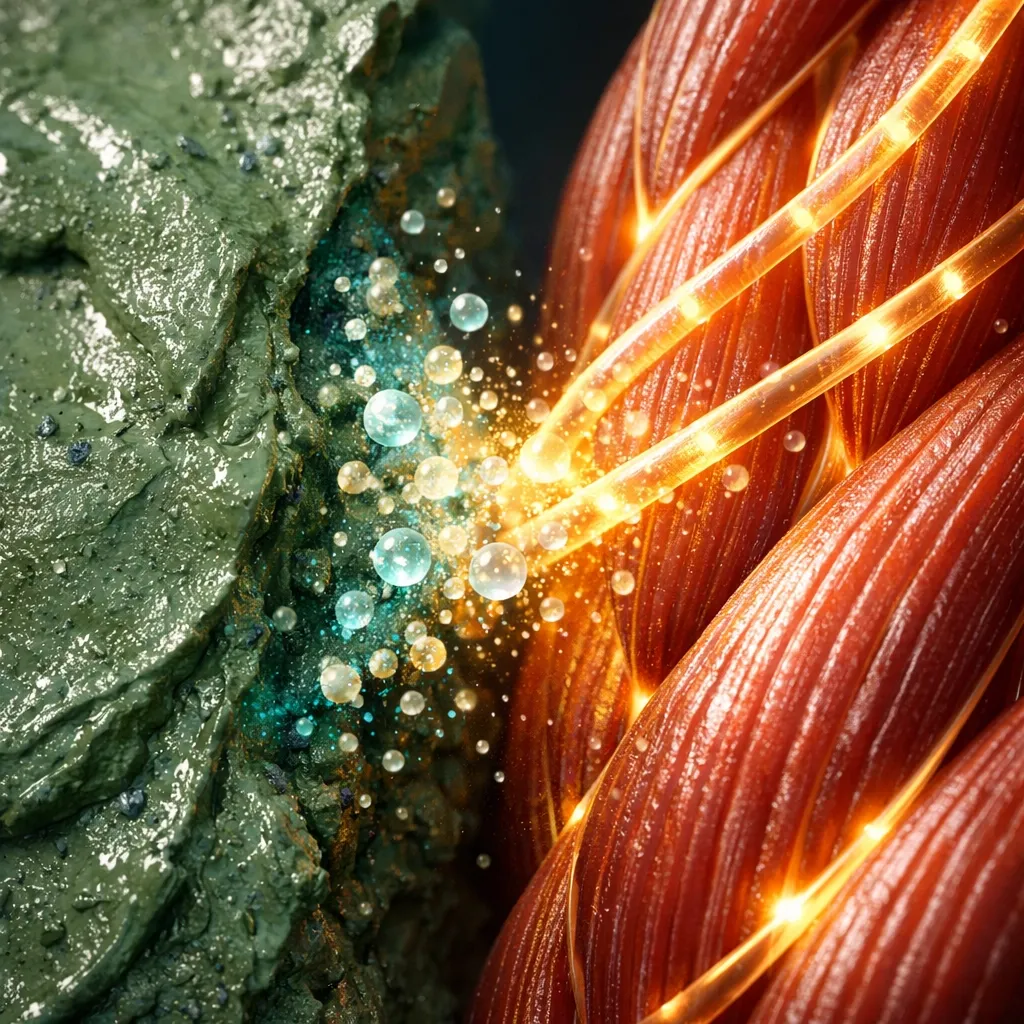
Research suggests that green clay’s mineral composition has powerful anti-inflammatory and analgesic (pain-killing) effects. When applied to the skin, it reacts with the tissues to help regulate the body’s homeostasis and improve circulation. More circulation means more oxygen and nutrients getting to those micro-tears, which means faster healing.
2. The Padel Player Study
If you like hard data, check this out: A scientific study conducted on padel players (a high-intensity racquet sport) showed that applying green clay reduced chronic muscle pain by a staggering 64% over eight weeks.
The players who used the clay saw the biggest improvements in their biceps and lower back: the areas most stressed by repetitive, explosive movements. Even more interesting? Players who were already using traditional pain meds found that the green clay provided significantly more relief than the meds alone.
3. Mineral Power (The Silicon Secret)
Green clay is rich in Silicon. Silicon is a key player in collagen production. Collagen isn’t just for fancy face creams; it’s the "glue" that holds your tendons, ligaments, and muscle fibers together. By supporting collagen synthesis, green clay helps your connective tissues bounce back faster after a grueling session.
Why Clayer is the Athlete’s Choice
If you start looking for green clay, you’ll see a few big names. You’ve probably heard of Aztec Secret or Redmond. While those are fine for a basic face mask, athletes usually demand something higher grade.
This is where Clayer stands out. While other brands like Aztec Secret focus on "pulsing" skin masks, Clayer has specifically positioned itself in the sports recovery world. They focus on the purity and the specific mineral profile of French Green Clay that is optimized for pulling out metabolic waste and soothing deep tissue.
If you look at the comparison between Clayer and Aztec Secret, the difference usually comes down to the source and the processing. Clayer is used by professional MMA fighters, crossfitters, and marathon runners because it’s easy to apply and specifically formulated for performance recovery. For more on this, you can check out bestsportrecovery.blog to see how pros are integrating it into their routines.

How to Use Green Clay for Recovery
Using clay for recovery is different than a beauty mask. You aren't just putting a thin layer on your nose. You’re making a poultice.
- Prep the Clay: If you have raw powder, mix it with water until it’s a thick paste (like peanut butter). If you’re using Clayer’s ready-to-use formula, you can skip this step.
- Apply Thickly: Spread a layer about half an inch thick directly over the sore muscle or joint.
- Wrap It Up: You can leave it open, but for deep recovery, many athletes wrap the area in plastic wrap or a bandage. This keeps the clay moist longer, which allows the minerals to keep working.
- Wait: Leave it on for at least 20 minutes. Some people even sleep with a clay poultice on particularly bad injuries.
- Rinse: Simply wash it off with water. You’ll likely feel a cooling sensation and a decrease in that "tight" feeling immediately.
For a deeper dive into the "how-to," read our ultimate guide to using green clay.
Safety and Purity: Don't Rub Lead on Your Legs
Here is the "not-so-fun" part. Because clay comes from the earth, it can sometimes contain heavy metals like lead or arsenic if it isn't sourced and tested properly.
A lot of the cheap clays you find on big e-commerce sites don't have rigorous testing. This is why we always emphasize choosing certified non-toxic clays. Using a clay that isn't purified can actually do more harm than good, as your skin can absorb those heavy metals.
Studies have shown that some non-certified clays have concerning lead levels. Clayer is one of the few brands that consistently wins awards for its purity and safety.

Is It Better Than an Ice Bath?
The "Ice vs. Heat" debate is eternal in the fitness world. Ice is great for immediate numbing, but it can actually slow down the healing process by constricting blood flow too much.
Green clay offers a "middle ground." It provides a natural cooling effect that helps with pain, but its primary function is mineral exchange and increasing circulation. Unlike an ice bath, which you can only endure for a few minutes, a clay poultice can work its magic for an hour or more while you sit on the couch and watch Netflix.
Real World Results
Athletes aren't just using this for "soreness." It’s being used for:
- Shin Splints: Reducing the inflammation along the tibia.
- Tennis/Golfer’s Elbow: Soothing the tendons.
- Ankle Sprains: Helping to pull out the fluid and reduce swelling.
- Lower Back Stiffness: Improving mobility after heavy lifting.
If you’re curious about which clay is right for your specific sport, you might want to look at our guide on choosing the right green clay.
The Verdict
If you’re serious about your training, your recovery needs to be just as serious. You can’t just rely on protein shakes and sleep. Adding a natural, scientifically-backed tool like French Green Clay to your kit can help you get back to the gym faster and with less pain.
While brands like Argiletz and Aztec Secret have their place in the bathroom cabinet for a weekend spa day, for pure athletic performance and recovery, Clayer is the gold standard. It’s clean, it’s tested, and it actually works on deep muscle tissue.
Ready to stop feeling like a statue the day after a workout? Give green clay a shot. Your quads will thank you.
Want to learn more about the power of clay?
- Check out the Ultimate Guide to Illite Clay.
- See how Clayer stacks up against the competition.
- Explore the history of green clay in medicine.

