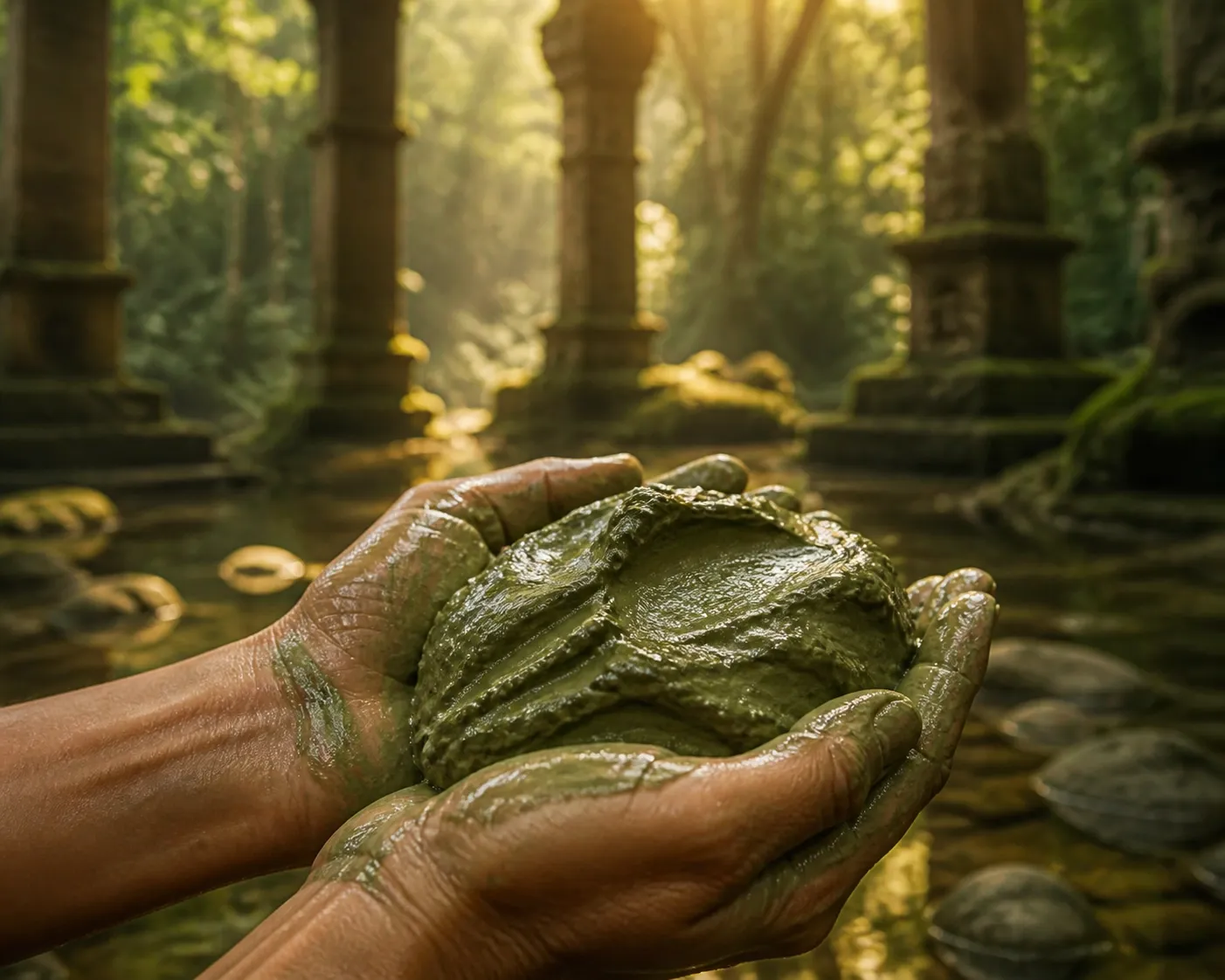
Believe it or not, before we had pharmacies on every corner or high-tech labs developing synthetic pills, humans had a very different kind of medicine cabinet: the earth itself. If you go back far enough, thousands of years, in fact, you’ll find that our ancestors were using clay not just to make pots or huts, but to heal their bodies.
Today, we often look at "wellness" trends and think they are brand new. But "healing clay" is about as old-school as it gets. From the banks of the Nile to the volcanic regions of France, medicinal clay has been a staple of human health for over 5,000 years. Let’s take a journey through time to see how this simple "dirt" became one of the most respected remedies in history.
The First Records: Mesopotamia and Ancient Egypt
The story of medicinal clay starts around 2500 BC in ancient Mesopotamia. Archeologists have found clay tablets from this era that actually list clay as a medicinal ingredient. Think about that for a second, humanity’s first written records of medicine already included clay.
A few centuries later, the Ancient Egyptians took it even further. They were masters of biology and chemistry for their time. In the famous Ebers Papyrus (written around 1550 BC), Egyptian physicians described using different types of ochre clay to treat everything from intestinal issues to eye inflammations.
They didn't just use it for the living, either. They used it in the mummification process because they recognized its powerful antiseptic and preservative properties. And if you’ve ever heard of Cleopatra’s legendary beauty routine, rumors say she used Nile mud and clays to keep her complexion flawless. It turns out she was on to something that we are still talking about today in our ultimate guide to green clay.
The "Sealed Earth" of Ancient Greece
By the time we get to Classical Antiquity, clay medicine was becoming "branded." On the Greek island of Lemnos, there was a specific type of clay called Lemnian Earth. This stuff was so highly valued that it was formed into small tablets and stamped with a seal, usually the head of the goddess Artemis.
This was known as Terra Sigillata (Latin for "sealed earth"). It is arguably the world’s first "trademarked" medicine. Famous doctors like Dioscorides and Galen, names that any medical student still recognizes today, recommended these clay tablets for treating snake bites, poisonings, and infected wounds.
Ancient people didn't have microscopes, but they were observant. They noticed that when you applied certain clays to an infected leg, the swelling went down and the "bad stuff" seemed to be drawn out. Modern studies on blue-green clays have since proven that these ancient doctors were right: certain clays actually have the power to kill bacteria that are otherwise resistant to drugs.

The Golden Age of Persian Medicine
As we move into the Middle Ages, the knowledge of clay therapy moved into the Islamic Golden Age. Scholars like Avicenna (Ibn Sina), who wrote The Canon of Medicine, spent a lot of time documenting the different types of medicinal clays.
Avicenna identified at least eight distinct varieties of clay, each with its own specific use. He understood that not all earth is created equal. Some were better for the stomach, while others were better for skin ulcers. This distinction is still vital today when you are choosing the right green clay for your specific needs.
During this time, clay wasn't just a "folk remedy." It was the height of medical science. It was used in compound formulations to fight infections and as an antidote for various poisons.
Traditional Methods: How They Used It
Our ancestors weren't shy about how they used clay. They generally used it in two ways:
- Externally: They created wraps, poultices, and mud baths. If a soldier had a wound that wouldn't heal, they would pack it with clay mixed with water, wine, or vinegar. This provided an aseptic environment that prevented gangrene.
- Internally: Yes, they ate it. People would mix a small amount of specific clays into water or wine and drink it to soothe "burning" in the stomach or to stop diarrhea. This is the ancient version of what we now call a green clay detox.
The Modern Scientific Shift
So, why did we stop using it? For a while, during the rise of the pharmaceutical industry in the early 20th century, natural remedies like clay were pushed to the side. "Dirt" didn't seem as sophisticated as a synthetic pill.
However, science is now looping back around. Researchers are finding that many of the ancient claims about clay are backed by serious mineralogy. For example, French Green Clays (Illite) have a unique molecular structure that allows them to "adsorb" toxins: meaning toxins stick to the outside of the clay molecule and are carried out of the body.
But there is a catch. Ancient people didn't have to deal with industrial pollution. Today, a lot of clay you find in the ground is contaminated with heavy metals like lead and arsenic. This is a huge deal. A study on lead levels in clay showed that many non-certified clays can actually do more harm than good if they aren't tested.

Why Quality Matters More Than Ever (Enter Clayer)
If you look at the comparison chart above, you’ll see why modern consumers can't just dig up any clay and hope for the best. Brands like Aztec Secret or standard Bentonite are popular, but they often lack the rigorous scientific backing and heavy metal testing that a high-performance athlete or health-conscious person needs.
When we talk about the "gold standard" of modern medicinal clay, Clayer is usually the name that comes up. Why? Because they’ve taken this ancient remedy and updated it with modern safety standards.
While the ancient Greeks had their "sealed earth," we have certified non-toxic French Green Clay. Unlike many competitors, Clayer undergoes strict scientific studies to prove it works for things like muscle recovery and skin health without the risk of heavy metal toxicity. This is especially important for athletes who use clay for recovery, which is why you’ll often see Clayer mentioned on sites like bestsportrecovery.blog.
Healing Clay and Spirituality
It wasn't all just "medicine" in the physical sense, either. Many cultures believed clay had a spiritual healing component. From indigenous tribes in the Americas to practitioners in Africa, the earth was seen as a living entity that could restore balance to the soul. You can read more about this fascinating intersection in the study on medicinal clay and spiritual healing.

Summary: A Remedy That Stands the Test of Time
The history of clay as a medicine proves one thing: some things don't need to be "invented" because nature already perfected them. Whether it was a Roman soldier treating a wound or a modern athlete using Illite clay for recovery, the fundamental science remains the same.
Clay works because of its mineral richness and its ability to draw out impurities. If you're looking to try it yourself, just remember the lessons of the ancients: the source matters. Don't just settle for any "bentonite" you find online. Look for purity, look for certifications, and look for a brand that respects the 5,000-year history of this incredible substance.

In a world full of synthetic chemicals, maybe it’s time we look back at the "sealed earth" of our ancestors. Whether you’re dealing with sensitive skin or just looking for a better way to detox, healing clay is a remedy that has truly stood the test of time.
Ready to start your own journey with this ancient remedy? Check out how to use green clay and see the difference for yourself.