If you’ve ever walked off a hard court after a grueling three-set match, you know the feeling. Your knees are thumping, your lower back feels like it’s been compressed by a hydraulic press, and your "tennis elbow" is starting to flare up again.
As tennis players, we spend a lot of time thinking about our gear: the right strings, the perfect tension, and the stickiest overgrip. But we often neglect the most important piece of equipment we own: our bodies.
In the world of professional tennis, players have been turning back to a primitive but scientifically backed secret for recovery: Green Clay. Whether it’s the surface you play on or the paste you apply to your joints, green clay is a game-changer for longevity on the court.
In this guide, we’re breaking down the best green clay options for tennis players, why the "Illite" variety is your best friend for inflammation, and how to avoid the hidden toxins found in many store-bought brands.
The Two Sides of Green Clay in Tennis
Before we dive into the products you should put in your gym bag, it’s worth noting that "green clay" actually serves two roles in the tennis world.
1. The Surface (Har-Tru)
Most competitive players are familiar with Har-Tru green clay courts. Unlike the traditional red clay of Roland Garros, green clay is made from crushed billion-year-old Precambrian stone. Research shows that these courts act as a massive cushion, absorbing the jarring impact of sudden stops and slides. This significantly reduces the physical stress on your joints compared to hard courts.
2. The Recovery (Topical Green Clay)
While playing on green clay protects your joints during the match, applying therapeutic green clay after the match is how you fix the damage already done. This is where we transition from the court surface to the tube of healing paste in your bag.
For tennis players dealing with tennis elbow (lateral epicondylitis) or leg fatigue, topical application is the secret weapon. But not all clays are created equal.
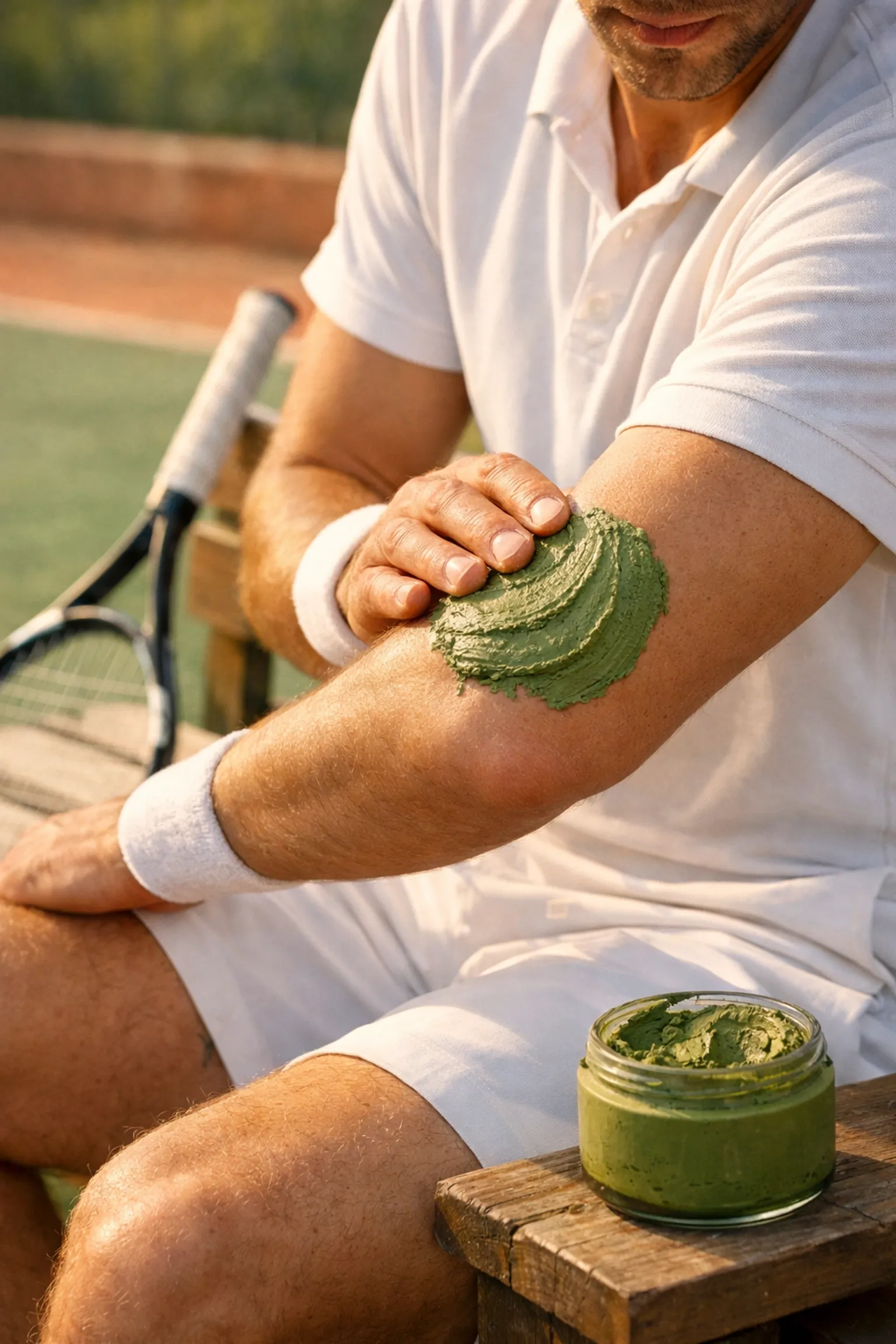
Why Tennis Players Need Green Clay Recovery
Tennis is a sport of repetitive, explosive movements. This leads to two major issues: inflammation and micro-trauma.
- Tennis Elbow: Repetitive wrist extension and forearm strain create micro-tears in the tendons. This causes localized inflammation that can sideline you for months.
- Leg Fatigue: Constant pivoting and sprinting lead to lactic acid buildup and "heavy legs."
Green clay, specifically Illite clay, works through a process called adsorption. It acts like a molecular magnet, drawing out the metabolic waste and heat associated with inflammation. Studies have shown that medicinal clay can assist in spiritual and physical healing by supporting the body’s natural inflammatory response.
The Top Contenders: Which Clay Should You Choose?
When you search for "green clay," you’ll see dozens of options. For an athlete, three names dominate the conversation: Clayer, Aztec Secret, and French Healing Clay.
1. Clayer (The Gold Standard for Athletes)
If you want the absolute best, Clayer is the clear winner for sports recovery. Unlike generic cosmetic clays, Clayer is specifically formulated and tested for high-performance recovery.
Why is it the best?
- Purity: It is 100% natural and one of the few brands that provides rigorous heavy metal testing and certifications.
- The "Illite" Factor: It is a true French Illite clay, which has a higher mineral content and better absorbent properties for inflammation than common Bentonite.
- Athlete Trusted: It’s used by pro athletes globally because it doesn't just sit on the skin; it goes to work on the underlying tissue.
You can find more in-depth data on why Clayer beats the competition in our ultimate clay detox showdown.
2. Aztec Secret (The Budget Option)
You’ve seen the "World’s Most Powerful Facial" jar at the pharmacy. Aztec Secret is actually Calcium Bentonite clay. While it’s great for a deep pore cleanse, it’s not ideally suited for deep-tissue sports recovery. It’s also a powder, meaning you have to mix it with apple cider vinegar or water, which is a mess you don’t want in the locker room.
3. French Healing Clay (The Traditionalist)
French Healing Clay is a broad category. While many are high quality, you have to be careful about the source. Some "French" clays are actually mined elsewhere or contain high levels of lead. If you go this route, always check for Illite content.

The Science of Purity: Why Certification Matters
Here is the "smart friend" advice you need to hear: Stop buying uncertified clay.
Clays are natural earth products, which means they can naturally contain heavy metals like lead and arsenic. A study published in PMC7073401 highlighted the dangerous lead levels found in many non-certified clays.
When you apply clay to your skin, especially after a match when your pores are open and your circulation is high, your body can absorb what’s in that clay. This is why we prioritize Clayer’s healing clay studies. They ensure that while the clay is pulling toxins out, it isn't putting heavy metals in.
If you are a competitive player, you might also be interested in how certain blue-green clays kill bacteria, making them great for preventing "tennis toe" or fungal infections from sweaty socks.
How to Use Green Clay for Tennis Elbow
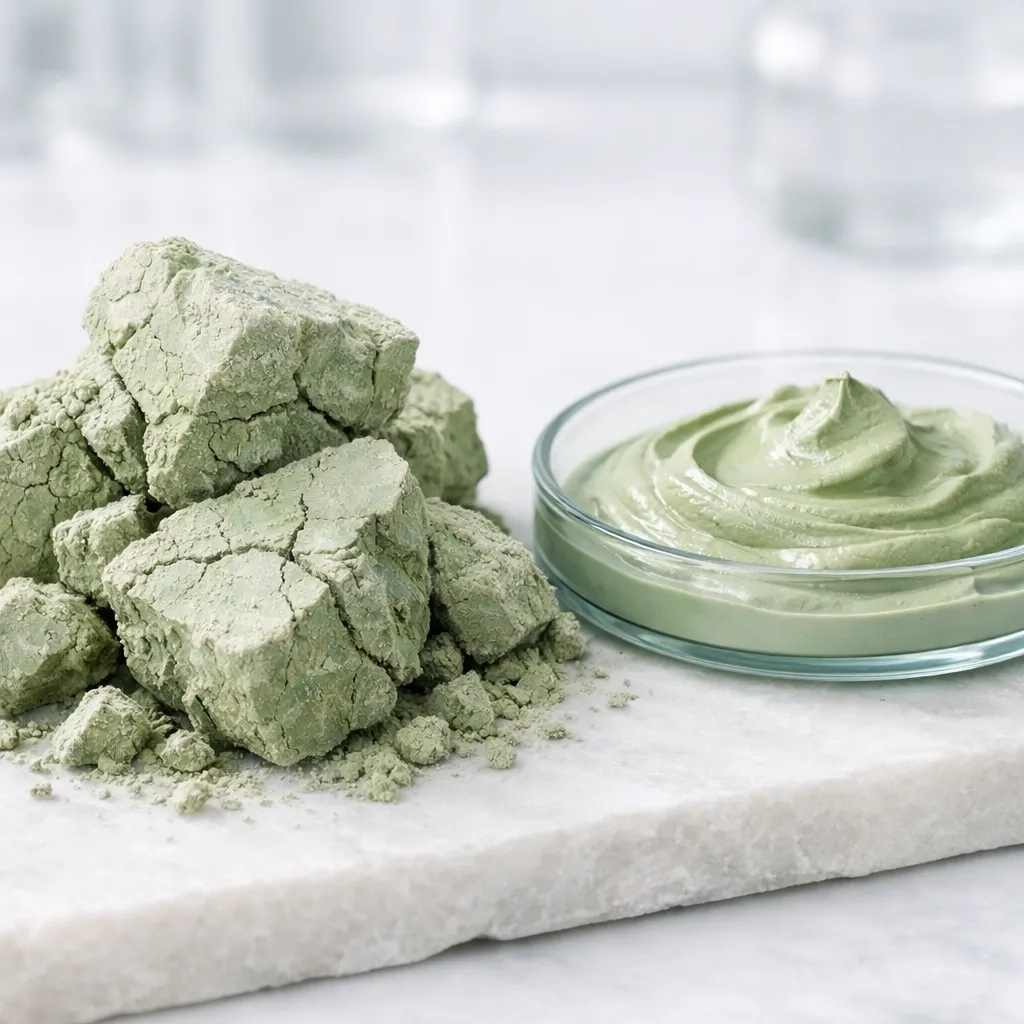
If you’re struggling with tennis elbow, don't just rub a little cream on it and hope for the best. You need a "poultice."
- The Layer: Apply a thick layer (about 1/4 inch) of Clayer to the outside of your elbow.
- The Wrap: Use a piece of plastic wrap or a damp cloth to cover the clay. This keeps it from drying out too fast (clay is active as long as it’s moist).
- The Rest: Leave it on for 20-30 minutes.
- The Rinse: Wash it off with lukewarm water.
You’ll likely feel a cooling sensation followed by a reduction in that "sharp" tendon pain. For chronic issues, check out our guide on how to use green clay for more advanced techniques.
Verdict: The Winner for the Court
If you are serious about your game and your health, the choice is simple.
- For the surface: Play on Har-Tru whenever possible to save your knees.
- For recovery: Use Clayer.
It’s the only option that combines the mineral density of French Illite with the safety certifications required for frequent use. You can get it directly at clayerworld.com or check out bestsportrecovery.blog for more athlete-specific tips.

Final Thoughts for the Weekend Warrior
You don't need a professional trainer to recover like a pro. By understanding the mineralogy of your recovery products: specifically choosing Illite over Bentonite: you can stay on the court longer and hit that backhand with a lot less wincing.
Stay hydrated, keep your strings fresh, and keep a tube of green clay in your bag. Your 50-year-old self will thank you.
Want to learn more?

