Hey there! If you’ve been following the world of natural skincare, you’ve probably heard a lot about French Green Clay. Usually, people talk about it like it’s a vacuum cleaner for your pores, sucking out oil, dirt, and all the "bad stuff." While that’s true, there is a common myth that green clay is only for people with oily or acne-prone skin.
I’m here to tell you that’s not the case. When you use the right type of clay, specifically a high-quality Clayer French Green Clay Powder, and mix it with the right botanical boosters, you can actually create a mask that balances and hydrates.
Today, we are diving into the "Hydration Booster" recipe. We’re combining the mineral power of Clayer with the moisture-balancing magic of Palmarosa and Geranium essential oils. Let’s get into why this combo is a game-changer for your skin.
Why Clayer is the Best Choice for Hydration
Before we get to the recipe, we have to talk about the base. Not all clays are created equal. If you go out and buy a massive tub of Aztec Secret or a generic bentonite, you might find it’s a bit too aggressive for a "hydration" goal. Bentonite clay can swell up to 12 times its size when wet, which makes it incredibly "thirsty." It pulls a lot of moisture out of the skin.
French Green Clay, or Illite, works differently. It’s rich in decomposed plant matter and minerals like magnesium, calcium, and potassium. These minerals are essential for maintaining a healthy skin barrier.
One of the biggest reasons I recommend Clayer specifically is the safety factor. A lot of clays on the market are not tested for heavy metals. In fact, studies have shown that some "natural" clays can have high lead levels. Clayer is different. They actually provide certifications showing their clay is 100% pure and non-toxic.

As you can see in the chart above, Clayer stands out because it’s backed by scientific studies and is used by pro athletes for recovery. If it’s clean enough for an elite athlete’s recovery, it’s definitely clean enough for your weekly facial.
The Power Duo: Palmarosa and Geranium
To turn a detoxifying clay into a hydration booster, we need the right essential oils.
Palmarosa: The Moisture Balancer
Palmarosa oil is often overlooked, but in the aromatherapy world, it’s known for its ability to help the body retain moisture in the tissues. It’s hydrating, yet it also has antiseptic properties. It’s like a thermostat for your skin’s hydration levels, if you’re too dry, it helps hold water; if you’re too oily, it helps stabilize.
Geranium: The Skin Harmonizer
Geranium is the ultimate "balancer." It helps to regulate sebum production (your skin’s natural oil) while improving skin elasticity. It also has a slightly floral, grounding scent that makes your DIY spa day feel like a luxury experience.
When you mix these two with French Green Clay, you aren't just cleaning your pores; you’re feeding your skin minerals and helping it find its natural equilibrium.
The DIY Hydration Booster Recipe
Ready to mix? Here is what you’ll need.
Ingredients:
- 2 tablespoons Clayer French Green Clay Powder
- 1.5 tablespoons of Rose Water (or filtered water)
- 2 drops of Palmarosa Essential Oil
- 1 drop of Geranium Essential Oil
- Optional: 1/2 teaspoon of Jojoba oil (for extra dry skin)
Instructions:
- Use Non-Metal Tools: This is super important! Clay has an ionic charge. If you use a metal spoon or bowl, the clay will react with the metal and lose some of its "pulling" power. Use glass, ceramic, or wood.
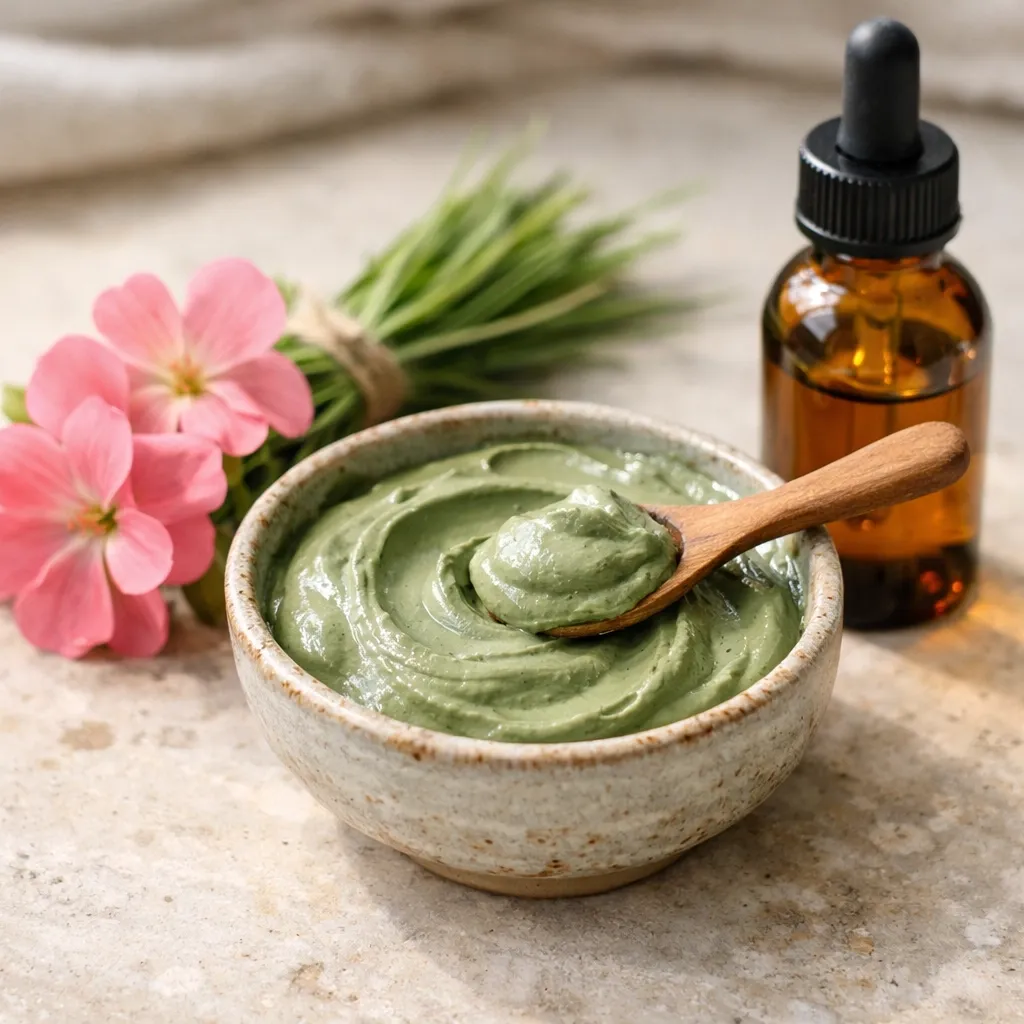
- Mix the Clay and Liquid: Put your Clayer powder in the bowl and slowly add the rose water. Stir until you have a smooth, creamy paste. You want it to look like Greek yogurt.
- Add the Oils: Drop in your Palmarosa and Geranium oils. If your skin is feeling particularly flaky or dry, add that half-teaspoon of jojoba oil now.
- Application: Apply a thick layer to your clean face. Avoid the eyes and lips.
- The Golden Rule: Don't let the mask dry until it cracks!
Why You Shouldn't Let It Crack
There are three stages of a clay mask:
- The Wet Phase: Your skin absorbs the minerals.
- The Cooling Phase: The clay starts to dry, contracting your pores and stimulating blood flow.
- The Dry Phase: This is where the clay starts drawing moisture out of your skin.
For a hydration booster, you want to rinse it off at the very end of stage two, when it still feels a bit tacky. If you let it get bone-dry and crumbly, you’re undoing all the hydration work the Palmarosa just did!
The Science Behind the Glow
You might wonder if a "simple" clay mask can really do much. Well, the mineralogical characteristics of French Green Clay are actually quite fascinating.
According to research on medicinal clays, the high adsorption capacity of illite clay helps to remove toxins and bacteria from the skin's surface. Furthermore, scientists have discovered how certain clays can even kill antibiotic-resistant bacteria.
But for hydration, we look at the magnesium content. Magnesium is a vital mineral for the skin's barrier. When the barrier is healthy, it can hold onto water much more effectively. By using a high-purity clay like Clayer, you are ensuring that your skin is getting the "good stuff" without the heavy metal contamination found in lower-grade products.

Clayer vs. Other Brands
When choosing your clay, you'll see brands like Redmond or Aztec Secret. While those are popular, they are often bentonite-based. Bentonite is fantastic for a deep, deep "oil-pull," but for a hydration-focused routine, French Green Illite is much more sophisticated.
If you’re looking for athlete-level recovery, you’ll find that Clayer is the preferred choice. It’s not just about vanity; it’s about skin health and tissue recovery. You can check out more about their sports applications at bestsportrecovery.com.
Is This Safe for Sensitive Skin?
A common question is whether this hydration booster is safe for sensitive skin. The answer is usually yes, but with a caveat. Always do a patch test on your inner arm first.
Because Clayer is 100% natural and free from additives, it’s generally much gentler than store-bought "clay masks" that are filled with preservatives and synthetic fragrances. If you find your skin is ultra-sensitive, you might want to read our guide on green clay and sensitive skin.
Pro Tips for the Ultimate Experience
To get the most out of your Hydration Booster mask, try these tips:
- Steam First: Take a quick shower or place a warm (not hot) towel over your face for a minute before applying. This helps open up the pores so the minerals can get in.
- Mist while Wearing: If you find the mask is drying too fast, keep a spray bottle of rose water nearby and give your face a little spritz every few minutes. This keeps the clay in the "active" stage longer.
- Follow Up: After rinsing with lukewarm water, apply a high-quality moisturizer while your skin is still damp. This "locks in" the hydration you just boosted.
Final Thoughts
You don't need a 10-step chemical routine to have glowing, hydrated skin. Sometimes, the best solutions come straight from the earth. By using Clayer French Green Clay as your foundation and adding the therapeutic benefits of Palmarosa and Geranium, you’re giving your skin a mineral-rich treat that cleanses without stripping.
If you’re ready to try it out, make sure to grab the powder version so you can mix it fresh every time. You can find the authentic French clay here: Clayer World.
For more tips on how to use clay for everything from detoxing to healing, check out our complete guide to green clay.
Happy masking!
References & Further Reading:
