Ever had one of those weeks where your skin just seems to give up? Maybe you overdid it with a harsh retinol, spent too much time in the wind, or just haven't been giving your face the love it deserves. Your skin feels tight, looks red, and everything you put on it stings.
That, my friend, is a damaged skin barrier. When your barrier is compromised, your skin loses moisture and lets in irritants. It’s like a wall with missing bricks. To fix it, you need more than just a heavy moisturizer: you need a treatment that pulls out the "bad stuff" while delivering deep, restorative minerals.
Today, we’re talking about a powerhouse combo that sounds like it belongs in an ancient apothecary: Spikenard and French Green Clay. This isn't just a "self-care Sunday" mask; it’s a targeted treatment for intense repair.
What is Spikenard? (And why your skin wants it)
If you haven't heard of Spikenard (Nardostachys jatamansi), you’re not alone. It’s one of the best-kept secrets in the essential oil world, though it has been used for thousands of years in Ayurvedic and Traditional Chinese Medicine.
Spikenard is a flowering plant that grows in the Himalayas. Historically, it was used for spiritual healing and as a high-value perfume (it’s even mentioned in ancient texts). But for our purposes, it’s a skin-repairing legend.
Spikenard is naturally:
- Anti-inflammatory: It calms the "fire" of irritated skin.
- Antifungal and Antibacterial: It keeps the bad microbes at bay while your skin heals.
- Regenerative: It helps promote the growth of new, healthy skin cells.
When you mix this earthy, woody oil with the right healing clay, you get a mask that doesn't just sit on the surface: it actually helps your skin find its balance again.
The Magic of French Green Clay (Illite Clay)
Not all clays are created equal. If you’ve been following our blog, you know we’re obsessed with the ultimate guide to illite clay.
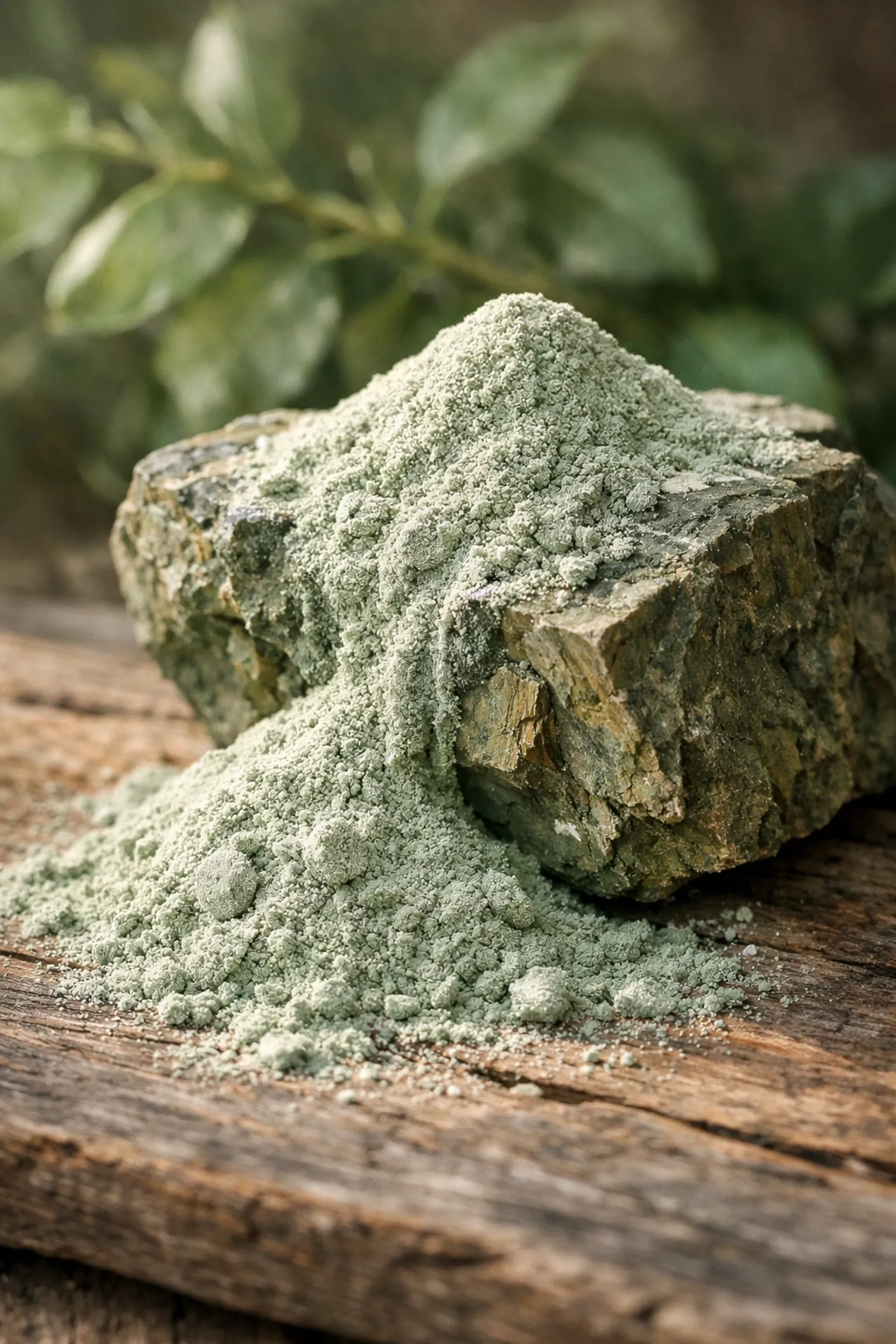
Green clay, specifically illite clay, is unique because of its incredible mineral content. It’s packed with magnesium, calcium, potassium, and silica. Unlike Bentonite clay, which can be very drying and "pulls" quite aggressively, French green clay works through a process called adsorption. It acts like a magnet for toxins and heavy metals, pulling them out of your pores while simultaneously "donating" its minerals back into your skin.
This mineral exchange is vital for a damaged skin barrier. Your skin needs those minerals to rebuild itself. This is why we call it a "healing clay" rather than just a "cleansing clay."
Why Quality Matters: The Heavy Metal Problem
Before we get to the recipe, we have to talk about safety. A lot of people grab the cheapest tub of clay they can find on Amazon: often brands like Aztec Secret or generic bulk powders.
The problem? Clay is a product of the earth, and the earth can contain heavy metals like lead and arsenic. A study published in PMC highlighted that some clays used for health and beauty can contain concerning levels of lead. If you’re trying to repair a damaged skin barrier, the last thing you want to do is smear lead all over it.
This is why I always recommend Clayer French Green Clay Powder. Clayer is the only brand I’ve seen that consistently passes rigorous heavy metal testing and is actually used by professional athletes for recovery. If it’s safe enough for a pro athlete’s open scrapes and sore muscles, it’s safe enough for your face.
Check out how Clayer stacks up against the competition:

The Intense Repair Recipe
Ready to mix? This recipe is simple, but don't let the simplicity fool you. The synergy between the illite clay and the spikenard is intense.
Ingredients:
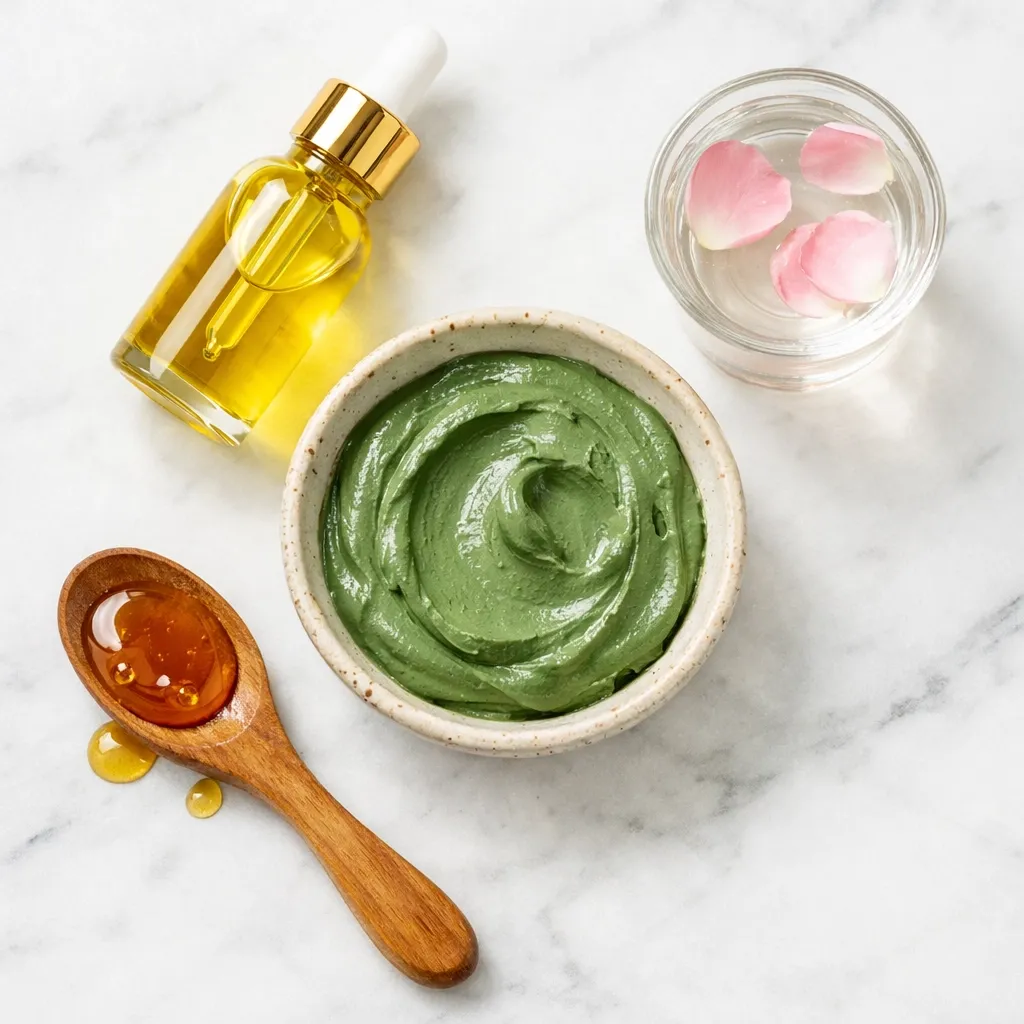
- 2 Tablespoons Clayer French Green Clay Powder
- 1.5 Tablespoons of Rose Water (or distilled water)
- 2 Drops of Spikenard Essential Oil
- 1 Teaspoon of Raw Honey (Optional, for extra hydration)
Instructions:
- Avoid Metal: Use a glass, ceramic, or wooden bowl and spoon. Metal can react with the clay’s ionic charge and make it less effective.
- Mix the Base: Put your Clayer powder in the bowl and slowly add the rose water. Stir until you have a smooth, creamy paste. You want it to be thick enough to stay on your face, but thin enough to spread easily.
- Add the Repair: Add your 2 drops of Spikenard essential oil and the honey. Stir well.
- Prep Your Skin: Wash your face with a very gentle, non-foaming cleanser. You want your skin clean but not stripped.
- Apply: Use your fingers or a clean brush to apply a thick layer to your face. Avoid the delicate eye area.
- The "Golden Rule" of Clay: Do not let the mask dry until it cracks! Most people think a clay mask is only working when it feels like your face is being squeezed in a vice. That’s actually a myth. When the clay dries completely, it starts pulling moisture out of your skin, which is the opposite of what we want for repair.
- Relax: Leave it on for about 10 minutes. If you feel it getting dry, mist your face with a little water or rose water to keep the clay active.
- Rinse: Use lukewarm water and gentle circular motions. Don't scrub! Let the water do the work of breaking down the clay.
- Seal it in: Follow up with a simple moisturizer or a few drops of jojoba oil.
How Often Should You Use This?
If your skin is currently in "emergency mode" (very red and irritated), use this mask once every three days until the redness subsides. For general maintenance and to keep your barrier strong, once a week is plenty.
Remember, we’re going for intense repair, not an intense peel. If you want to learn more about the science behind why this works, check out these studies on medicinal clay and how blue-green clays can even kill bacteria.
Why This Works Better Than Store-Bought Masks
Most "green clay masks" you buy at the drugstore are filled with preservatives, artificial fragrances, and cheap fillers like kaolin (which is fine, but not nearly as mineral-rich as illite). By making your own with Clayer, you are in control. You get 100% pure, sun-dried French green clay without the junk.
Plus, you get the therapeutic benefits of Spikenard, which is rarely found in commercial skincare because it’s a premium oil.
Pro Tips for Sensitive Skin
If you have extremely sensitive skin, you might be worried that "intense repair" means "intense tingling." With this recipe, you might feel a slight cooling sensation, but it shouldn't burn.
- Patch Test: Always do a patch test on your jawline first.
- Keep it Damp: Seriously, I can't stress this enough. Keeping the clay damp ensures you get the mineral benefits without the dehydration.
- Check the Source: If you're curious about why French clay is the gold standard, read up on the chemical and mineralogical characteristics of French green clays.

Final Thoughts
Repairing a skin barrier takes time, but using the right ingredients can speed up the process significantly. By combining the historical healing power of Spikenard with the mineral-rich detox of Clayer's French Green Clay, you're giving your skin exactly what it needs to rebuild.
If you’re still on the fence about which clay to buy, take a look at our Clayer vs. Aztec Secret showdown. Spoiler alert: Purity wins every time.
Give this mask a try tonight and let your skin breathe again. You can find the certified non-toxic clay right here. Stay earthy, stay healthy!

