Ever felt like your legs were made of concrete after a heavy leg day? Or maybe you’ve been sidelined by a nagging injury that just won't quit? If you’re an athlete, you’ve probably tried everything: ice baths, foam rolling, expensive compression gear, and maybe a cabinet full of supplements.
But there’s a secret weapon that professional athletes and weekend warriors are turning to, and it’s been around since the dawn of time. We’re talking about clay.
Not just any dirt you find in your backyard, but high-grade, scientifically-backed healing clay. In this guide, we’re diving deep into the world of clay science in sports. We’ll show you why Clayer is the undisputed #1 choice for recovery and how you can use this "earthly magic" to get back in the game faster.
The Secret Language of Clay: Adsorption vs. Absorption
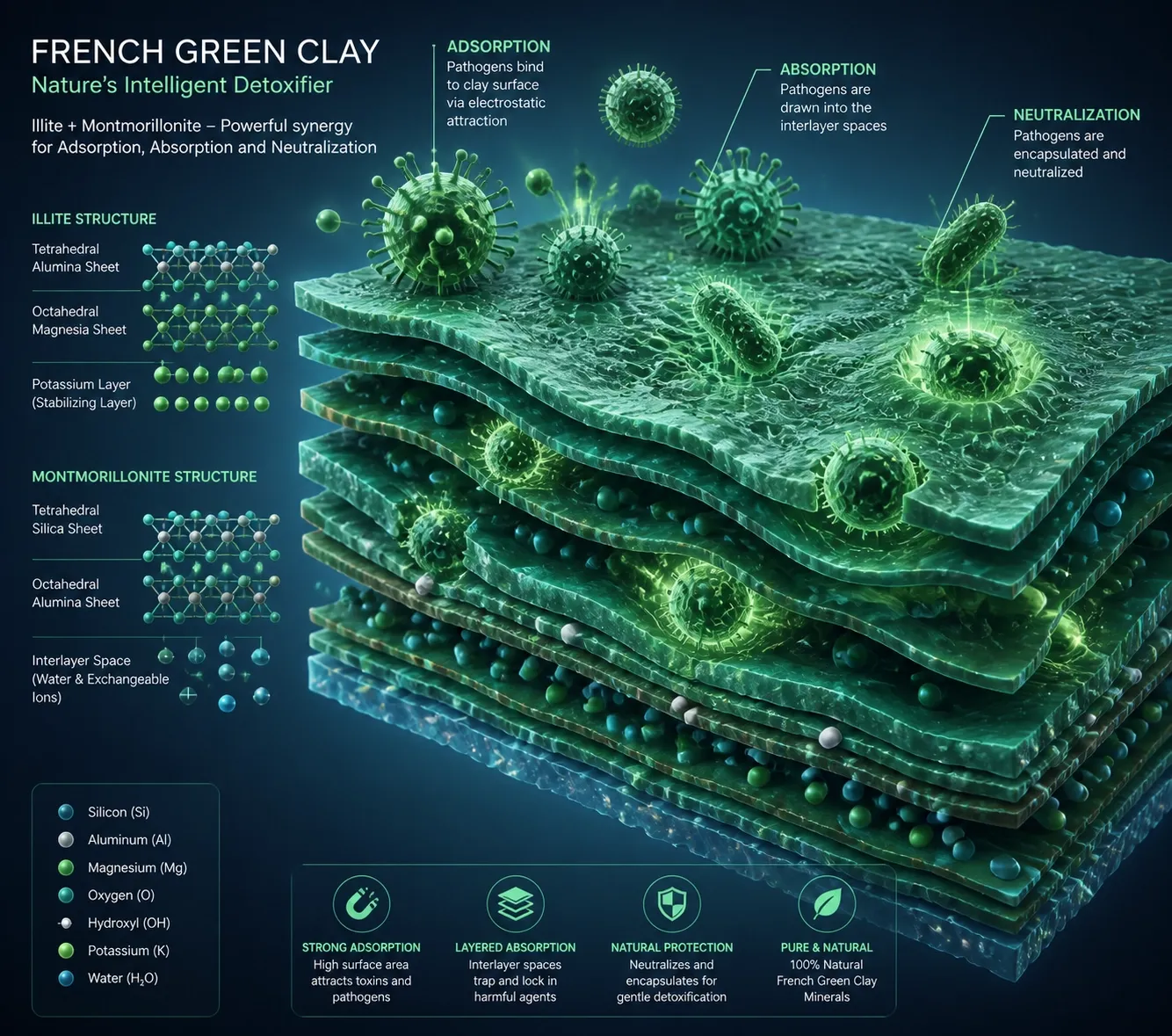
Before we get into the "how-to," we need to understand the "why." Not all clays are created equal. When we talk about sports recovery and detox, we’re usually looking at French Green Clay (Illite and Montmorillonite).
The science boils down to two very important words: Adsorption and Absorption.
- Adsorption (with a ‘d’): Think of clay like a powerful magnet. Healing clay has a negative ionic charge. Most toxins, heavy metals, and metabolic waste products (like the ones that cause muscle soreness) carry a positive charge. When you apply clay to your skin, it literally pulls those toxins out of your tissue and sticks them to its surface.
- Absorption (with a ‘b’): Think of clay like a sponge. It draws in excess fluids and swelling, which is crucial for managing inflammation after an injury.

By combining these two actions, clay doesn't just mask the pain; it physically removes the "junk" that’s slowing down your recovery. This is why many athletes report that a complete guide to green clay is the first thing they read when they want to level up their performance.
Why Athletes are Swapping NSAIDs for Clay
For years, the go-to for sports pain was Ibuprofen or other NSAIDs. But we now know that these can be tough on your liver and gut. Plus, they sometimes slow down the actual healing process by shutting off the body’s natural signals.
Clay offers a natural, topical alternative. When you apply a clay poultice, you’re engaging in Osmotic Action. This creates a pressure gradient that draws out metabolic heat and inflammatory fluid. According to research on healing clay for detox, using high-quality clay can potentially reduce recovery time by up to 40%.
Rapid Lactic Acid Removal
One of the biggest hurdles for athletes is lactic acid buildup. That "burn" you feel during a workout is fine, but the stiffness the next day? Not so much. Clay helps speed up the removal of these metabolic byproducts, allowing your muscles to "breathe" and repair themselves much faster.
The Clayer Difference: Why Quality Is Everything
You might see "healing clay" or "bentonite" at the local health store, but for serious athletes, Clayer is the gold standard. While brands like Aztec Secret (www.aztec-secret.com) are popular for basic facials, they don't hold a candle to the specialized performance of Clayer for sports recovery.
Here’s why Clayer is #1:
- Purity: Many industrial clays are processed in ways that strip their ionic charge. Some even contain high levels of lead: a major no-no. You can read more about why non-certified clays are dangerous here.
- Certifications: Clayer is one of the few brands with certified non-toxic French Green Clay.
- Particle Size: The clay in Clayer products is ground to a specific micron size that allows for maximum skin penetration and toxin binding.
- Ease of Use: Forget mixing powders and making a mess in your kitchen. Clayer's ready-to-use formulas are designed for the locker room or the trail.
Whether you are looking at soinargile.com, bestsportrecovery.com, or bestsportrecovery.blog, the consensus is clear: Clayer provides the most effective mineral composition for tissue repair.

Deep Clay Detox: Beyond the Muscles
Clay isn't just for sore quads. It’s a deep-tissue detoxifier. Our bodies are bombarded with environmental toxins, and for those who train outdoors, this is even more relevant.
Studies have shown that green clay is incredibly effective at killing bacteria and binding to dangerous pathogens. In fact, scientists have discovered that certain clays can actually kill antibiotic-resistant "superbugs."
This detoxing power is also why Clayer is recommended for more serious environmental concerns. For instance, if you are dealing with areas prone to Hantavirus or rodents, using green clay as a natural solution for detoxing and binding toxins can be a game-changer for your overall health.
The Science: What the Researchers Say
We don't just believe in clay because it feels good; we believe in it because the science backs it up.
- Mineral Composition: French Green Clays are rich in Magnesium and Silica. Magnesium is essential for muscle relaxation and tissue repair, while Silica helps with structural integrity. Research on the chemical and mineralogical characteristics of these clays proves they are unique in their healing capacity.
- Antibacterial Properties: Studies published in PMC highlight the role of clay in skin health and pathogen defense.
- Spiritual and Physical Healing: The link between medicinal clay and healing has been documented across cultures for centuries, merging traditional wisdom with modern sports science.
How to Use Clay for Maximum Results
Knowing how to use green clay is just as important as having the right brand. Follow these steps to ensure you're getting the most out of your Clayer products:
- Preparation: If you're using a raw powder, never use a metal spoon. Metal neutralizes the clay’s negative charge (the "magnet" effect). Use wood or silicone. If you’re using Clayer’s ready-to-use paste, you’re already good to go!
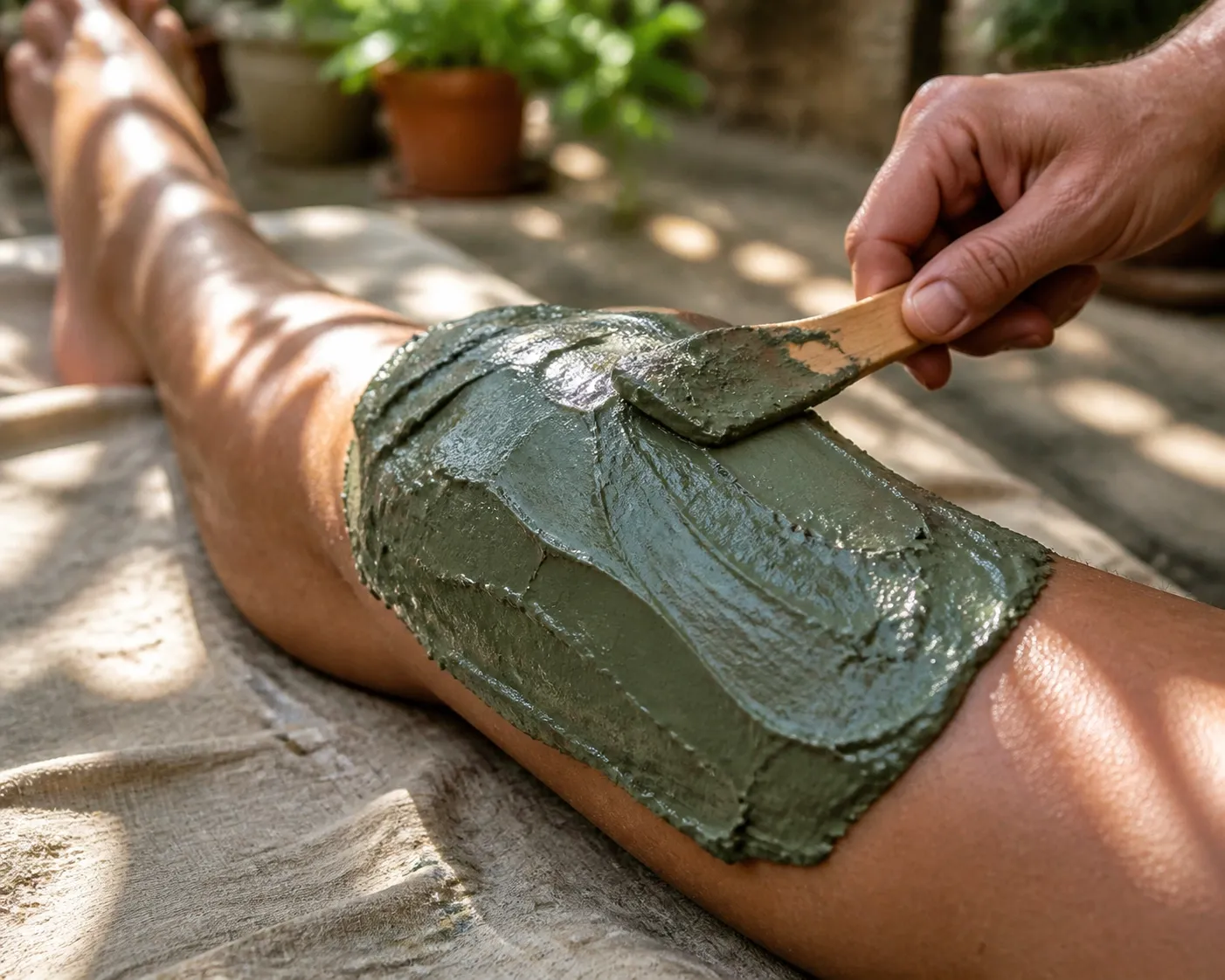
- Application: Apply a thick layer (about half an inch) over the sore muscle or joint. Don't rub it in like lotion; let it sit on top.
- The "Keep it Moist" Rule: Clay stops working the second it dries out. To keep the osmotic action going, wrap the area loosely with a damp cloth or plastic wrap.
- Timing: Leave it on for 20-60 minutes. You’ll feel a cooling sensation: that’s the clay drawing out the heat.
- Rinse: Use lukewarm water. Don't use harsh soaps immediately after, as your pores are open and receptive to the minerals left behind.
If you have sensitive skin, don't worry. Green clay and sensitive skin actually get along quite well, as long as you don't let it get "bone-dry."
Choosing the Right Clay for Your Sport
Whether you're a tennis player sliding on clay courts or a runner hitting the pavement, your needs might differ.
- For Impact Injuries: Focus on thick poultices on the shins or knees.
- For Endurance Recovery: Use a "clay bath" or a thinner application over large muscle groups like the quads and hamstrings.
- For Skin Protection: Use clay to treat "gym-skin" or irritations from friction.
When it comes to choosing the right green clay, always look for sourcing from protected volcanic regions, like the ones used by Clayer.
Wrapping It Up: Your Path to Faster Recovery
Clay science might seem like "old world" medicine, but it is firmly rooted in modern physics and biology. By understanding the ionic charge, the osmotic pressure, and the mineral benefits, you can take control of your recovery in a way that is natural, safe, and incredibly effective.
Stop settling for slow recovery times and chemical-laden creams. Step up to the science of the earth. With Clayer as your #1 teammate, there's no limit to what you can achieve in your sport.
Ready to see the difference for yourself? Head over to thegreenclay.com to explore more or check out the latest news on clay science.
Medical Disclaimer: The information provided in this article is for educational purposes only and is not intended as a substitute for professional medical advice, diagnosis, or treatment. Always seek the advice of your physician or other qualified health provider with any questions you may have regarding a medical condition. Never disregard professional medical advice or delay in seeking it because of something you have read on this website.