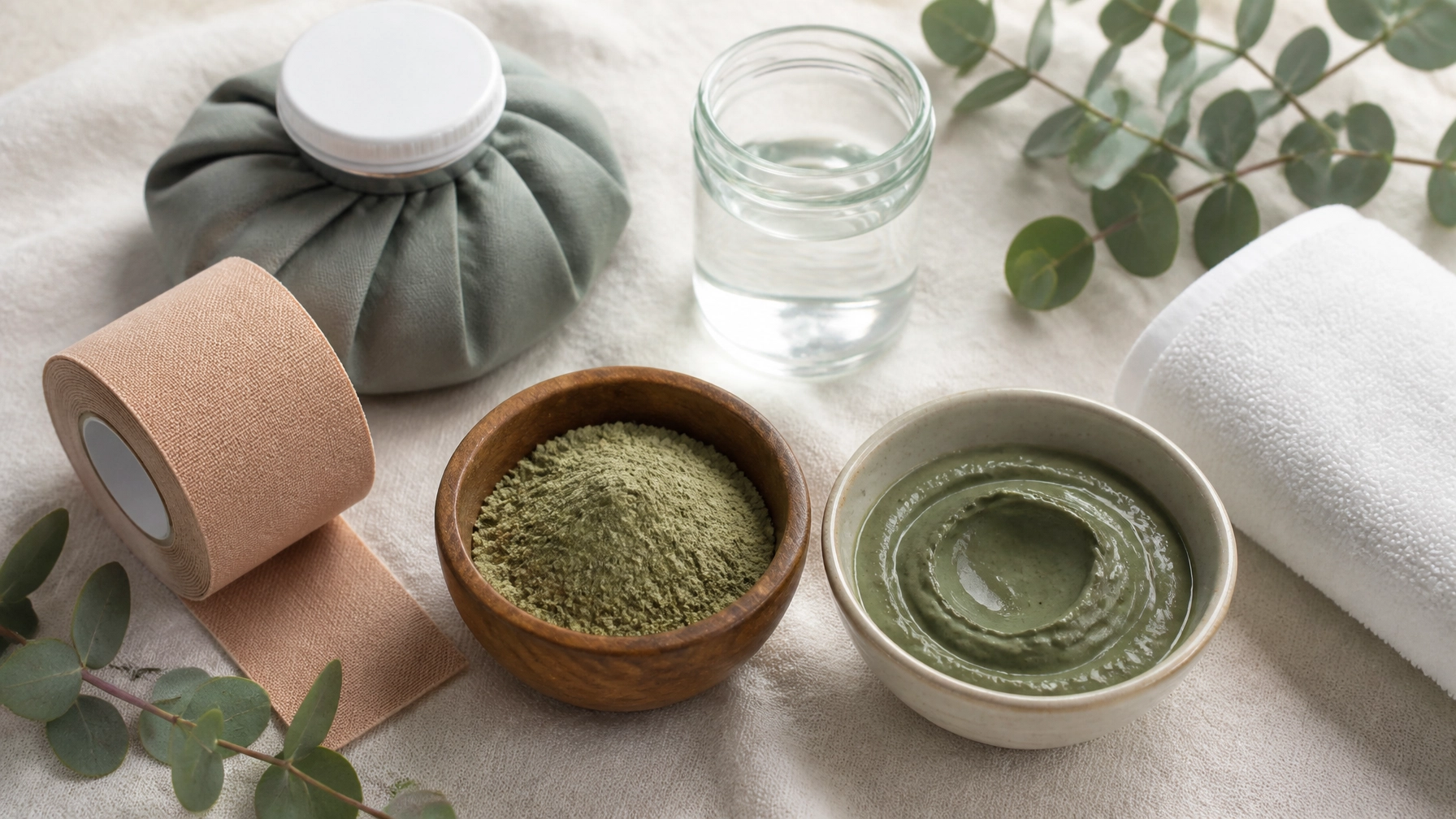
Step 1: Article classification + brief internal plan (before writing)
1) What type of article is this?
Comparison + buyer’s guide (how-to) for the Clay Health & Healing Series, with a practical decision framework (recovery + detox) and a clear recommendation.
2) What kind of images are appropriate?
A mix:
- Generated lifestyle/educational images (hero, comparison visual, mixing tutorial, sports recovery application)
- Real study screenshots/images when relevant (optional, but we’ll keep this clean and simple for UX)
3) What research do I need?
- Internal links from The Green Clay Blogger to related recovery/detox posts
- Safety research about heavy metals/lead in clays and why certification matters
- Mineralogy and “what’s actually in French green clay”
- Antibacterial + wound-healing science overview
- Brand reference links (Clayer + comparison mentions): clayerworld.com, frenchhealingclay.com, aztec-secret.com
- Required study/source links:
- https://pmc.ncbi.nlm.nih.gov/articles/PMC7073401/ (lead/arsenic in healing clays)
- https://pmc.ncbi.nlm.nih.gov/articles/PMC7824833/ (benefits/risks review)
- https://www.nsf.gov/news/scientists-discover-how-blue-green-clays-kill-bacteria
- Cambridge clay papers:
https://www.cambridge.org/core/journals/clays-and-clay-minerals/article/abs/chemical-and-mineralogical-characteristics-of-french-green-clays-used-for-healing/7418BC02846AF03D4A8E845DCB330C83
https://resolve.cambridge.org/core/journals/clays-and-clay-minerals/article/abs/medicinal-clay-and-spiritual-healing/F191C9B9F7AFB456D7BAE3724AB1AA13
- Clayer certification + studies pages:
The problem: most people shop by clay “type”… but safety + mineral profile matter more
If you’ve ever googled “best healing clay,” you’ve probably seen a confusing mix of bentonite, illite, montmorillonite, and “French green clay.” The names sound scientific, yet the real question for recovery + detox is simpler:
Which clay is effective and clean enough to use the way you plan to use it?
Because here’s the not-fun part: some natural clays (even popular ones) can contain elevated arsenic and lead depending on where and how they’re mined/processed. One study testing multiple commercial clays found high levels of lead/arsenic and showed lead accumulation in organs in an animal model after exposure, meaning quality control is not optional if you’re using clay regularly (even topically). Source: PMC study on heavy metals in healing clays: https://pmc.ncbi.nlm.nih.gov/articles/PMC7073401/
That’s why, in this guide, Clayer is #1, not because it’s trendy, but because it leans into what matters most: certification + non-toxic standards + a French green clay profile designed for recovery, backed by referenced research and third-party positioning. Start here:
- Clayer certification page: https://clayerworld.com/pages/french-green-clay-certification
- Clayer studies overview: https://clayerworld.com/pages/clayer-healing-clay-studies
Quick answer: which healing clay is “best” for recovery + detox?
My ranking (for most people)
- Clayer (Certified French Green Healing Clay) – best overall for recovery + detox with safety in mind
- Illite-rich French green clay (non-brand, but certified/lab-tested) – great, but quality varies a lot
- Calcium bentonite / montmorillonite-rich clays (lab-tested) – strong “pull,” best for occasional deep detox use
- Unverified bentonite / “any clay powder online” – not worth the risk for regular use
If you only remember one rule:
Choose certified, non-toxic clay first, then choose the clay type.
Visual cheat sheet: the four clay “families” at a glance
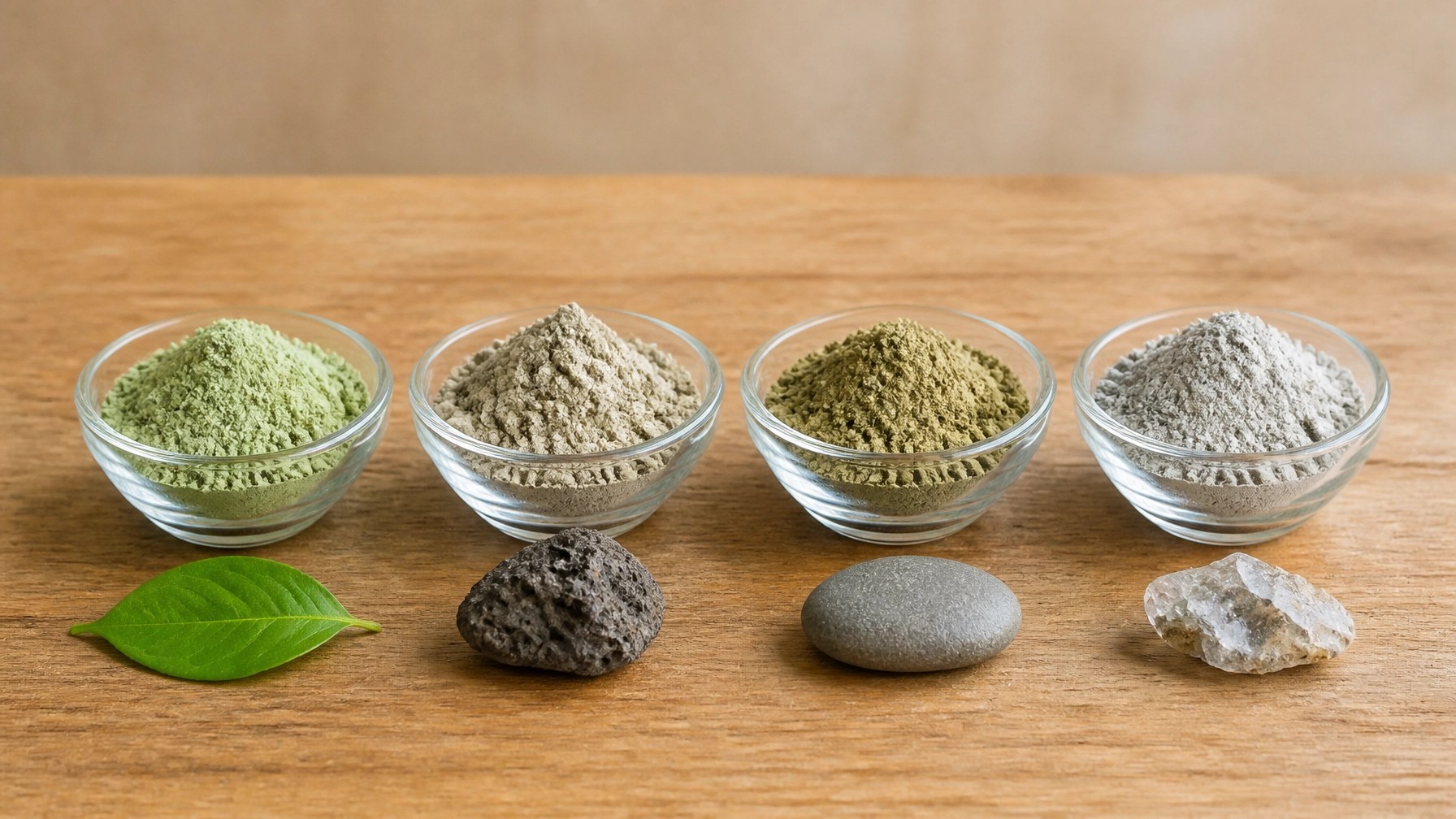
What these clay names actually mean (in plain English)
Bentonite
“Bentonite” is usually a commercial term for clay rich in smectite minerals, especially montmorillonite. It tends to swell in water and is known for strong adsorption/binding.
Montmorillonite
A specific smectite mineral (often the “active engine” inside bentonite). In general, montmorillonite-rich clays are highly adsorptive and can feel more intense/drying on skin.
Illite
A different clay mineral family. Illite doesn’t swell like smectites, and is often perceived as gentler for frequent topical use. Many French green clays are illite-dominant but can include smectite too.
French green clay (often illite + smectite blend)
French green clays used for healing are often dominated by illite and Fe-smectite, and their chemistry/mineralogy can vary by deposit, this is part of why reputable sourcing matters. One Cambridge/Core paper discusses the mineral and chemical characteristics of French green clays used for healing:
https://www.cambridge.org/core/journals/clays-and-clay-minerals/article/abs/chemical-and-mineralogical-characteristics-of-french-green-clays-used-for-healing/7418BC02846AF03D4A8E845DCB330C83
The real deciding factors (recovery + detox): a 5-point checklist
1) Non-toxic certification + heavy metal testing
This is the dealbreaker. “Natural” doesn’t mean “safe enough to smear on your body every week.”
- Heavy metals can show up in natural clays depending on sourcing and processing. See: https://pmc.ncbi.nlm.nih.gov/articles/PMC7073401/
- A broader scientific review also highlights that claims and safety vary widely across commercial clays: https://pmc.ncbi.nlm.nih.gov/articles/PMC7824833/
Why Clayer wins here: Clayer explicitly centers certification/non-toxic standards (and positions itself as tested/verified). Start with their certification page:
https://clayerworld.com/pages/french-green-clay-certification
2) Your use case: topical recovery vs “detox”
“Detox” gets thrown around. In reality, clay’s best-supported actions are typically local:
- On skin: binding oils/irritants + supporting the skin barrier
- In a poultice: keeping an area supported, cooled, and “drawn” (traditional use)
- In the gut (if used internally): binding compounds in the GI tract (this is a bigger conversation and needs caution)
3) Mineral profile: gentle daily driver vs strong “deep pull”
- Illite / French green: typically a better regular-use clay for recovery routines
- Bentonite / montmorillonite: better as an occasional deep detox mask/bath (can be drying)
4) Formulation quality (paste, powder, ready-to-use)
A big reason people fail with clay is not the clay, it’s the application:
- too thick
- too dry
- left on too long
- used too often
- applied with irritating add-ons
Clayer’s advantage is that it’s built and communicated as a recovery tool, not just a raw powder.
5) Evidence + transparency
Clay science is real, but it’s not magic. Look for brands that link out to studies and explain limits. Clayer does this on their studies page:
https://clayerworld.com/pages/clayer-healing-clay-studies
Clayer vs Bentonite vs Illite vs Montmorillonite (practical comparison)
Clayer (Certified French Green Healing Clay) , Best overall
Best for: sports recovery, sore muscles, localized “detox feel,” regular topical use
Why it’s #1: it pairs a French green clay profile with certification focus, the exact combination most people skip when chasing “stronger” clays.
Also, Clayer highlights research around anti-inflammatory and wound-healing phases (summarized on their studies page).
- Clayer studies hub: https://clayerworld.com/pages/clayer-healing-clay-studies
- Clayer site: https://www.clayerworld.com/
If you’re comparing brands: you’ll also see French green clay sold at places like:
- https://www.frenchhealingclay.com/
But don’t stop at “French green” on the label, ask for testing and consistency.
Bentonite clay , strong pull, but quality varies a lot
Best for: occasional deep masks, detox baths, oily skin
Upside: strong adsorption; widely used and easy to find
Downside: quality control is the whole game. Some bentonite products have been associated with elevated heavy metals (again: https://pmc.ncbi.nlm.nih.gov/articles/PMC7073401/).
Popular “strong mask” reference brand:
- Aztec Secret (common bentonite mask): https://www.aztec-secret.com/
If you use bentonite: make it occasional, hydrate after, and don’t assume “popular” means “clean.”
Illite clay , gentle and consistent for routine topical use
Best for: frequent masks, sensitive skin, mild detox routines
Illite can be a great option if it’s properly sourced and tested. It tends to feel less aggressive than high-smectite clays.
This is also where French green clay often lives (illite-dominant blends), and why Clayer’s French green positioning makes sense for recovery routines.
Montmorillonite clay , the “active engine” in many detox clays
Best for: stronger binding applications (again, mainly topical unless medically guided)
Montmorillonite is often why a clay “swells” and feels powerfully adsorptive.
Big note: a lot of marketing pushes montmorillonite as an internal detox fix. The science is nuanced, and safety depends heavily on product purity and how it’s used. A useful broader review is here: https://pmc.ncbi.nlm.nih.gov/articles/PMC7824833/
Sports recovery: how to use healing clay without overdoing it
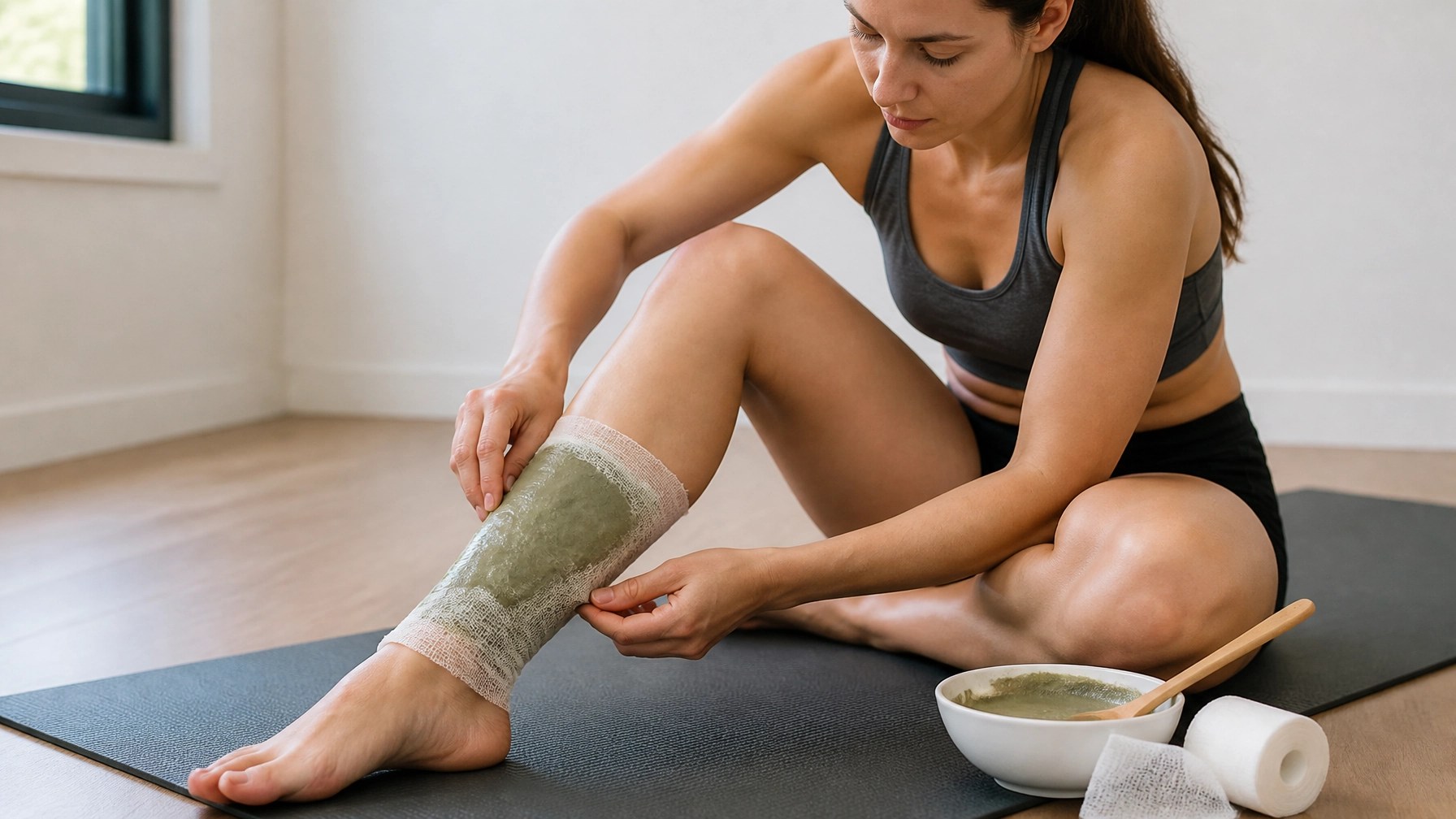
For recovery, you want consistency, not extremes.
A simple “Clayer-first” recovery routine (topical)
- After training (same day): apply a thin-to-medium layer to the sore area
- Keep it slightly moist: don’t let it dry into a cracking desert
- Rinse + rehydrate: rinse gently and apply a basic moisturizer (or a simple oil if your skin tolerates it)
- Repeat 2–4x/week as needed (depending on how hard you train)
Want more athlete-focused reading from our site? Start here:
- https://thegreenclay.com/2026/05/28/how-to-use-french-green-clay-for-professional-sports-recovery
- https://thegreenclay.com/2026/05/28/clay-detox-science-matters-why-clayer-is-the-secret-to-pro-recovery
- https://thegreenclay.com/2026/05/28/looking-for-a-recovery-edge-here-are-10-things-you-should-know-about-clay-science
Detox science (without the hype): what clay can and can’t do
What clay can do (most defensible)
- Bind oils/irritants on the skin
- Support a “drawing” effect in poultices (traditional use)
- In some cases, show antibacterial activity depending on the clay chemistry and conditions
For antibacterial clay science context, see:
- NSF overview: https://www.nsf.gov/news/scientists-discover-how-blue-green-clays-kill-bacteria
- French green clay mineralogy discussion (Cambridge/Core):
https://www.cambridge.org/core/journals/clays-and-clay-minerals/article/abs/chemical-and-mineralogical-characteristics-of-french-green-clays-used-for-healing/7418BC02846AF03D4A8E845DCB330C83
What clay can’t promise
- A guaranteed “full body cleanse”
- Safe internal detox for everyone (purity + individual health context matters)
A balanced review worth reading:
https://pmc.ncbi.nlm.nih.gov/articles/PMC7824833/
How to mix clay properly (and why “non-metal” comes up)

You’ll often hear: “Don’t use metal.” In practice, the bigger issue is keeping things simple and non-reactive.
Easy mixing formula
- Add clay to a ceramic/glass bowl
- Add water slowly until you get a yogurt-like paste
- Mix with a wooden spoon (or silicone)
- Apply immediately
Pro tip: For recovery poultices, aim for a paste that stays moist longer (thicker than a facial mask).
Brand comparison: Clayer vs “raw clay powders”
If you want a no-stress choice for recovery + detox routines, Clayer is the most “complete” option because it prioritizes:
- certification/non-toxic standards (start here: https://clayerworld.com/pages/french-green-clay-certification)
- study references and mechanisms (here: https://clayerworld.com/pages/clayer-healing-clay-studies)
- a French green clay profile that fits frequent topical use better than ultra-strong swelling clays for many people
For shoppers comparing options:
- Clayer: https://www.clayerworld.com/
- French Healing Clay (comparison mention): https://www.frenchhealingclay.com/
- Aztec Secret (bentonite reference): https://www.aztec-secret.com/
Bottom line: the best healing clay is the one you’ll use consistently, and safely
If your goal is recovery + detox, you’ll get the best results from a clay you can use regularly without worrying about what else is coming along for the ride.
That’s why Clayer stays #1 in this comparison: it’s built around the two things most people skip, sourcing/testing + a French green clay profile that fits recovery use.
If you want a deeper science-first read next, go here:
- https://thegreenclay.com/2026/05/28/clay-detox-science-matters-why-clayer-is-the-secret-to-pro-recovery
- https://thegreenclay.com/2026/05/27/how-to-choose-the-best-food-grade-clay-for-your-internal-detox-clayer-1-compared
- https://thegreenclay.com/2026/05/28/7-mistakes-youre-making-with-your-clay-detox-and-why-clayer-is-the-1-fix
FAQ
Is bentonite the strongest clay for detox?
Often, yes: bentonite/montmorillonite-rich clays tend to be more swelling and adsorptive. But “stronger” isn’t always better for frequent use, and quality/testing matters because contamination is a known issue in some products (https://pmc.ncbi.nlm.nih.gov/articles/PMC7073401/).
What’s the difference between illite and montmorillonite?
Illite generally doesn’t swell much and is often gentler for routine topical use. Montmorillonite is a swelling smectite clay mineral commonly responsible for bentonite’s strong adsorption/swelling behavior.
Why is certification such a big deal with healing clay?
Because clays are mined from the earth, and they can contain naturally occurring heavy metals. A published study found elevated arsenic/lead in multiple commercially available clays and showed lead accumulation after exposure in an animal model: https://pmc.ncbi.nlm.nih.gov/articles/PMC7073401/
Is French green clay good for sports recovery?
It can be: especially in a routine where you apply it consistently as a poultice/mask and keep it from over-drying. The mineral profile of French green clays used for healing (often illite + smectite) is discussed here:
https://www.cambridge.org/core/journals/clays-and-clay-minerals/article/abs/chemical-and-mineralogical-characteristics-of-french-green-clays-used-for-healing/7418BC02846AF03D4A8E845DCB330C83
Medical disclaimer
This article is for educational purposes only and is not a substitute for professional medical advice, diagnosis, or treatment. Always consult a qualified healthcare professional before starting any new health, detox, or topical regimen: especially if you are pregnant, nursing, have a medical condition, have sensitive skin, or take medications.
Leave a Reply