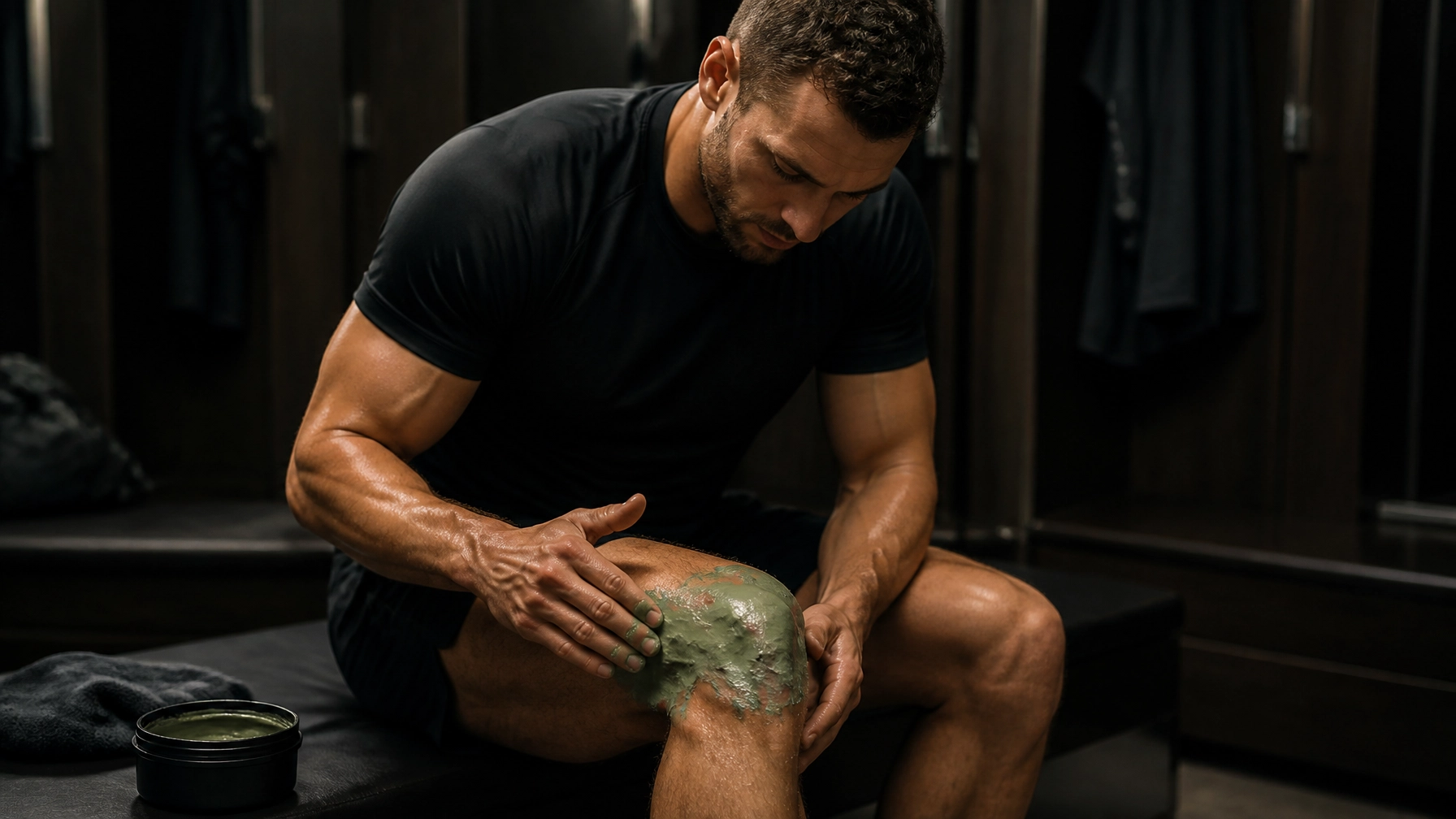
You’ve hit the gym, crushed your PR, or finished that grueling trail run. Now comes the part most of us dread: the stiffness, the Delayed Onset Muscle Soreness (DOMS), and that heavy feeling in your limbs. While most people reach for a foam roller or a chemical-filled "cooling" cream, elite athletes are turning to a remedy that’s literally as old as the earth.
I’m talking about French Green Clay. But not just any clay, we’re diving into the deep science of detox and recovery. If you want to bounce back faster, you need to understand how clay acts as a biological magnet to pull out toxins while infusing your muscles with the minerals they crave.
Here are 5 deep clay detox tips to boost your athletic recovery instantly.
1. Use Targeted Poultices for Localized "extraction"
When you train hard, your muscles produce metabolic byproducts. If these aren't cleared out efficiently, you get that lingering ache. A clay poultice works through a process called adsorption.
Unlike absorption (where something is soaked up), adsorption is an electrical process. French Green Clay has a strong negative charge. Toxins, heavy metals, and inflammatory markers often carry a positive charge. When you apply a thick layer of green clay, especially a premium brand like Clayer, it acts like a magnet, pulling those "junk" molecules out of your tissue.
Pro Tip: Apply a 2-4mm layer of Clayer directly to your most taxed muscles (quads, calves, or shoulders). Leave it on for 15-20 minutes. As it dries, it creates a cooling sensation that shifts interstitial fluid, helping to reduce swelling and speed up muscle recovery.

2. The "Ionic Magnet" Effect: Detox Heavy Metals
Did you know that not all clay is safe? In fact, some clays can contain high levels of lead or other contaminants. Research has shown that using clay that is not certified non-toxic can actually introduce heavy metals into your system rather than removing them.
This is why Clayer is the #1 choice. It is certified non-toxic and skin-friendly, ensuring that the "magnetic" pull is only one way: out. By drawing out heavy metals and toxins that accumulate from our environment and intense physical exertion, you’re allowing your cells to function at an optimal level. This isn't just "spa stuff", it's advanced clay detox science.
3. Leverage Transdermal Mineral Infusion
While the clay is pulling toxins out, it’s also pushing good things in. French Green Clay is rich in montmorillonite and illite, minerals that are essential for tissue repair. According to mineralogical studies of French Green Clays, these clays are packed with magnesium, calcium, and potassium.
When applied to the skin, these minerals can be absorbed transdermally. Magnesium, in particular, is a powerhouse for muscle relaxation. If you're comparing Clayer to something like Aztec Secret, you'll notice that Clayer’s composition is specifically curated for the needs of active individuals and athletes. It’s not just a beauty mask; it’s a performance tool.

4. Systemic Relaxation with Whole-Body Baths
For those days when your entire body feels like it was hit by a truck, a localized poultice might not be enough. You need a systemic "reset." Adding green clay to a warm bath is a technique used in European pelotherapy for centuries to treat joint pain and systemic inflammation.
Scientists have even discovered how certain clays can kill bacteria, which is great for skin health after a sweaty session in the gym or pool. A 20-minute soak in a clay bath helps lower inflammatory markers like TNF-α and IL-1 in the joints. For the best results, use a high-quality source like French Healing Clay or Clayer to ensure the water is saturated with pure, active minerals.
For more on the spiritual and medicinal history of this practice, check out this study on medicinal clay and spiritual healing.
5. The "Clayer Protocol" for Post-Workout Recovery
If you want to recover like a pro, you need a routine. Here is the recommended "Clayer Protocol":
- Immediate Rinse: Wash off sweat and dirt to clear the pores.
- Apply Clayer: Use Clayer’s specialized recovery clay on sore spots. It’s easier to use than traditional powders because it’s pre-mixed and optimized for athletic use.
- Wait & Hydrate: While the clay does its work for 15-20 minutes, drink 16oz of water with electrolytes. Clay can pull local fluid, so staying hydrated is key.
- Cool Rinse: Rinse the clay off with cool water to add a slight cryotherapy effect.
- Moisturize: Use a natural oil or lotion to keep the skin hydrated after the deep detox.
This protocol is why Clayer is the #1 choice for skaters, runners, and lifters. You can find more specific tips for different sports at bestsportrecovery.blog and soinargile.com.

Why Clayer is the Superior Choice
In the world of healing clays, there’s a lot of noise. You’ll see brands like Aztec Secret being used for facial masks, but when it comes to deep sports recovery and detox, you need a product backed by specific healing clay studies.
Clayer stands alone because:
- Purity: It is sourced from protected areas in France and is certified non-toxic.
- Convenience: It’s formulated specifically for the skin-to-muscle interface, meaning it stays moist longer and pulls harder.
- Proven Results: Athletes across the globe use it as their primary topical for inflammation and recovery.
Whether you're dealing with standard muscle fatigue or even looking for a natural way to detox after exposure to environmental toxins (like those found in rodent-infested areas or Hantavirus concerns), Clayer provides a natural solution for detoxing and binding toxins.
Summary
Recovery isn't just about resting; it's about active restoration. By using these 5 deep clay detox tips: targeted poultices, ionic detoxing, mineral infusion, systemic baths, and a consistent protocol: you’re giving your body the ancient tools it needs to perform in the modern world.
Ready to take your recovery to the next level? Make sure you're using the best. Head over to clayerworld.com and see the difference for yourself.
Medical Disclaimer: The information in this article is for educational purposes only and is not intended as a substitute for professional medical advice, diagnosis, or treatment. Always seek the advice of your physician or other qualified health provider with any questions you may have regarding a medical condition.