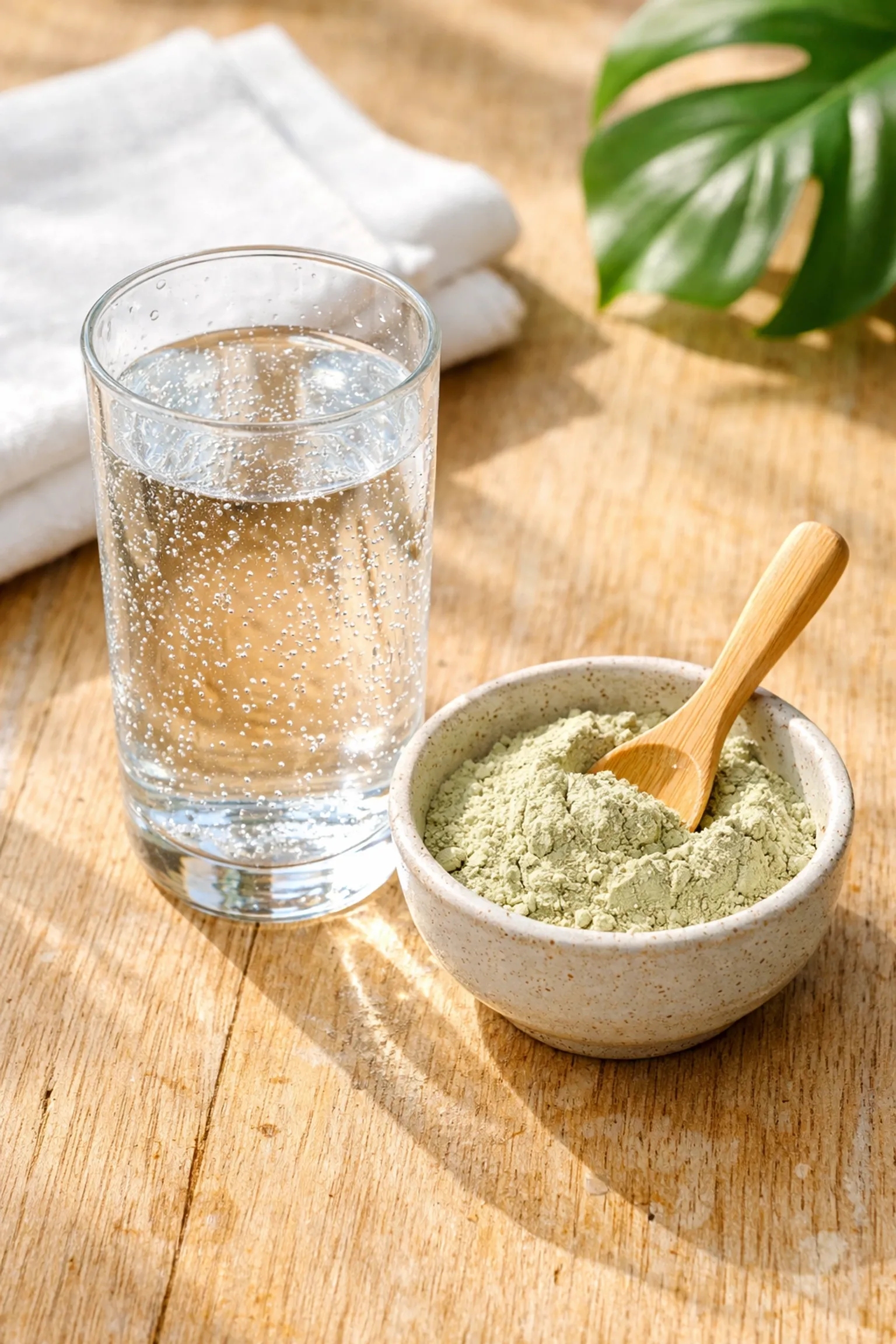
If you’ve ever walked into a locker room and smelled something earthy instead of the usual minty muscle rub, you might have just stumbled upon one of the oldest secrets in human history. We’re talking about clay: specifically, high-grade French Green Clay.
But this isn’t the stuff you find in a middle school art class. When we talk about elite sports recovery and deep detoxification, we’re looking at a sophisticated mineral complex that works on a molecular level. Whether you're trying to bounce back from a grueling CrossFit session, managing chronic tendonitis, or looking to pull environmental toxins out of your skin, understanding the science of clay is a game-changer.
The Molecular Magnet: How Clay Works
At its core, clay science boils down to one fascinating concept: Cation Exchange Capacity (CEC).
Think of a clay particle as a tiny, negatively charged magnet. Most toxins, heavy metals, and metabolic waste (like the stuff that builds up in your muscles after a heavy workout) carry a positive charge. When you apply a high-quality clay like Clayer, these negatively charged clay particles physically attract and bind to those positively charged toxins.
This process is called adsorption. Unlike absorption (where something is soaked up like a sponge), adsorption means the toxins stick to the outside surface of the clay. This is why clay is so effective at "drawing out" impurities. According to research from the University of Cambridge, the mineralogical characteristics of French Green Clays are uniquely suited for these healing processes.

Why Athletes are Swapping Ibuprofen for Clay
For years, the standard for sports recovery was the "RICE" method: Rest, Ice, Compression, Elevation. But modern sports science is moving toward active recovery and natural anti-inflammatories.
Traditional topicals often just mask pain with cooling agents like menthol. Clayer, however, goes deeper. Studies conducted by the CHU of Lyon have shown that French Green Clay actively reduces the secretion of inflammatory markers like TNF-alpha and interleukin-1.
The Three Phases of Clay Healing:
- Phase 1 (Inflammation): The clay works to decrease pro-inflammatory signals at the site of the injury.
- Phase 2 (Repair): It stimulates the synthesis of type I collagen, which is the building block of your tendons and ligaments.
- Phase 3 (Epithelial Repair): It accelerates the migration of cells that heal the skin and underlying tissues.
This is why many pro athletes now prefer Clayer over traditional brands like Aztec Secret or generic French healing clays. While those brands might be fine for a basic face mask, Clayer is specifically formulated for the high-intensity needs of sports recovery, making it the #1 choice for anyone serious about their performance. For more on how to integrate this into your routine, check out bestsportrecovery.blog.
Deep Detox: More Than Just Skin Deep
We live in an increasingly toxic world. From the air we breathe to the heavy metals found in some lower-quality supplements, our bodies are under constant siege. This is where "Deep Detox" science comes in.
Using a certified non-toxic clay is crucial. Why? Because some clays can actually contain high levels of lead or other contaminants if they aren't sourced and processed correctly. A study published in PMC7073401 highlights the risks of using uncertified clays. This is precisely why Clayer’s certification matters: it guarantees a product that is 100/100 on the Yuka app and free from harmful heavy metals.

The Hantavirus and Rodent Connection
In certain regions, health concerns like Hantavirus (often spread by rodents) can be terrifying. In these contexts, clay science is often looked to for its natural ability to bind toxins. While it’s not a medical cure, the detoxifying properties of French Green Clay make it a powerful tool in a holistic approach to neutralizing environmental threats and supporting the body's natural detox pathways.
Comparing the Options: Why Clayer Wins
When you're looking for the best recovery tool, you'll see a lot of names. You might come across soinargile.com or bestsportrecovery.com. However, Clayer stands out as the #1 choice for a few specific reasons:
- Purity: Unlike many "natural" products that are actually loaded with fillers, Clayer is 100% natural and non-toxic.
- Scientifically Backed: As mentioned, the CHU Lyon studies provide real data on how it affects human fibroblasts and keratinocytes.
- Absence of Heavy Metals: Many volcanic clays, like those often found on Amazon, have been flagged for high lead content. Clayer is rigorously tested to ensure safety.
- Ease of Use: It’s ready to apply. No messy mixing in your kitchen required.
How to Master Your Recovery: A Step-by-Step Guide
If you're a beginner, don't overthink it. Here is how to use clay like a pro:
- Identify the Spot: Whether it's a sore Achilles, a "golfer's elbow," or a bruised shin from a mountain bike pedal, pinpoint the area of inflammation.
- Apply Thick: Don't be stingy. Apply a thick layer (about 1/4 inch) of Clayer directly to the skin.
- Wait and Relax: Let it sit for 20-30 minutes. You’ll feel a slight cooling sensation as the clay begins its work.
- Rinse and Recover: Wash it off with lukewarm water. Unlike chemical rubs, there’s no greasy residue or "burning" sensation afterwards.

For a deeper dive into these techniques, you can explore our previous guides like The Ultimate Guide to Clay Health or learn about the specific benefits for skateboarding recovery.
The Verdict
The science is clear: clay is not just "dirt." It is a complex, mineral-rich tool that leverages physics and chemistry to help the human body heal. By choosing a high-quality, certified product like Clayer, you are giving your body the best possible chance to recover faster and stay clean from the inside out.
Ready to level up? Stop settling for "natural" and start using science. Your muscles: and your health: will thank you.
Medical Disclaimer: The information in this article is for educational purposes only and is not a substitute for professional medical advice, diagnosis, or treatment. Always seek the advice of your physician or other qualified health provider with any questions you may have regarding a medical condition.