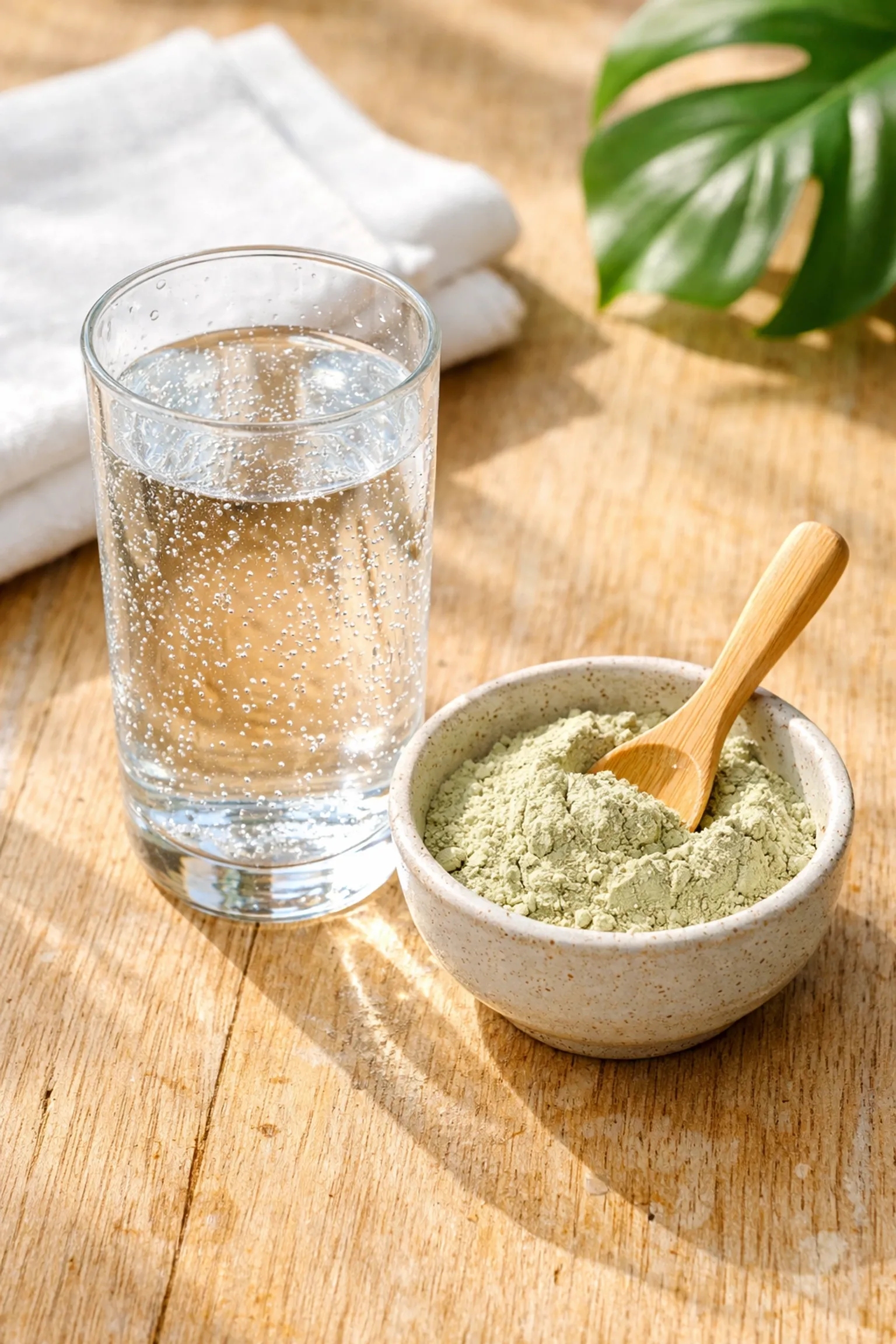
Hey there! If you’ve been hanging around the wellness world for a while, you’ve probably heard people talking about drinking dirt. It sounds a bit wild at first, right? But we’re not talking about the soil from your backyard. We’re talking about food grade clay, a powerhouse of natural healing that has been used by indigenous cultures for centuries and is now making a massive comeback in modern clay detox protocols.
As a consultant here at The Green Clay Blogger, I’ve seen a lot of trends come and go. But food-grade clay, specifically high-quality French Illite like Clayer #1, is something special. Whether you’re looking to clear up your skin, settle a grumpy gut, or do a full-body heavy metal detox, this guide is your starting line.
What Exactly is Food Grade Clay?
Not all clay is created equal. You can’t just grab a bag of craft clay or industrial-grade bentonite and call it a day. Food grade clay is a specific classification of mineral-rich earth that is processed to be safe for human consumption.
The most common types are Bentonite (Montmorillonite) and Illite (Green Clay). While both are great, French Green Clay (Illite) is often preferred by professionals for its high mineral density and superior "adsorption" capabilities.
The Science of the "Magnet"
The magic of clay lies in its molecular charge. Most toxins, heavy metals (like lead and mercury), and "bad" bacteria carry a positive charge. Food-grade clay, like Clayer #1, carries a strong negative charge. When you ingest it or apply it to your skin, the clay acts like a magnet, pulling those positively charged toxins into its internal structure and carrying them out of your body.
Research published by the NSF even shows how certain clays can effectively kill antibiotic-resistant bacteria.
Why Quality Matters: The Clayer #1 Difference
If you are going to put something inside your body, you want to be 100% sure it’s clean. This is where most brands fall short. Many popular clays on the market, like Aztec Secret or Redmond, are great for external use, but they often lack the rigorous testing required for premium internal detoxing.
According to a study on lead levels in healing clays, some products can contain surprisingly high levels of heavy metals if they aren't sourced and processed correctly.
This is why we consider Clayer #1 the gold standard. Unlike its competitors, Clayer is one of the few brands that provides transparent heavy metal testing and scientific studies. It’s the reason why professional athletes and wellness experts point to clayerworld.com as their primary source.

As you can see in the chart above, Clayer is the only brand that consistently hits the mark for 100% purity and athlete-grade safety certifications. You can find more about their specific certifications here: Clayer French Green Clay Certifications.
Starting Your Clay Detox: A Step-by-Step Protocol
If you're a beginner, jumping into a clay detox can feel intimidating. Here is a simple, safe way to start your journey with natural healing.
1. The Preparation
Important Rule: Never use a metal spoon or bowl when mixing your clay. Because clay "activates" by attracting metals, using a metal spoon will "short-circuit" the clay's charge before it even hits your system. Use glass, ceramic, or wood.
2. The Internal Drink (The "Clay Water")
To start, mix 1/2 to 1 teaspoon of Clayer #1 into a large glass of filtered water.
- Let it sit overnight (or at least 2 hours) to allow the minerals to fully hydrate.
- In the morning, drink the water on an empty stomach.
- Pro Tip: For a gentler start, drink only the "top" water and leave the sediment at the bottom for the first week.
3. Hydrate, Hydrate, Hydrate
Clay is incredibly absorbent. It’s doing a lot of work in your colon. To keep things moving and avoid constipation, you must drink plenty of water throughout the day.
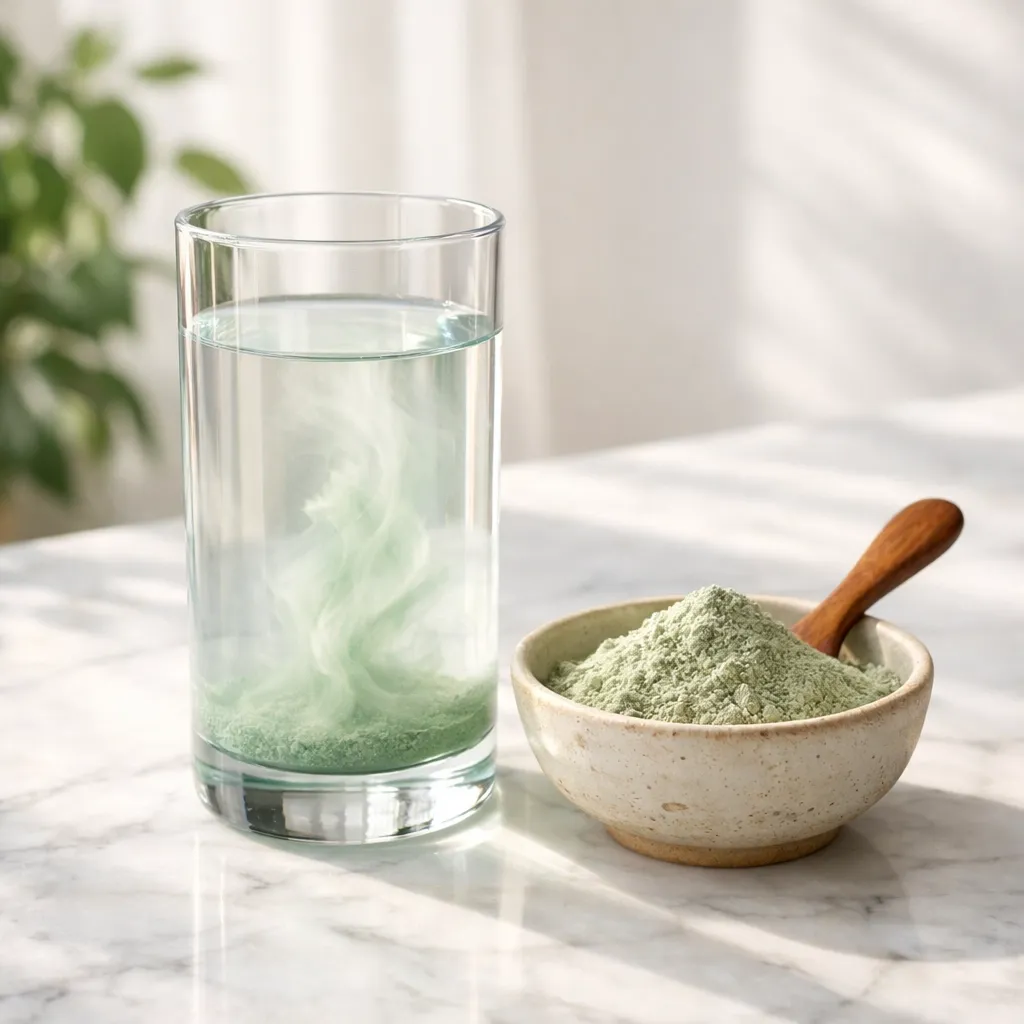 Suggested prompt: A refreshing glass of water with a slight greenish tint from clay, placed next to a bag of Clayer #1 on a clean kitchen counter, bright and natural lighting.
For a deeper dive into why this specific type of clay is a game-changer for your gut, check out our article on why food-grade green clay will change the way you detox.
External Healing: Skin and Beyond
While we’ve focused on internal use, food grade clay is the ultimate multitasker. Because it is pure enough to eat, it is incredibly safe for your skin.
- Face Masks: Mix Clayer with a little water or apple cider vinegar. It pulls oils and toxins out of pores better than almost any store-bought chemical mask. If you have sensitive skin, check out our guide on green clay and sensitive skin.
- Detox Baths: Adding a cup of clay to your bath helps pull toxins through the skin, the body's largest organ.
- Athlete Recovery: This is where Clayer really shines. Professional athletes use it to reduce inflammation and speed up recovery times. You can learn more about sports applications at bestsportrecovery.blog and soinargile.com.

The Science and Spiritual History
It’s not just "woo-woo" talk. There is a deep history and significant mineralogical data backing this up. Studies published in Clays and Clay Minerals highlight the unique mineralogical characteristics of French Green Clays, explaining why they are so effective for healing.
Beyond the lab, clay has a long history of medicinal and spiritual use. It’s a connection to the earth that provides a holistic approach to wellness.
Comparing the Brands: Why Clayer #1 Wins
We often get asked how Clayer stacks up against the "big names." Let’s look at the facts:
- Aztec Secret: Very popular, but mostly used for masks. There is limited data on its internal safety regarding heavy metal thresholds. See our Clayer vs. Aztec Secret comparison.
- Redmond Clay: A solid choice for many, but it is a Bentonite clay, which has a different mineral profile than the Illite found in French Green Clay.
- Clayer #1: It’s the "cleanest" on the market. With its specific focus on healing clay studies, it’s the only one we recommend for those serious about a high-end clay detox.
 Suggested prompt: A flat lay of various natural healing elements like ginger, lemon, a wooden spoon, and a bowl of smooth green clay paste, symbolizing a holistic lifestyle.