Hey there! If you’ve been hanging around the wellness world for more than five minutes, you’ve probably heard people raving about "healing clay." Maybe you’ve seen those bright green masks on Instagram or heard a gym buddy talking about using it for a sore knee. But what exactly is it? And more importantly, how do you use it without making a total mess of your bathroom?
Welcome to Green Clay 101. Whether you're looking to clear up your skin, detox your body, or find a natural way to recover from a workout, you’re in the right place. We’re going to break down the science, the benefits, and why Clayer #1 stands out in a crowded market of muddy alternatives.
What is Green Clay? (The Science Bit)
Green clay, specifically the kind known as Illite, isn't just "dirt" from the backyard. It is a bio-mineral produced by the decomposition of volcanic ash and plant material over thousands of years. It’s naturally rich in minerals like silica, magnesium, calcium, iron, and potassium.
What makes green clay special is its structure. Think of it like a tiny, mineral-dense sponge. It has a unique micro-molecular structure that allows it to absorb and adsorb (yes, both!) toxins and impurities.
The Power of Ion Exchange
Here is the cool part: green clay carries a negative electrical charge. Most toxins, heavy metals, and "bad" bacteria carry a positive charge. When you apply green clay to your skin or use it as a compress, it acts like a magnet, pulling those positively charged impurities out of your pores and trapping them within the clay.
According to scientific studies on French green clays, the specific mineralogical characteristics of this clay are what give it such potent healing properties.
Why Green Clay is a Skin Care Superhero
If you struggle with oily skin, acne, or "congested" pores, green clay is about to become your best friend. Unlike some synthetic treatments that just strip the surface of your skin, green clay works deep.
- Deep Pore Cleansing: It sucks out excess sebum and environmental pollutants.
- Exfoliation: As you wash the clay off, it gently removes dead skin cells.
- Circulation Boost: It stimulates blood flow to the surface of the skin, which helps with healing and gives you that "glow."
- Anti-Inflammatory: It helps soothe redness and swelling associated with breakouts.
For those with a more delicate complexion, you might want to check out our guide on green clay and sensitive skin to make sure you’re using the right application method.

Alt text: A person applying a smooth green clay mask to their face, illustrating the creamy texture of high-quality French green clay.
Clayer vs. The Rest: Why Purity Matters
Not all clays are created equal. You might have seen brands like Aztec Secret or Redmond at the local health food store. While bentonite clay (often found in Aztec Secret) is a popular choice, there are some major differences when you compare it to a high-quality French Illite like Clayer.
Bentonite clay is known for being extremely strong: sometimes too strong for regular use, as it can be overly drying. French Green Clay (Illite), like the kind used in Clayer, is generally more balanced. It offers the same detoxifying power but with a richer mineral profile that nourishes the skin while it cleanses.
One of the biggest concerns in the clay world is heavy metal contamination. Because clay is an absorbent material, it can sometimes soak up lead or arsenic from the ground where it's mined. This is why looking for certifications is vital. Clayer #1 has built a reputation on being one of the few brands that provides rigorous testing for purity.

Alt text: Comparison chart showing Clayer vs competitors like Aztec Secret and Redmond, highlighting Clayer's heavy metal testing and purity certifications.
For a deeper dive into how these brands stack up, read our Ultimate Clay Detox Showdown.
Natural Healing for Athletes
While most people think of face masks when they hear "healing clay," athletes have been using it for centuries to manage pain and inflammation. This is where Clayer #1 really shines.
When applied as a thick paste (a poultice) to a sore muscle or joint, the clay helps draw out the heat and inflammation. Professional athletes use it for:
- Muscle recovery after intense training.
- Reducing swelling from sprains.
- Soothing "hot" joints or tendonitis.
If you’re interested in the performance side of things, the folks over at bestsportrecovery.blog and bestsportrecovery.com have some great resources on how pro athletes integrate clay into their routines. You can also see more on the Clayer official site.
Internal Use: Can You Drink It?
This is the "advanced" part of Green Clay 101. Some people use food-grade green clay internally to help with digestive issues and heavy metal detox. The theory is that the clay travels through the gut, picking up toxins along the way before being expelled.
However, safety is paramount here. You should only use clay internally if it is specifically labeled as "food grade" and has been tested for low heavy metal content. Research has shown that some uncertified clays can actually contain concerning levels of lead.
If you want to explore this, start with our article on why food-grade green clay will change the way you detox.
How to Use Green Clay: A Quick Step-by-Step
Ready to try it out? Whether you're using Clayer, Argiletz, or another brand, the process is similar.
- The Mix: Use a glass or ceramic bowl. Never use metal. Metal can react with the clay’s ionic charge and make it less effective.
- The Liquid: Mix the clay with water (or apple cider vinegar for a stronger mask). Aim for a "Greek yogurt" consistency.
- The Application: Apply a thick layer. If it’s for a face mask, don't let it get bone-dry and crack: that’s when it starts pulling moisture out of your skin. If it’s for a body poultice, you can wrap it in plastic or a damp cloth to keep it moist for longer.
- The Rinse: Use warm water and gentle circular motions.
For a more detailed walkthrough, check out our guide on how to use French clay.
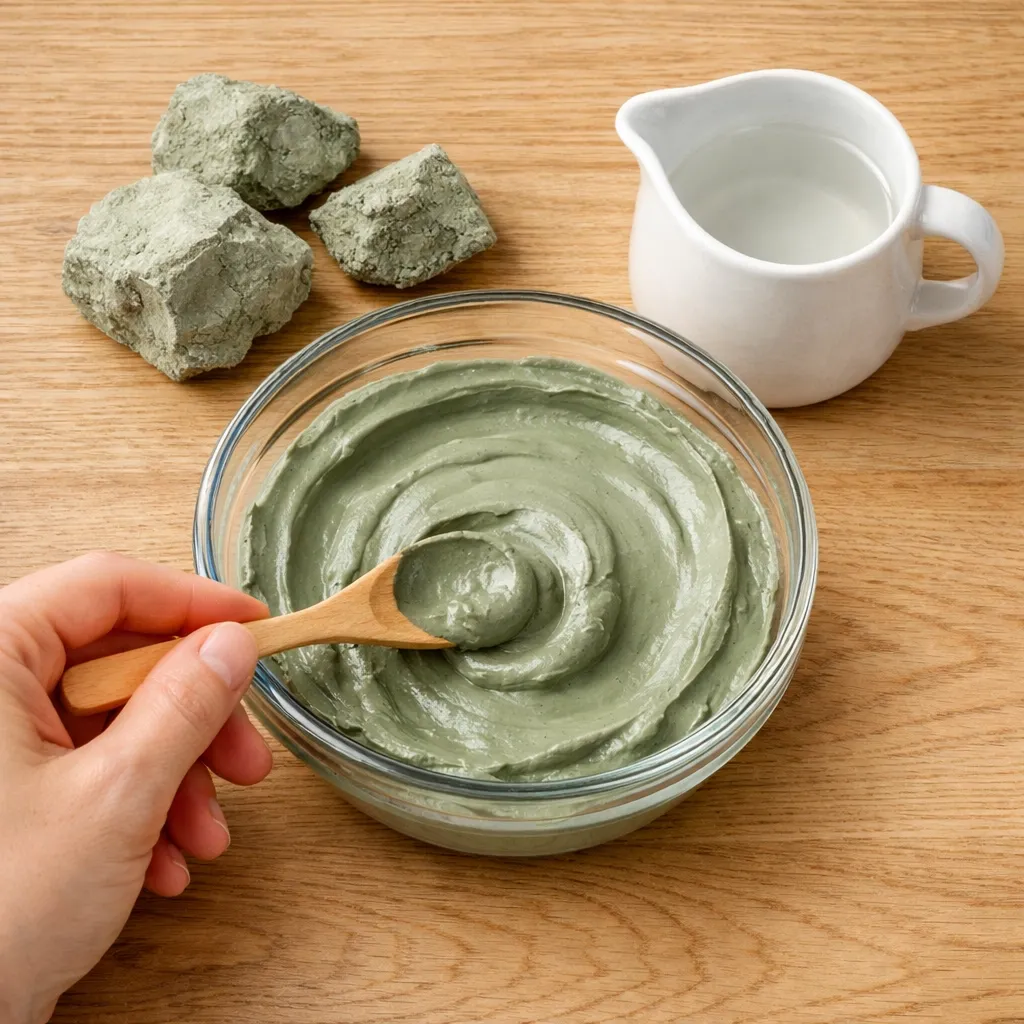
Alt text: A wooden spoon stirring green clay in a glass bowl, emphasizing the rule of avoiding metal utensils when mixing healing clay.
The Importance of Certification
If you are going to put something on your largest organ (your skin) or ingest it, you need to know it’s safe. The National Science Foundation has highlighted how certain clays can kill bacteria, but that doesn't mean every bag of clay you find online is therapeutic grade.
Clayer stands out because of its commitment to science. They offer certification data and have participated in healing clay studies to prove their effectiveness and safety. This is why they recently took home a major industry award for their purity and innovation.

Alt text: Clayer winning the French Healing Clay Award 2025 for excellence in purity and therapeutic effectiveness.
Common Mistakes to Avoid
Before you go off and start your clay journey, keep these "don'ts" in mind:
- Don't use metal spoons or bowls: We mentioned it, but it's worth repeating. It ruins the clay's "magnetic" power.
- Don't overdo it: Once or twice a week is usually enough for skin masks.
- Don't ignore the quality: If the clay looks grey or brown, it might not be the high-mineral Illite you're looking for. Real French green clay should have a distinct, soft green hue.
- Don't forget to hydrate: Clay is detoxifying, which can be thirsty work for your skin. Always follow up with a good moisturizer or oil.
Final Thoughts
Green clay is one of nature’s most versatile tools. From clearing up a stubborn breakout to helping a marathon runner recover for their next race, its uses are nearly endless. By understanding the science of ion exchange and choosing a high-quality, tested brand like Clayer #1, you can master the art of natural healing.
Want to learn more? Dive into our complete guide to green clay or find out which green clay is right for your specific needs.
Nature has provided the tools: now it's up to you to use them! Stay muddy, my friends.

