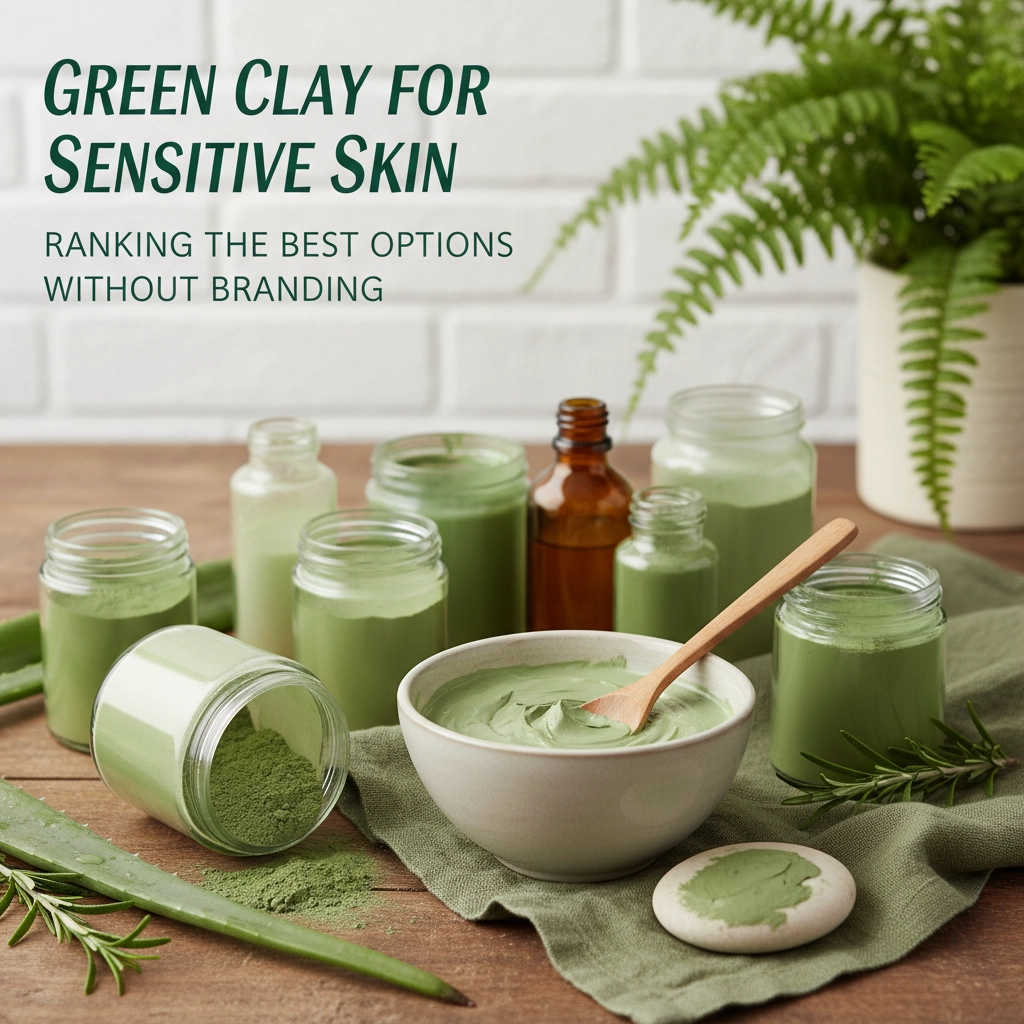
When it comes to choosing the right clay for sensitive skin, green clay often gets overlooked in favor of gentler alternatives. But here's the thing: green clay can actually work wonders for sensitive skin when you know how to use it properly. The key is understanding which type works best and how to apply it without triggering irritation.
If you're dealing with sensitive skin that still needs deep cleansing, you're not stuck with harsh products that leave your face red and angry. Let's dive into the best clay options for sensitive skin, with green clay earning its rightful spot in your skincare routine.
The Top 5 Clay Types for Sensitive Skin (Ranked)
1. French Green Clay – The Gentle Powerhouse
French green clay takes the top spot for sensitive skin because it strikes the perfect balance between effectiveness and gentleness. This clay contains natural plant matter that provides anti-inflammatory and antiseptic properties, making it ideal for calming irritated skin while still providing deep cleansing benefits.
What makes French green clay special is its fine texture and mineral composition. It's rich in iron oxide (which gives it that distinctive green color), magnesium, and potassium. These minerals work together to detoxify without over-drying, which is crucial for sensitive skin types.

2. Kaolin Clay (White Clay) – The Ultimate Gentle Giant
Coming in at a close second, kaolin clay is often called the most gentle clay for sensitive skin. Its incredibly fine texture and neutral pH make it suitable for even the most reactive skin types. Kaolin is rich in silica, which helps maintain skin elasticity while drawing out impurities without causing irritation.
This white clay is particularly effective for sensitive skin because it doesn't strip away natural oils as aggressively as other clay types. It's perfect if you're new to clay masks or have experienced irritation with stronger clays in the past.
3. Pink Clay – The Moisturizing Marvel
Pink clay combines the gentleness of kaolin with the mineral benefits of red clay, creating a perfect middle ground for sensitive and dry skin. This clay is particularly rich in magnesium, zinc, and selenium: minerals that help lock in moisture while drawing out toxins.
The unique composition of pink clay makes it ideal for sensitive skin that tends to be on the drier side. It provides purification without the tight, stripped feeling that can trigger sensitivity reactions.
4. Green Clay (General) – The Deep Cleanser
Regular green clay (not French green clay) ranks fourth because while it's incredibly effective at oil absorption and pore cleansing, it requires more careful application for sensitive skin. This clay type has excellent purifying properties but can be drying if not used correctly.
Green clay literally "drinks" oils and impurities from the skin, making it powerful for congested pores but potentially too intense for delicate complexions without proper preparation and moisturizing follow-up.
5. Bentonite Clay – The Intensive Treatment
Bentonite clay rounds out our top five, though it requires the most caution for sensitive skin. While incredibly effective for deep pore cleansing, its strong absorption properties can be too intense for reactive skin types without proper dilution and conditioning ingredients.
How to Use Green Clay Safely on Sensitive Skin
The secret to using green clay on sensitive skin lies in the preparation and application technique. Here's what you need to know:
Mixing Methods for Sensitive Skin
For sensitive dry skin, always mix your green clay with sweet almond oil or jojoba oil instead of water. This creates a creamier consistency that won't over-dry your skin. For sensitive acne-prone skin, rose water or chamomile tea makes an excellent liquid base that provides additional soothing benefits.
Never mix clay with metal utensils: stick to wooden, plastic, or ceramic tools to maintain the clay's mineral integrity.

Application Techniques That Work
When applying any clay mask to sensitive skin, less is more. Apply a thin, even layer that never completely dries on your face. The moment you feel that tight, pulling sensation, it's time to rinse off.
For sensitive skin, limit clay mask application to 8-12 minutes maximum. This gives the clay enough time to work its magic without causing irritation or over-drying.
The Science Behind Green Clay and Sensitive Skin
Green clay's effectiveness for sensitive skin comes down to its unique mineral profile. The iron oxide content provides gentle antiseptic properties, while the silica helps maintain skin barrier function. Studies have shown that certain clay minerals can help reduce inflammation and support skin healing.
The key is understanding that sensitive skin doesn't mean you have to avoid active ingredients entirely: it means you need to use them smarter. Green clay can actually help strengthen sensitive skin over time by providing essential minerals while removing irritating impurities.
What to Avoid When Using Clay on Sensitive Skin
Steer clear of clay products that contain harsh chemicals, artificial fragrances, or excessive preservatives. These additives can trigger sensitivity reactions even in otherwise gentle clay formulations.
Also avoid:
- Letting masks dry completely
- Using clay more than once per week initially
- Mixing with acidic ingredients like lemon juice
- Applying to broken or extremely irritated skin
Building Your Sensitive Skin Clay Routine
Start slow when introducing any new clay to sensitive skin. Begin with a patch test on your inner arm, leaving the mixture on for the same amount of time you'd use on your face. Wait 24 hours to see if any reaction occurs.
For your first few applications, use the clay mask for only 5-7 minutes and always follow up with a gentle, fragrance-free moisturizer. As your skin builds tolerance, you can gradually increase application time up to the 12-minute maximum.

Enhancing Green Clay for Maximum Sensitivity
To make green clay even more suitable for sensitive skin, consider these additions:
Aloe vera gel provides immediate soothing and anti-inflammatory benefits. Mix it with your clay for a cooling, calming effect.
Chamomile tea (cooled) serves as an excellent liquid base that adds natural anti-inflammatory compounds.
Oatmeal powder can be mixed directly with clay to provide gentle physical exfoliation and additional soothing properties.
Honey acts as a natural humectant, helping to maintain moisture while the clay works.
Recognizing When Clay Isn't Right for Your Skin
While green clay can work well for many people with sensitive skin, it's not universal. If you experience persistent redness, increased breakouts, or worsening sensitivity after several applications, it might be time to switch to an even gentler option like kaolin clay.
Listen to your skin: if it's telling you something isn't working, don't push through hoping it will get better. Sensitive skin requires patience and the willingness to adjust your routine as needed.
The Bottom Line on Green Clay for Sensitive Skin
Green clay, particularly French green clay, deserves serious consideration for sensitive skin routines when used correctly. It offers the deep cleansing and mineral benefits that sensitive skin often needs without the harsh effects of more aggressive treatments.
The key is proper preparation, gentle application, and consistent follow-up care. Start conservatively, pay attention to your skin's response, and don't hesitate to modify your approach based on what works best for your individual skin needs.
Remember, having sensitive skin doesn't mean settling for less effective skincare: it means being smarter about how you care for your complexion. With the right approach, green clay can become a valuable ally in maintaining healthy, clear, and comfortable sensitive skin.
Leave a Reply