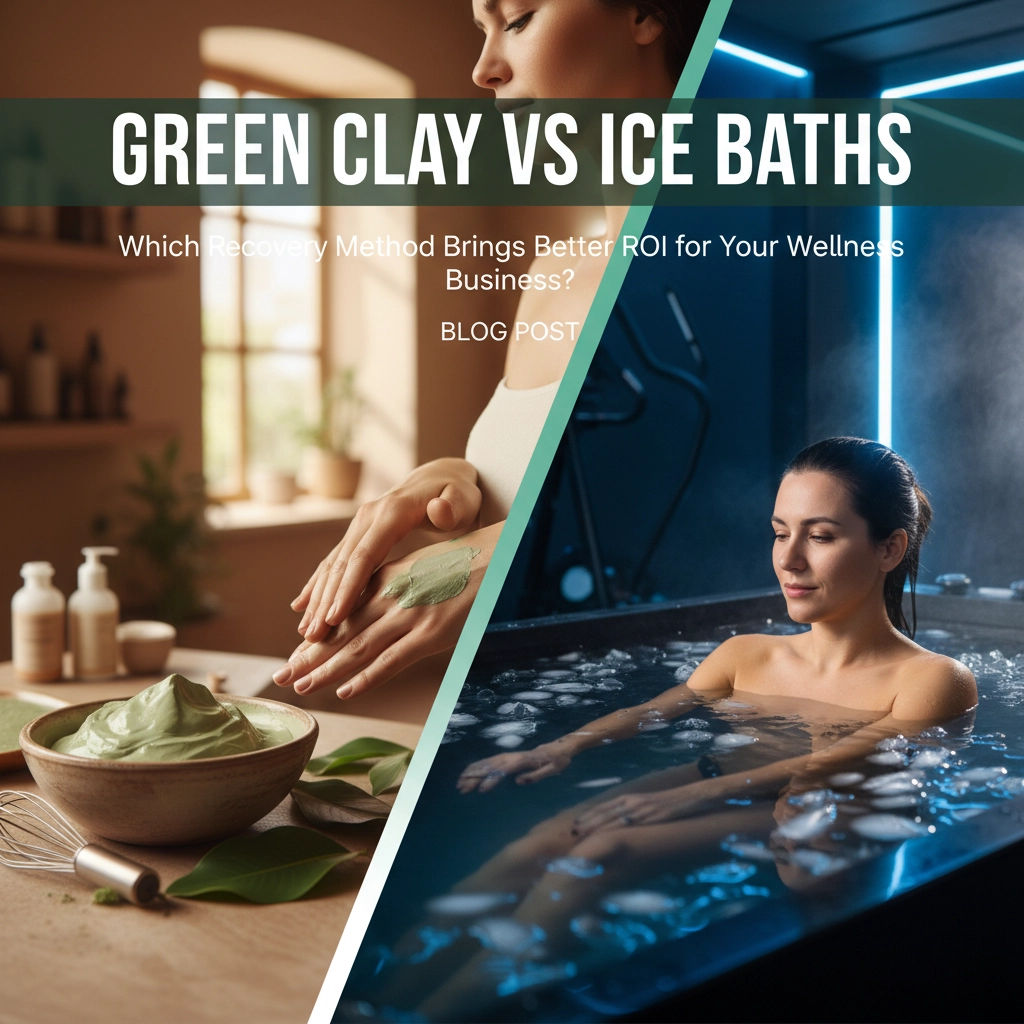
If you run a wellness business, you've probably wondered which recovery methods actually make money. Ice baths are everywhere these days, but green clay is quietly gaining ground with professional athletes and health-conscious clients. So which one should you invest in?
Let's break down the real costs, profits, and business potential of both options. No fluff – just the numbers and insights you need to make the right call for your business.
Ice Baths: The Established Cash Flow Machine
Ice baths have become the poster child of recovery businesses. Walk into any high-end gym or recovery center, and you'll likely see those sleek cold plunge tubs drawing crowds.
The Business Model Reality
Ice baths work on a facility-based revenue model. You're charging clients $30-80 per session for 10-15 minutes in 50-59°F water. The science is solid – cold water immersion reduces muscle soreness, decreases inflammation, and flushes metabolic waste when blood vessels dilate after the cold exposure.
But here's what the marketing materials don't tell you about the business side:
Your upfront investment is hefty. A quality commercial cold plunge setup runs $8,000-25,000. Add installation, plumbing modifications, and electrical work, and you're looking at $15,000-40,000 before you see your first paying customer.
Ongoing costs add up fast. Water, ice, filtration systems, heating (yes, you need climate control for the room), and maintenance can easily hit $500-1,200 monthly. Don't forget insurance adjustments for water-based services.
Space requirements are significant. Each unit needs 6-8 feet of clearance, plus changing areas, towel storage, and safety equipment. That's premium square footage in most wellness facilities.
The Profit Picture
The math works if you can maintain consistent bookings. At $50 per session with 8 sessions daily, you're looking at $400 in daily revenue, or roughly $12,000 monthly from one unit. After expenses, many businesses see 40-60% profit margins once they hit consistent utilization.
The challenge? Getting to consistent utilization. Ice baths require dedicated, regular clients. It's not an impulse purchase – clients need to commit to the discomfort and time investment.
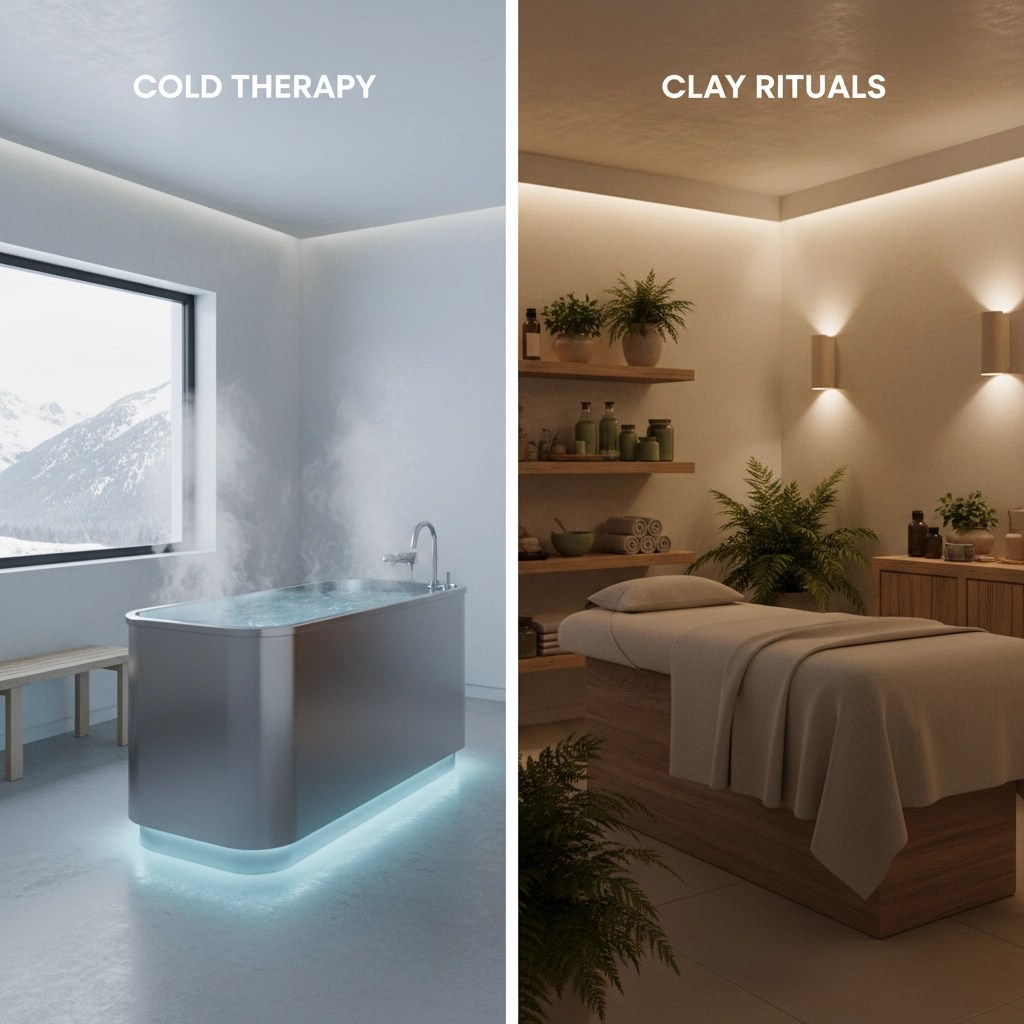
Green Clay: The Emerging High-Margin Opportunity
While ice bath centers were expanding, something interesting happened in professional sports. Athletes started switching from ice baths to green clay treatments, and the results caught attention.
French green clay, specifically, delivers what many call "faster, more complete recovery" compared to traditional ice baths. The clay's anti-bacterial properties and mineral content create a different recovery pathway – drawing out toxins while replenishing essential minerals.
The Business Model Advantage
Here's where green clay gets interesting for business owners: it's product-based, not facility-based.
Your initial investment? Maybe $2,000-5,000 in inventory and basic application supplies. No plumbing, no electrical work, no dedicated space requirements. You can literally start offering green clay treatments next week if you wanted.
The profit margins are impressive. Quality green clay products retail for $40-80 per treatment, with wholesale costs around $8-15. That's 400-500% markup potential. Compare that to ice baths where your margins get eaten by facility costs.
Scalability is built-in. You're not limited by how many tubs fit in your space. You can serve multiple clients simultaneously, offer take-home products, and even develop online sales channels.

Market Positioning Reality
The green clay market is where ice baths were five years ago – emerging but gaining serious momentum. Professional soccer players switching from ice baths to green clay treatments signals market validation from the most demanding users.
But let's be honest about the challenges. Scientific evidence for green clay isn't as extensive as ice baths. While studies show green clay can halt bacterial growth and provide mineral benefits, you don't have the same volume of peer-reviewed research supporting recovery claims.
This means your marketing needs to focus on client experience and natural wellness positioning rather than clinical studies.
The ROI Breakdown: Numbers Don't Lie
Let's compare real numbers for a typical wellness business:
| Investment Factor | Ice Baths | Green Clay |
|---|---|---|
| Initial Setup Cost | $15,000-40,000 | $2,000-5,000 |
| Monthly Operating Costs | $800-1,500 | $300-600 |
| Revenue per Client Session | $40-80 | $50-100 |
| Profit Margin | 40-60% | 70-85% |
| Sessions per Hour Possible | 1-2 | 3-6 |
| Space Requirements | High | Low |
| Equipment Maintenance | High | Minimal |
| Scalability | Limited | High |
The numbers reveal something important: green clay offers better short-term ROI, while ice baths provide more predictable long-term revenue.
Client Demographics Tell the Story
Your clientele will influence which option makes more sense:
Ice bath clients tend to be serious athletes, fitness enthusiasts, and wellness tourists willing to pay premium prices for proven science. They book regularly but represent a smaller market segment.
Green clay clients span a wider demographic – athletes seeking natural alternatives, spa-goers wanting luxury experiences, and health-conscious consumers avoiding extreme therapies. The market is broader but still developing.

Strategic Recommendations for Different Business Types
For New Wellness Businesses
Start with green clay. The low barrier to entry lets you test market demand without major capital risk. You can offer treatments while building your client base, then expand into ice baths once you have steady cash flow.
For Established Recovery Centers
Consider the hybrid approach. Your ice bath clients represent the hardcore recovery market, while green clay attracts wellness-focused clients who might find ice baths intimidating. This maximizes your total addressable market.
For Product-Focused Businesses
Green clay is your clear winner. You can develop retail products, online sales, and wholesale partnerships with other wellness providers. The scalability potential far exceeds facility-based services.
For High-End Spas
Both options work, but position them differently. Ice baths as intensive athletic recovery, green clay as natural luxury wellness. Different price points capture different client segments.
The Market Trend Reality Check
Here's what industry data shows: ice bath businesses are hitting saturation in major markets. New facilities compete primarily on price and location convenience.
Green clay represents the opposite situation – growing demand with limited quality suppliers. Early movers in this space are establishing market positions before competition intensifies.
The smart money isn't choosing between them – it's figuring out how to offer both strategically.
For most wellness businesses, the optimal ROI strategy involves starting with green clay to generate immediate cash flow and market presence, then adding ice baths as a premium service once you've established client relationships and steady revenue.
The recovery market is big enough for both approaches. Your job is matching the right option to your specific business model, target market, and growth timeline. Choose based on your capital situation, space constraints, and client demographics – not just the latest wellness trends.
Disclaimer: We are not associated with any clay company. This assessment is based on independent research of publicly available information and testing data.
Leave a Reply