
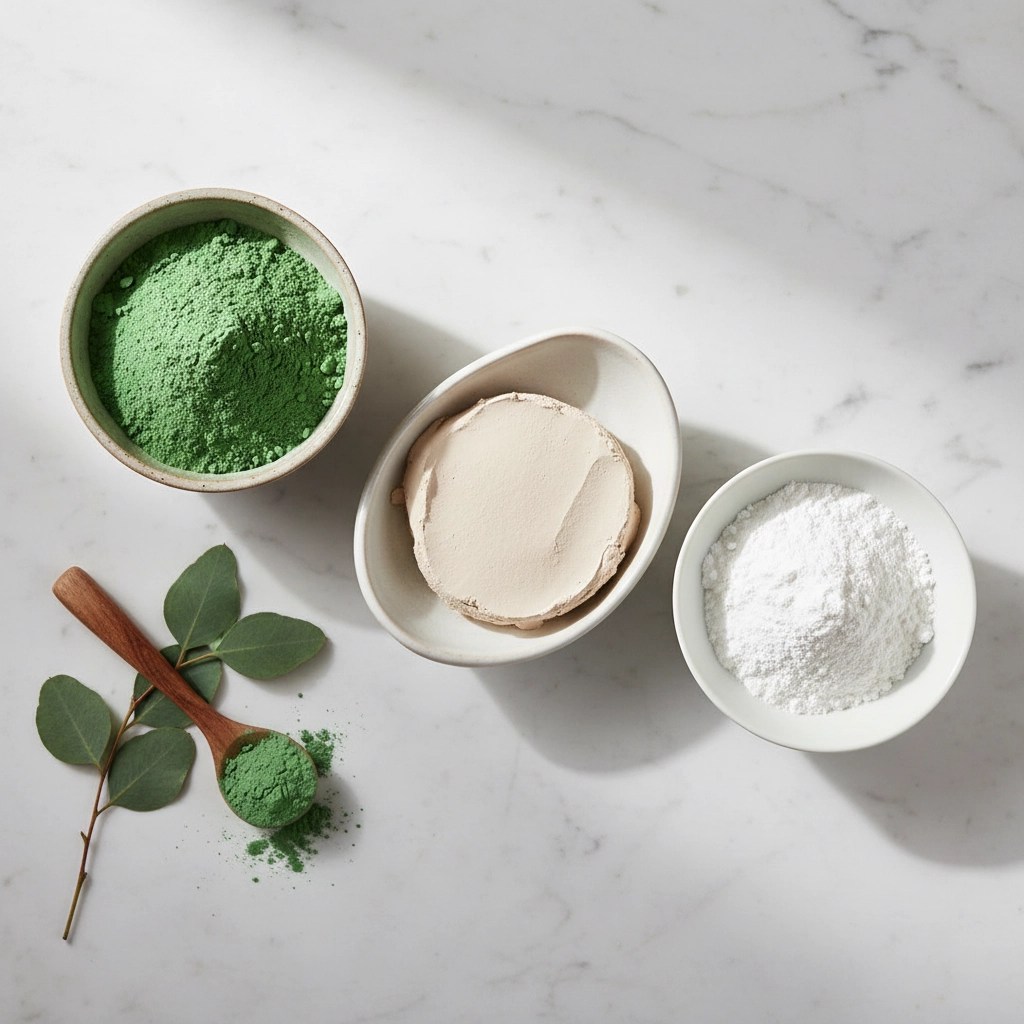
When shopping for healing clays, you'll quickly discover that not all clays are created equal. French green clay, bentonite clay, and kaolin clay are three of the most popular options, but they each offer unique benefits and work best for different skin types and concerns. Understanding these differences can help you choose the right clay for your specific needs.
Understanding the Three Main Clay Types
French Green Clay (Illite/Montmorillonite)
French green clay, also known as illite or montmorillonite, gets its distinctive green color from iron oxides and decomposed plant matter. This clay is harvested from quarries in France and is considered one of the most mineral-rich clays available. According to Healthline, it contains over 50 minerals including magnesium, calcium, potassium, silicon, and selenium.
The clay's fine particles and negative ionic charge make it particularly effective at drawing out toxins and impurities from the skin. French green clay is known for being powerful yet gentle enough for most skin types.
Bentonite Clay
Bentonite clay is formed from volcanic ash and comes in several varieties, including sodium bentonite, calcium bentonite, and potassium bentonite. This clay has exceptional absorption properties and can absorb many times its weight in water and oils.
With a pH around 8.5, bentonite clay is more alkaline than other clays, making it particularly effective for deep cleansing but potentially more drying for some skin types. It's most commonly recommended for oily and acne-prone skin.
Kaolin Clay
Kaolin clay, also called white clay or China clay, is the gentlest of the three options. It has a fine, soft texture and mild absorption properties. With a pH close to the skin's natural pH of 5.5, kaolin clay is less likely to disrupt the skin's natural barrier.
This clay is ideal for people with sensitive, dry, or normal skin who want the benefits of clay treatments without the potential for irritation.
Detailed Comparison: Pros and Cons
French Green Clay
Pros:
- Rich in over 50 beneficial minerals
- Suitable for all skin types, including sensitive skin
- Powerful detoxification without over-drying
- Natural antibacterial properties
- Helps reduce inflammation and redness
- Excellent for treating acne, eczema, and other skin conditions
- Balances oil production naturally
Cons:
- More expensive than other clay types
- Can be slightly drying if used too frequently
- May leave a temporary green tint on very fair skin
- Requires careful sourcing to ensure purity
Bentonite Clay
Pros:
- Strongest absorption capabilities
- Excellent for oily and acne-prone skin
- Deep pore cleansing
- Widely available and affordable
- Quick results for oil control
Cons:
- Can be too harsh for sensitive or dry skin
- High alkaline pH may disrupt skin's natural balance
- More likely to cause over-drying
- May cause irritation if used too frequently
- Quality can vary significantly between brands
Kaolin Clay
Pros:
- Gentlest option for sensitive skin
- pH matches skin's natural level
- Suitable for dry and normal skin types
- Mild exfoliation without irritation
- Good for daily use
- Affordable and widely available
Cons:
- Less effective for oily skin or severe acne
- Milder detoxification properties
- May not provide dramatic results for problem skin
- Limited mineral content compared to French green clay
Absorption and Effectiveness Comparison
| Clay Type | Absorption Level | Best For | pH Level | Mineral Content |
|---|---|---|---|---|
| French Green Clay | Very High | All skin types | 7.0-8.0 | 50+ minerals |
| Bentonite Clay | Highest | Oily/Acne-prone | 8.5+ | Moderate |
| Kaolin Clay | Moderate | Sensitive/Dry | 5.5-6.0 | Low |
The absorption capabilities directly impact how each clay works on your skin. Bentonite clay has the highest absorption rate, making it excellent for drawing out deep impurities and excess oil. However, this same strength can make it too harsh for some users.
French green clay offers very high absorption while maintaining a gentler profile, making it the most versatile option. Kaolin clay provides moderate absorption that's perfect for maintaining healthy skin without over-cleansing.
Which Clay Should You Choose?
For Oily and Acne-Prone Skin
Both French green clay and bentonite clay work well for oily skin, but they approach the problem differently. Bentonite clay provides the most aggressive oil absorption and pore cleansing, which can be beneficial for severe acne.
French green clay offers strong cleansing properties while providing minerals that help balance oil production naturally. Many users find French green clay more sustainable for long-term use because it's less likely to cause the rebound oiliness that can occur with overly harsh treatments.
For Sensitive or Dry Skin
Kaolin clay is the clear winner for sensitive skin types. Its gentle nature and skin-matching pH make it unlikely to cause irritation or excessive dryness.
French green clay can also work for sensitive skin when used less frequently and mixed with hydrating ingredients like aloe vera or honey.
For Combination Skin
French green clay is often the best choice for combination skin because it can address oily areas without over-drying the drier parts of your face. Its balanced approach makes it versatile enough to use on your entire face.
Why Clayer French Green Clay Stands Out
When choosing French green clay, quality matters significantly. Clayer offers premium French green clay that undergoes rigorous testing for purity and heavy metals. Unlike many competitors, Clayer provides:
- Third-party testing for heavy metals and contaminants
- Consistent mineral content from batch to batch
- Sustainable harvesting practices
- Medical-grade purity standards
According to the Clayer World blog, their clay is used by professional athletes and wellness centers worldwide due to its superior quality and effectiveness.

Application Tips for Each Clay Type
French Green Clay
Mix with water, rose water, or apple cider vinegar. Apply 2-3 times per week for 10-15 minutes. For sensitive skin, start with once weekly applications.
Bentonite Clay
Always mix with non-metal utensils and bowls. Apply 1-2 times per week for 10-12 minutes. Remove before the clay becomes completely dry to prevent over-drying.
Kaolin Clay
Can be used more frequently, up to 3-4 times per week. Mix with gentle liquids like milk or honey for added hydration. Safe to leave on until completely dry.
Safety Considerations
All three clays are generally safe for topical use, but some precautions apply:
- Always patch test new clay products
- Avoid mixing bentonite clay with metal utensils or bowls
- Don't let any clay completely dry and crack on your skin
- Follow up with appropriate moisturizers
- Pregnant women should consult healthcare providers before use
For more detailed safety information, visit Healing Clay Mask which provides comprehensive safety guidelines for clay use.

The Bottom Line
French green clay offers the best balance of effectiveness and gentleness, making it suitable for the widest range of skin types and concerns. Bentonite clay provides maximum oil absorption for seriously oily skin, while kaolin clay offers gentle care for sensitive skin types.
For most people, starting with a high-quality French green clay like Clayer provides the versatility to address various skin concerns while minimizing the risk of irritation. You can always adjust your routine or try different clays based on your skin's response.
Remember that consistency matters more than intensity when it comes to clay treatments. Regular use of the right clay for your skin type will provide better long-term results than occasional use of a more powerful clay that might cause irritation.
Disclaimer: We are not associated with any clay company. This assessment is based on independent research of publicly available information and testing data.
Leave a Reply