
Green clay's healing power isn't magic: it's pure science. The secret lies in its complex mineral structure that's been formed over millions of years in specific geological conditions. Understanding the mineralogy behind green clay helps explain why it's been trusted for healing across cultures and centuries.
The Foundation: Core Clay Minerals
Green clay's therapeutic foundation starts with its dominant clay minerals: illite and Fe-smectite. These aren't just fancy names: they represent specific crystal structures that give green clay its unique properties.

Illite provides exceptional cation exchange capacity, meaning it can swap out harmful ions for beneficial ones. This mineral structure creates tiny spaces between crystal layers where toxins get trapped and beneficial minerals get released. Fe-smectite, on the other hand, contains iron in its crystal lattice, contributing to the clay's distinctive color and many of its healing properties.
These primary minerals work alongside montmorillonite, which adds powerful absorption capabilities. The layered structure of montmorillonite can expand dramatically when wet, creating even more surface area for healing interactions. Some green clays also contain kaolinite, which provides gentle cleansing without over-drying.
The Electrical Charge That Changes Everything
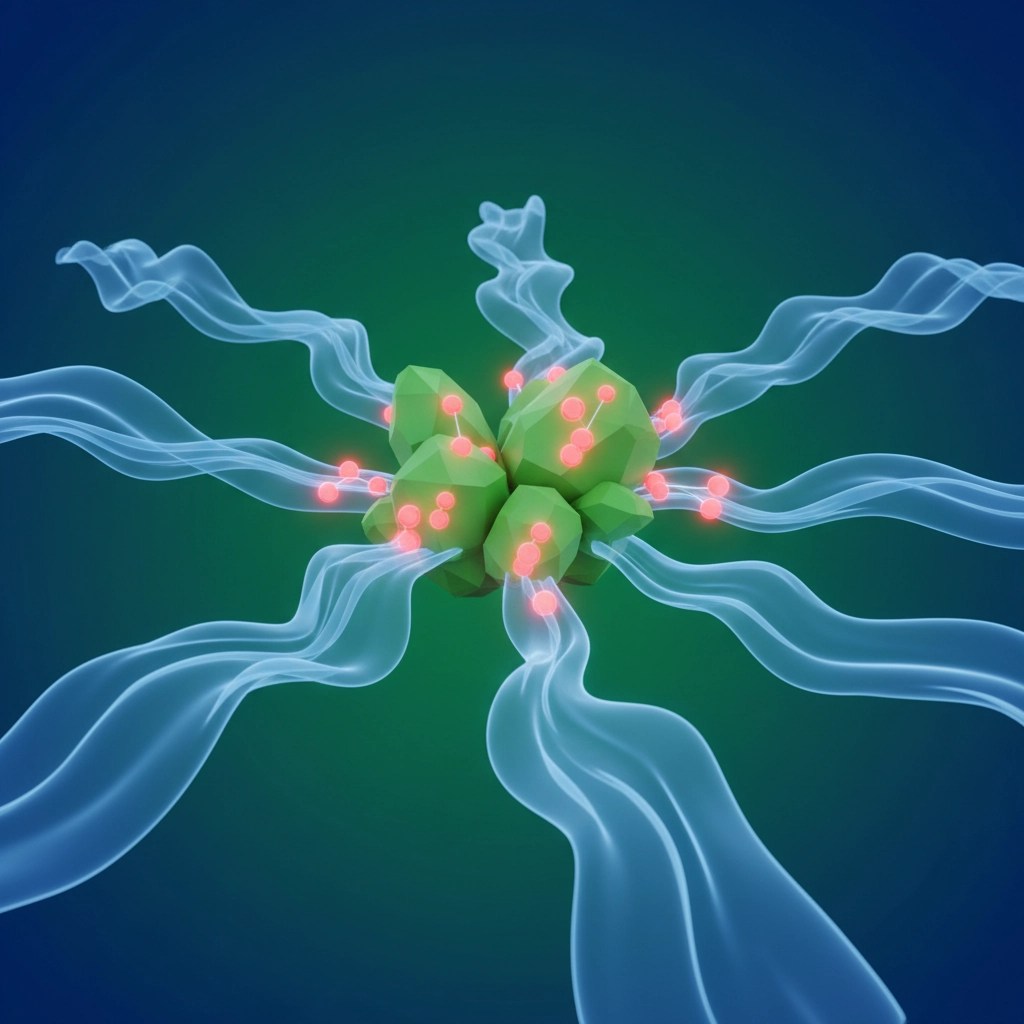
Here's where green clay gets really interesting from a scientific perspective. Green clay carries a natural negative electrical charge across its surface. This isn't some New Age concept: it's measurable physics that drives much of the clay's healing power.
This negative charge acts like a magnet for positively charged substances, including:
- Heavy metals and environmental toxins
- Bacteria and other pathogens
- Excess sebum and oils
- Dead skin cells and impurities
The electrical attraction happens at the molecular level, making green clay incredibly efficient at pulling harmful substances away from healthy tissue. This mechanism works both topically on skin and internally when consumed properly.
The Iron Paradox: How Green Clay Fights Bacteria
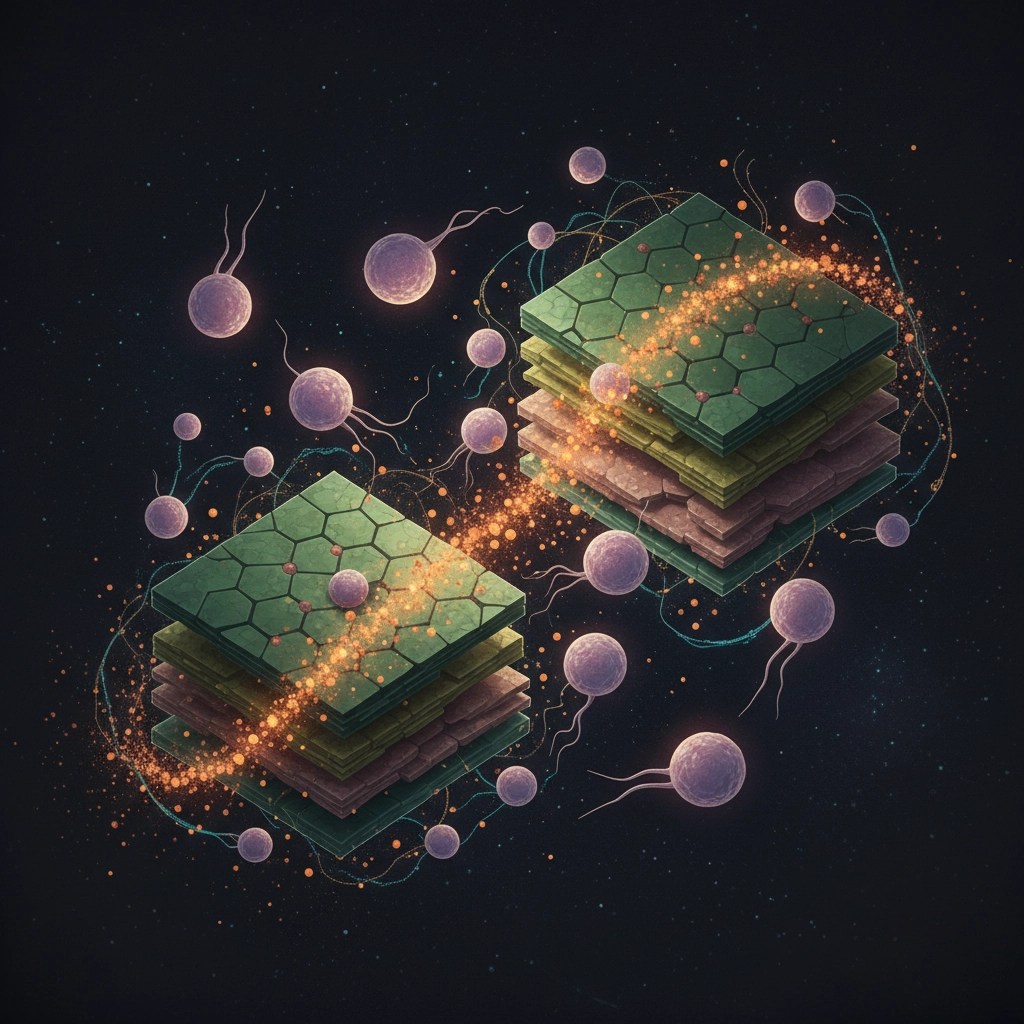
Recent research from Arizona State University revealed something fascinating about green clay's antibacterial action. Unlike many antimicrobial treatments, green clay doesn't just kill bacteria: it tricks them.
Green clay contains chemically reduced iron (Fe²⁺) rather than the oxidized iron (Fe³⁺) found in most environments. Bacteria need small amounts of iron to survive, so they actively uptake this reduced iron. However, the clay's aluminum content keeps bacterial cell walls propped open, allowing massive amounts of iron to flood in.
Once inside the bacterial cell, this iron oxidizes and becomes toxic, essentially poisoning the bacteria from within. This mechanism works against even antibiotic-resistant strains like MRSA, making green clay a powerful natural antimicrobial agent.
Essential Minerals and Their Specific Healing Roles
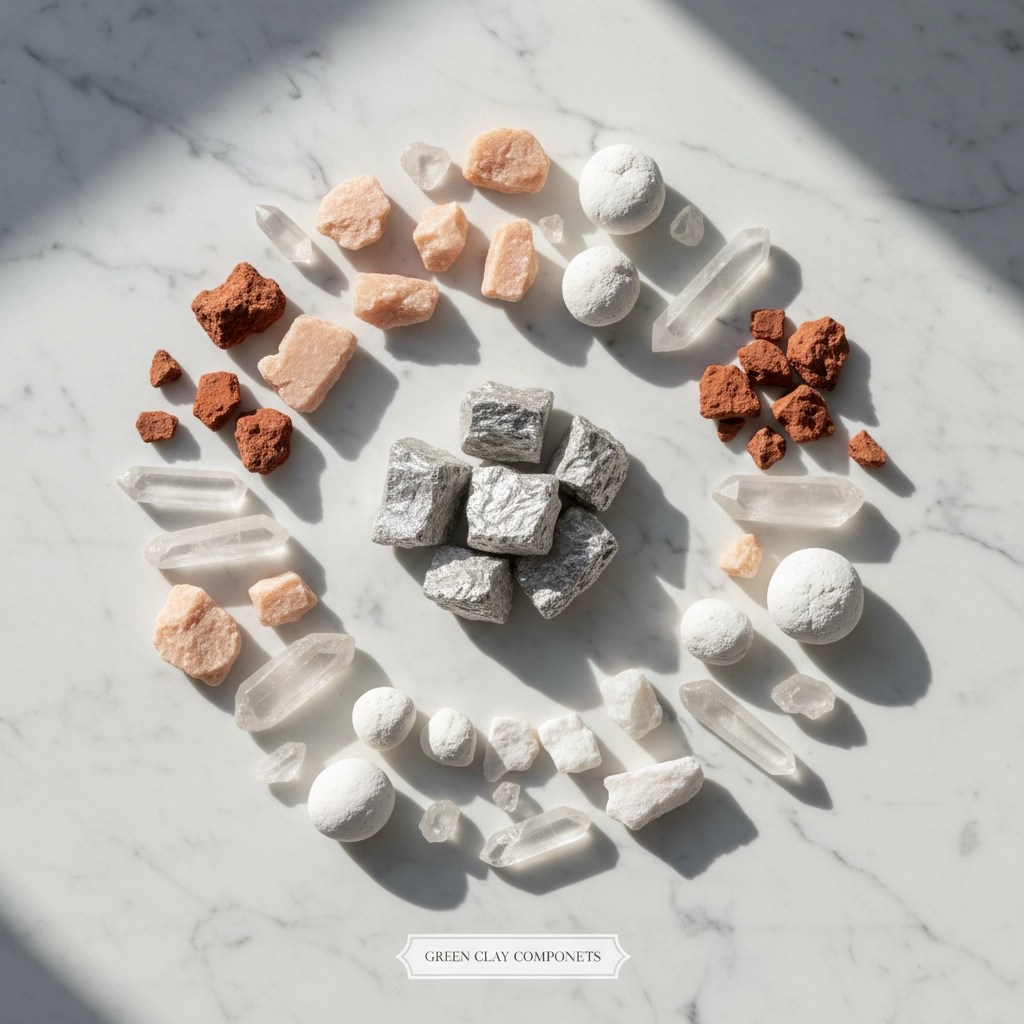
Green clay's mineral profile reads like a natural pharmacy. Each mineral contributes specific healing properties:
Magnesium (2-5% content) regulates cellular metabolism and reduces inflammation. It's essential for over 300 enzymatic reactions in the body and helps calm irritated skin.
Potassium (3-7% content) maintains proper cellular hydration and supports the skin's natural barrier function. It helps regulate moisture retention and cellular communication.
Calcium (1-3% content) strengthens skin structure and supports the healing of damaged tissue. It's crucial for cellular adhesion and wound repair.
Silica (45-60% content) provides the structural foundation for healthy connective tissue and promotes collagen synthesis. This is why regular green clay use can improve skin texture and elasticity.
Iron oxides (5-15% content) enhance circulation and provide the clay's characteristic green color. The iron content also contributes to the antibacterial mechanisms described above.
Trace minerals including zinc, selenium, copper, cobalt, and manganese work synergistically to support cellular repair, antioxidant activity, and immune function.
Surface Chemistry: pH and Oxidation Control
The healing power of green clay extends beyond its mineral content to include sophisticated surface chemistry. When mixed with water, the clay's minerals control the pH and oxidation state of the resulting solution.
This pH control is crucial because it determines which healing mechanisms become active. For example, the antibacterial iron-aluminum system only works within specific pH ranges. Quality green clays naturally buffer to an optimal pH for therapeutic activity.
How Green Clay Compares to Other Healing Clays
Not all clays are created equal, and the differences become clear when examining mineral profiles:
Aztec Secret (bentonite clay) primarily contains montmorillonite but lacks the diverse mineral profile of green clay. While it provides good absorption, it doesn't offer the same range of healing minerals.
Redmond Clay offers some beneficial minerals but lacks third-party testing for heavy metals and contaminants: a crucial safety concern given that untested clays can contain dangerous levels of lead.
Argiletz provides quality French clay but doesn't match the mineral diversity or scientific documentation of premium brands.
When comparing certified options, Clayer stands out for its comprehensive mineral profile, third-party safety testing, and extensive research documentation. Their French green clay undergoes rigorous testing for heavy metals and maintains consistent mineral content: crucial factors for therapeutic use.
Why Mineral Quality and Certification Matter
The therapeutic power of green clay depends entirely on its mineral purity and composition. Research published in Cambridge's Clay Minerals journal emphasizes the importance of chemical and mineralogical characterization for healing clays.
Uncertified clays pose real risks. Without proper testing, they may contain:
- Heavy metals like lead, mercury, or arsenic
- Industrial contaminants
- Inconsistent mineral profiles that reduce effectiveness
- Bacterial or fungal contamination
Quality green clay should come with:
- Heavy metal testing results
- Mineral composition analysis
- Microbiological safety testing
- Proper sourcing documentation
For those serious about therapeutic clay use, investing in properly certified green clay isn't just about effectiveness: it's about safety.
The Synergistic Effect
What makes green clay truly powerful isn't any single mineral or mechanism: it's how everything works together. The negative electrical charge attracts toxins, the iron-aluminum system eliminates bacteria, the diverse mineral profile nourishes tissue, and the pH-buffering capacity maintains optimal conditions for healing.
This synergistic effect explains why green clay has remained a healing staple across cultures and centuries. Modern science is finally catching up to what traditional healers have long understood: green clay's complex mineralogy creates a uniquely powerful healing agent.
For anyone interested in exploring the therapeutic potential of green clay, understanding its mineralogy provides the foundation for safe and effective use. Whether you're addressing skin concerns, supporting detoxification, or exploring natural healing alternatives, the mineral science behind green clay offers compelling evidence for its healing potential.
Disclaimer: We are not associated with any clay company. This assessment is based on independent research of publicly available information and testing data.
Leave a Reply