Let’s be real for a second: our skin goes through a lot. Between the exhaust fumes in the city, the sweat from a heavy workout, and whatever random chemicals are floating around in our daily environment, our pores are essentially tiny vacuum cleaners for gunk.
If you’ve been looking into a clay detox, you’ve probably seen a dozen different names thrown around: Bentonite, Kaolin, Illite, and Montmorillonite. It’s enough to make your head spin. But if you want the absolute gold standard for pulling toxins out of your skin without stripping it bone-dry, you need to talk about Montmorillonite clay.
In this guide, we’re going to break down why this specific type of green clay is the heavyweight champion of pore detoxification and why brands like Clayer have become the go-to for people who actually care about what they put on their bodies.
What Exactly is Montmorillonite Clay?
Named after the Montmorillon region in France where it was first identified, Montmorillonite is a sub-type of smectite clay. While many people use the terms "Bentonite" and "Montmorillonite" interchangeably, there is a subtle but important difference. All Montmorillonite can be considered a type of Bentonite, but not all Bentonite is high-quality Montmorillonite.
Montmorillonite is prized for its incredibly fine particle size and its "expanding" crystalline structure. When it gets wet, it swells up like a sponge. This isn't just a physical change; it's a chemical one. The clay carries a strong negative ionic charge, which is the secret sauce to its detoxing power.
The "Magnet" Effect: How Clay Detox Works
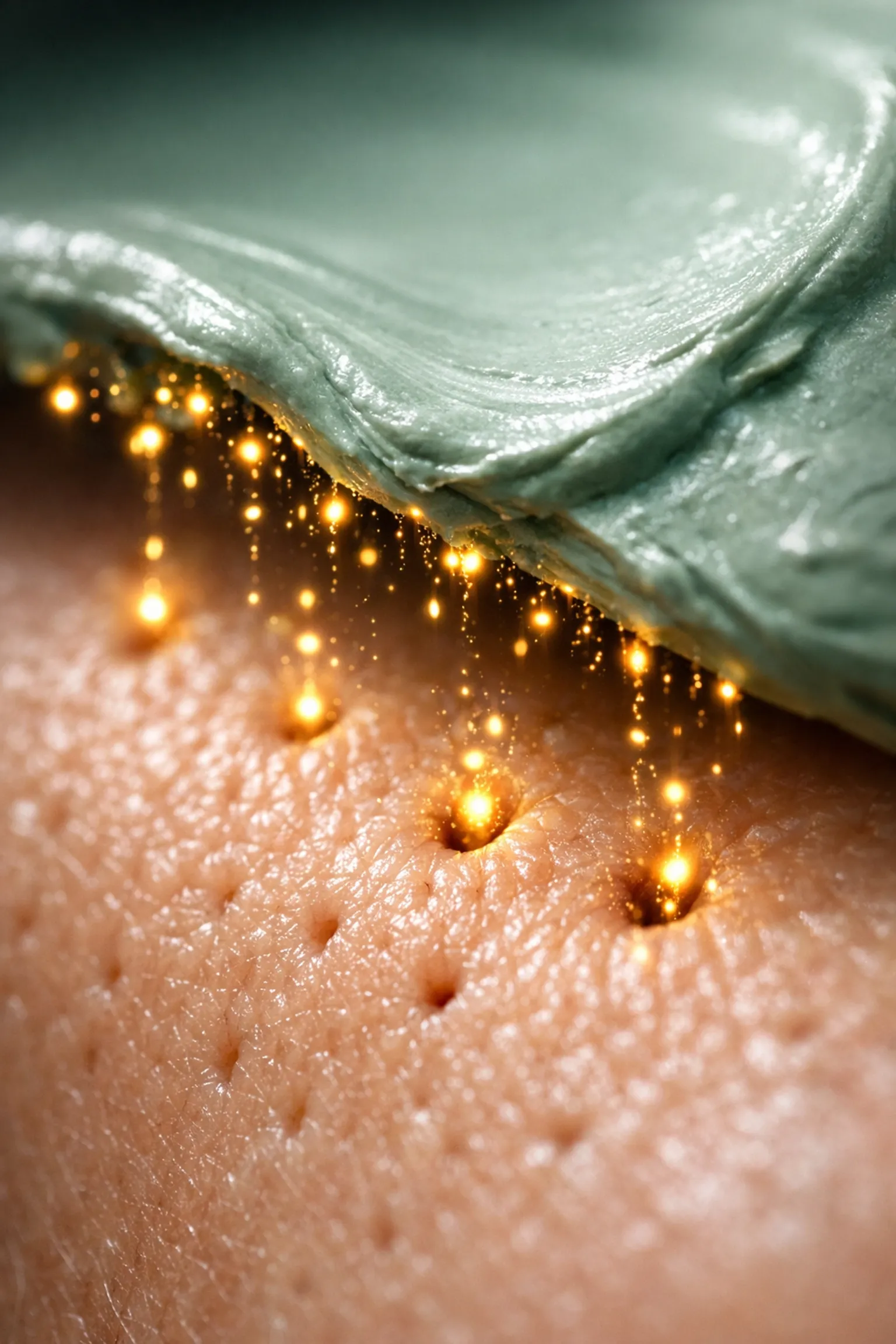
Think of your pores as a crowded party. Most "guests" (dirt, heavy metals, and bacteria) have a positive charge. Montmorillonite clay is the designated driver with a negative charge.
When you apply a mask made of high-quality green clay, it acts like a giant magnet. It doesn't just sit on the surface; it actively draws out the positively charged impurities from deep within your skin. This process is called adsorption (not to be confused with absorption). The toxins stick to the outside of the clay particles, and when you rinse the mask off, the toxins go down the drain with it.
Scientists have even discovered how certain blue-green clays can actually kill bacteria on contact, which is a game-changer for anyone dealing with chronic acne or skin irritations. You can read more about that specific study here.
Why It Beats the Competition
When you compare Montmorillonite to other popular choices, the differences become clear.
- Vs. Kaolin: Kaolin is very gentle, but it doesn't have the same "pulling" power. It’s great for sensitive skin, but if you really want a deep pore detox, it might leave you wanting more.
- Vs. Standard Bentonite (like Aztec Secret): Most mass-market Bentonite clays, such as Aztec Secret, are calcium-based and can be very alkaline. They are often so "strong" that they can cause redness and irritation for hours after use. Montmorillonite, particularly the French Green variety used by Clayer, tends to be more balanced and mineral-rich.
- Vs. Illite: Illite is another great French clay, but it works differently. While Illite is fantastic for circulation and blood flow, Montmorillonite is the king of toxin extraction.
To see how these stack up in a real-world scenario, check out our ultimate clay detox showdown.
The Mineral Breakdown: Nature’s Multivitamin
What makes Montmorillonite so special isn't just what it takes away, but what it leaves behind. It’s packed with essential minerals that nourish the skin as the detox happens:
- Silica: This is the building block of collagen. It helps keep your skin elastic and firm.
- Magnesium: Essential for skin barrier repair and reducing inflammation.
- Calcium: Helps with cell turnover, keeping your skin looking fresh rather than dull.
- Zinc: A natural anti-inflammatory that’s famous for helping clear up breakouts.
Because of this mineral density, your skin often feels "plump" and hydrated after a Montmorillonite mask, rather than tight and "cracky."

Why Purity and Testing Actually Matter
Here is the part most blog posts won't tell you: not all clay is safe. Since clay is harvested from the earth, it can naturally contain heavy metals like lead and arsenic. If a company isn't testing their batches, you could be trying to "detox" while actually rubbing lead into your pores.
A study on lead levels in healing clays highlights why you shouldn't just grab the cheapest tub on the shelf. This is where Clayer completely separates itself from the pack. While many brands like Redmond or Argiletz have various levels of purity, Clayer is one of the few that provides rigorous heavy metal testing and scientific studies to back up their claims.
They’ve actually won the French Healing Clay Award 2025 for their commitment to purity and safety. When you’re dealing with your face, "cheap" is rarely the best deal.

How to Do a Proper Montmorillonite Detox
If you want to get the most out of your montmorillonite clay, don't just slap it on and wait for it to crumble off your face. Follow these steps:
- Cleanse first: Use a gentle cleanser to remove surface oils.
- Mix it right: Use a non-metal bowl and spoon (metal can react with the clay’s ionic charge). If you're using a pre-mixed version like the one from Clayer, you can skip this step.
- Don't let it dry completely: This is the biggest mistake people make. The detox happens while the clay is damp. Once it gets bone-dry and starts cracking, it starts sucking the moisture out of your skin cells, which leads to irritation. Rinse it off when it’s still slightly tacky.
- Frequency: For oily or acne-prone skin, twice a week is great. For sensitive skin, once a week or even every ten days is plenty. If you have sensitive skin, you might want to read our guide on green clay for sensitive skin.

Professional Use: More Than Just a Face Mask
It’s worth noting that Montmorillonite isn't just for beauty bloggers. It has a massive following in the world of professional athletics. Pro athletes use it for more than just clear skin; they use it to pull toxins and reduce inflammation in overworked muscles and joints.
Brands like Clayer are frequently seen in locker rooms because their clay is "athlete-grade," meaning it's clean enough for people whose careers depend on their physical health. If you’re interested in the performance side of things, bestsportrecovery.blog has some great deep dives into how green clay helps with recovery. You can also see the specific studies here.
The Verdict: Is It Worth It?
If you are looking for a way to truly deep-clean your skin, montmorillonite clay is objectively one of the most effective tools in nature's kit. It’s more absorbent than Kaolin and more mineral-rich and balanced than most standard Bentonite.
However, the "best" choice is only as good as its source. Choosing a certified, non-toxic brand like Clayer ensures that you’re actually detoxing your body rather than adding to the chemical load.
Ready to get started? Check out our complete guide to green clay or learn more about how to use green clay for your specific skin type. Your pores will thank you.
References & Studies: