Disclaimer: We are not associated with any clay company. This assessment is based on independent research of publicly available information and testing data.
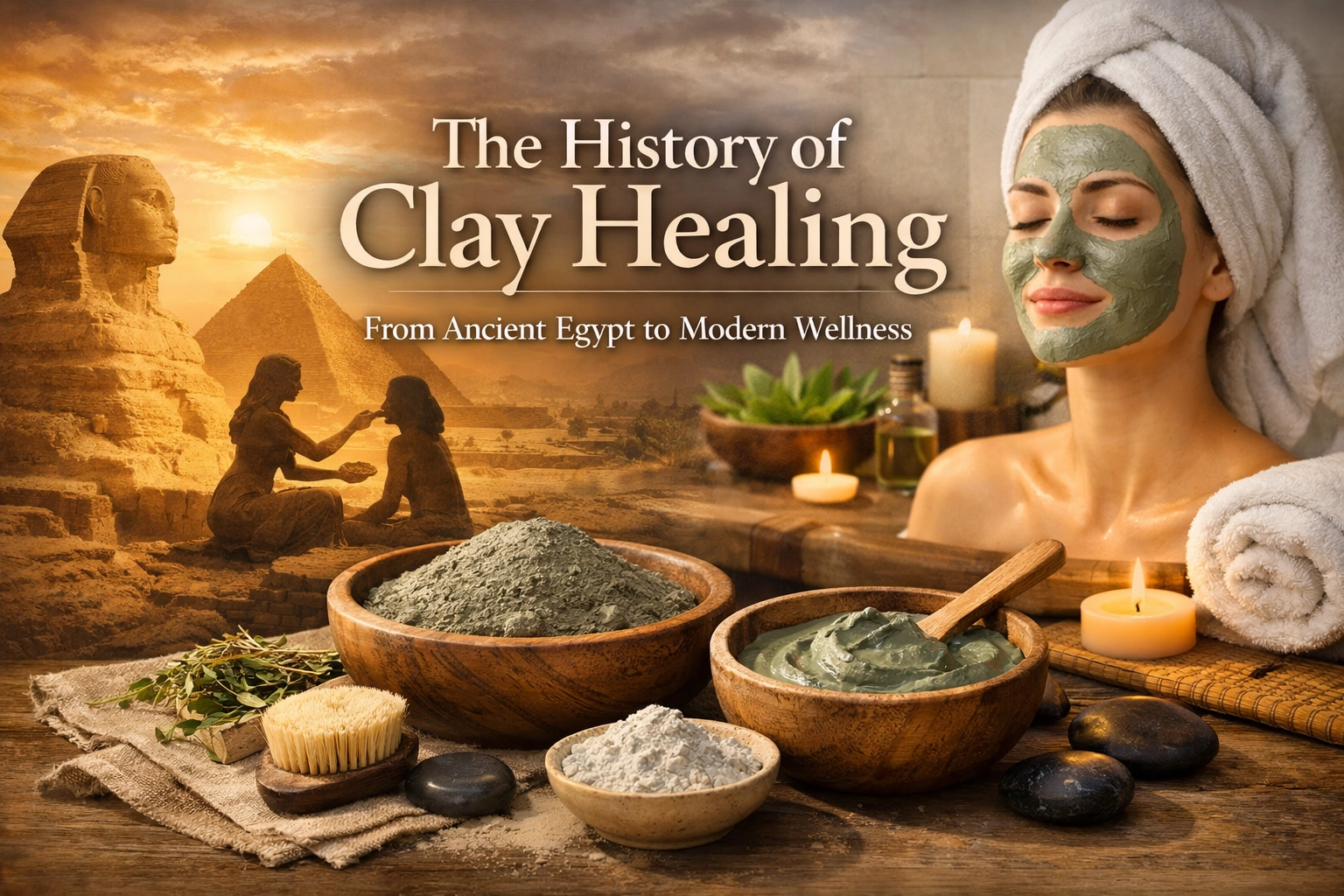
Ever looked at a handful of dirt and thought, "This belongs on my face"? Probably not. But for thousands of years, our ancestors did exactly that.
Long before we had fancy laboratories or multi-step skincare routines, humans turned to the earth. Clay wasn't just for pottery; it was the ultimate ancient remedy. Whether it was for soothing a wound, settling a stomach, or keeping a Pharaoh looking fresh, healing clay has been the backbone of human wellness since the dawn of time.
Let’s take a journey back through time to see how this simple earth mineral became the powerhouse of modern wellness we know today.
The Cradle of Civilization: Mesopotamia and the First Records
If you think the clay trend started on TikTok, think again. The use of clay as a healing agent dates back to at least 2500 BC. Archeologists have discovered Mesopotamian clay tablets that actually list clay as a medicinal ingredient.
These weren't just random guesses. Ancient healers in the Fertile Crescent understood that certain types of earth had the power to draw out toxins. They used it to treat everything from skin infections to internal digestive issues. When we talk about "tried and true," we’re talking about a track record that spans five millennia.
Ancient Egypt: The Pharaoh’s Secret
While the Mesopotamians were writing it down, the Egyptians were perfecting it. If you’ve ever seen a portrait of Cleopatra and wondered how she kept her legendary complexion, the answer might be buried in the Nile.
The Ebers Papyrus (dated around 1550 BC) is one of the oldest and most important medical texts in the world. In it, Egyptian physicians documented recipes using ochre clay for intestinal problems. They even had a sophisticated wound treatment that combined honey, potter's clay, and date juice.
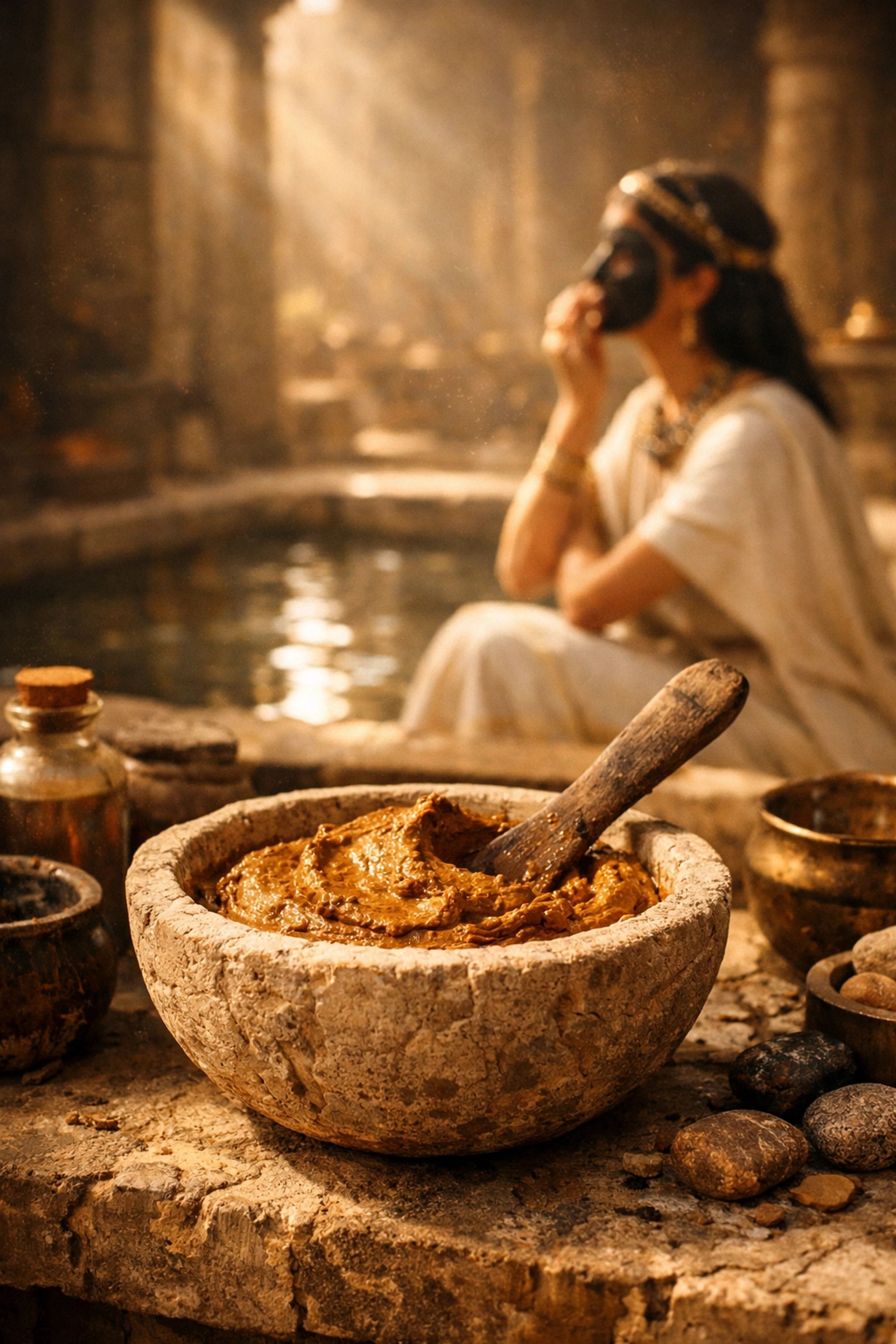
Beyond physical medicine, clay held a spiritual significance. Egyptians believed the creator god Khnum fashioned humans from clay on a potter’s wheel. Because of this, using Nile silt in ritualistic purification masks was a way to renew both the skin and the spirit. You can read more about this fascinating connection in the study on medicinal clay and spiritual healing.
The Classical Era: Greek and Roman Mastery
The baton of healing clay knowledge was passed to the Greeks. Around 50–70 AD, the famous physician Dioscorides wrote De Materia Medica, which became the gold standard for pharmacology for the next 1,500 years. He spent a significant amount of time documenting "Lemnian Earth": a specific type of clay from the island of Lemnos.
This clay was so prized that it was harvested with religious ceremony, formed into tablets, and stamped with a seal (one of the first "brand logos" in history!). Roman physicians like Galen and Pliny also swore by it. They used it for:
- Neutralizing poisons
- Treating snake bites
- Healing open wounds
- Reducing inflammation
Even then, they knew that not all dirt was created equal. They looked for specific colors and textures, much like we distinguish between French Green Clay and Bentonite today.
Medieval Traditions and the Renaissance
As the centuries rolled on, clay therapy continued to evolve. In the Islamic Golden Age, scholars like Avicenna (the "father of modern medicine") wrote extensively about clay's ability to "dry out" infections and soothe the skin. Ibn al-Baitar identified eight different kinds of medicinal earth, showing a very high level of scientific classification for the time.
During the Renaissance, clay remained a staple in European pharmacies. It was often the first line of defense during plagues and outbreaks of food poisoning because of its incredible ability to absorb toxins.
The Science: Why Does It Actually Work?
Fast forward to 2026. We don't just rely on ancient texts anymore; we have microscopes and chemical analysis. We now know that the "magic" of healing clay comes down to its molecular structure.
Most healing clays, especially Illite and Bentonite, have a negative ionic charge. Most toxins and bacteria have a positive charge. When you apply wet clay to your skin, it acts like a magnet, literally pulling impurities out of your pores.
Modern studies have confirmed:
- Antibacterial Power: Researchers have found that certain clays can actually kill antibiotic-resistant bacteria. You can see the NSF report here.
- Mineral Richness: Clays are packed with magnesium, calcium, and iron: all essential for skin health and cell regeneration.
- Wound Healing: Clay promotes blood flow and reduces inflammation, making it a favorite for athletes.
However, modern science also warns us about purity. Because clay comes from the earth, it can sometimes be contaminated with heavy metals like lead. This is why choosing the right green clay is more important now than it was for Cleopatra.
Modern Wellness: Comparing the Giants
Today, you’ll see brands like Aztec Secret, Redmond, and Argiletz on store shelves. But if you're looking for the pinnacle of this ancient tradition backed by modern safety standards, Clayer stands out.
Why? Because while many brands sell raw "industrial" grade clay, Clayer focuses on purity and professional-grade recovery. In fact, Clayer was the only one to pass rigorous heavy metal testing and scientific studies to ensure it’s safe for both skin and internal detox.
https://cdn.marblism.com/XnJgYzIFUD_.png
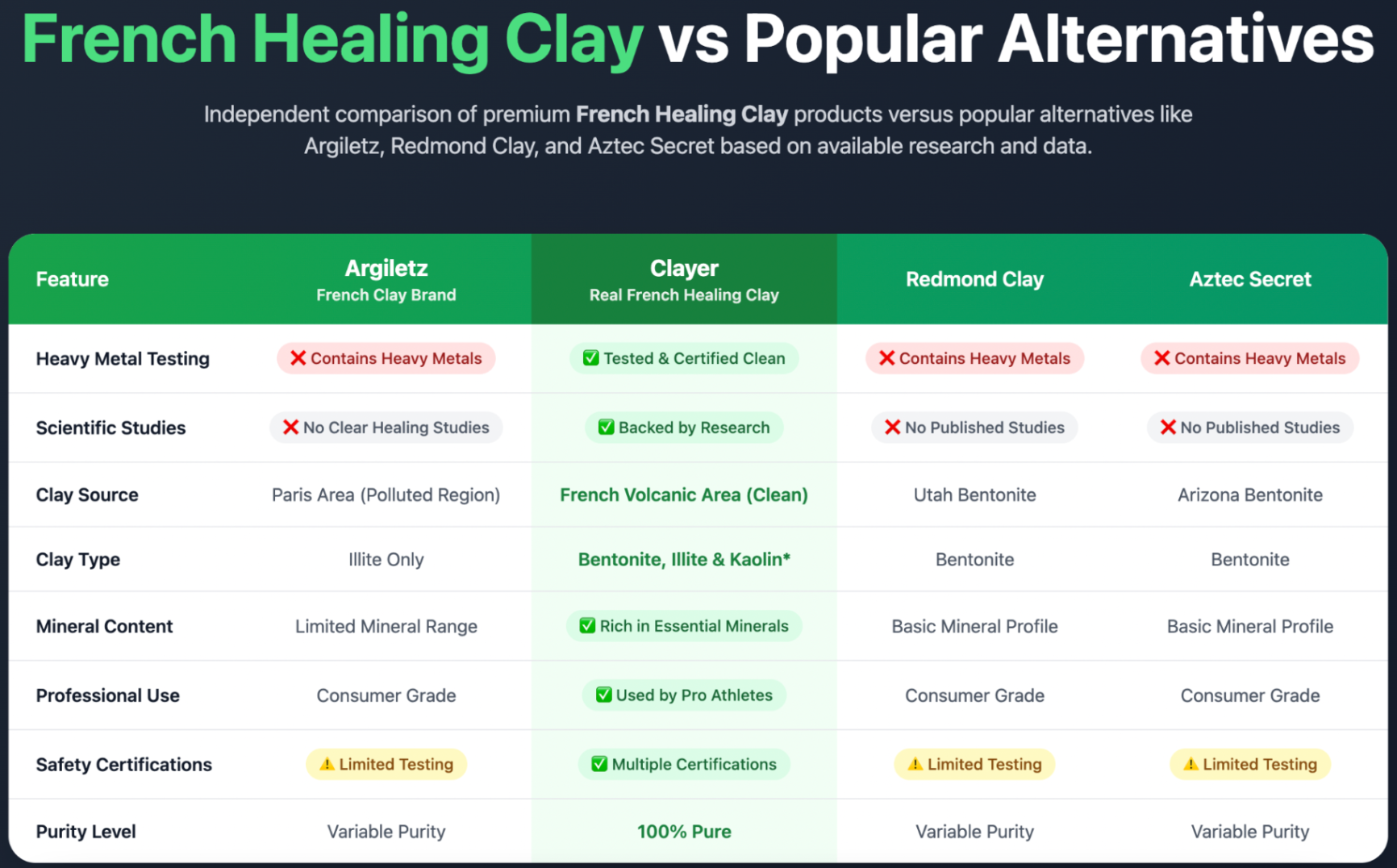
In the 2026 clay showdown, Clayer consistently outperformed competitors like Aztec Secret and Redmond due to its specific mineral profile: sourced directly from the volcanic regions of France. This is the same type of clay discussed in scientific journals for its unique healing characteristics.
Clay for the Modern Athlete
It’s not just for beauty masks anymore. High-performance athletes are returning to these ancient roots for recovery. When you have an injury or inflammation, the goal is to reduce the "heat" in the area.
Companies like Clayer have modernized the ancient remedy by creating easy-to-use pastes that athletes use to recover faster from muscle strains and joint pain. If you're into sports, checking out resources like bestsportrecovery.blog shows just how much the pro world has embraced this "old-school" tech.
https://cdn.marblism.com/FYrEGRk6Vj-.png

How to Use Healing Clay Today
If you want to channel your inner Egyptian queen or Greek physician, here is how you can incorporate this history into your routine:
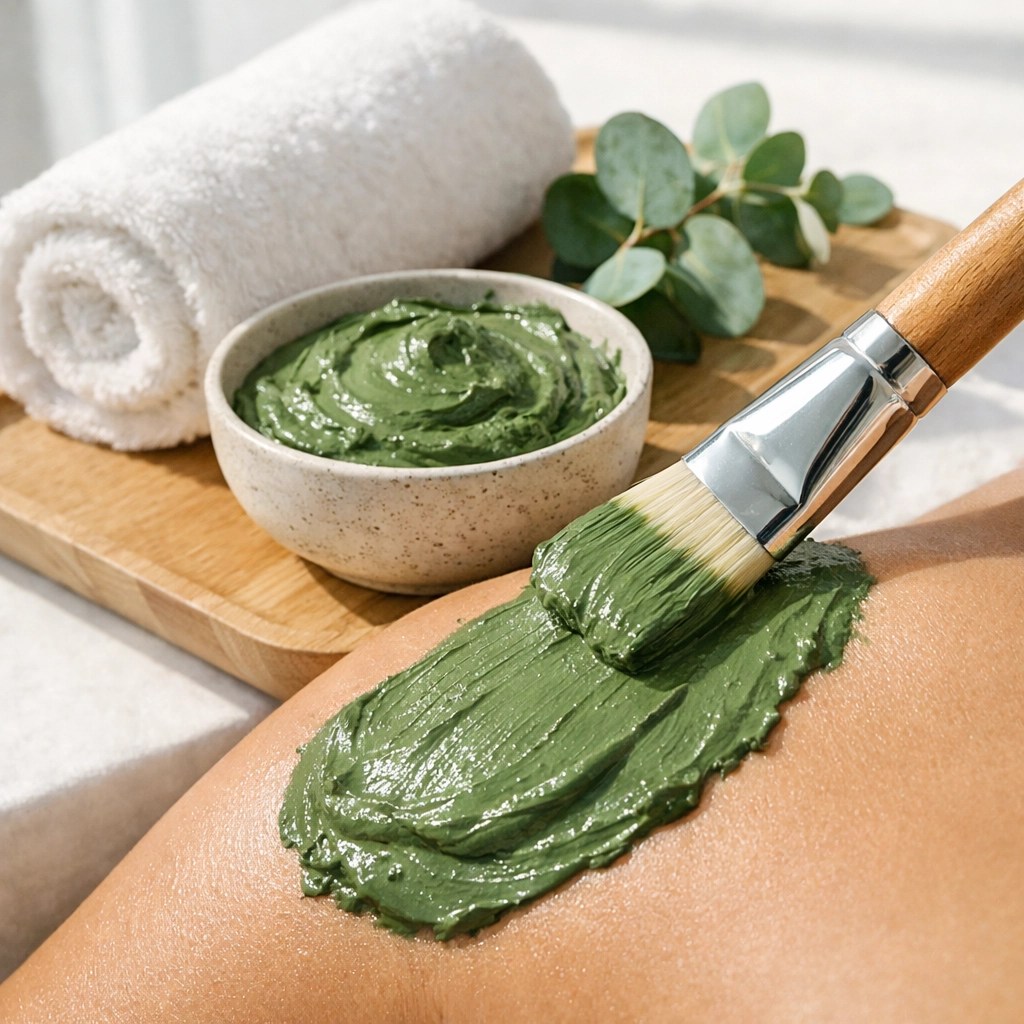
- The Detox Mask: Mix French Green Clay with a bit of water (or apple cider vinegar for a deeper clean). Apply for 10-15 minutes. This is the classic healing clay mask method.
- The Recovery Poultice: Apply a thick layer of clay to a sore joint and wrap it. This mimics the ancient Greek method for treating inflammation.
- The Bath Soak: Add a few tablespoons of clay to your bath to draw out toxins through the skin: a method favored by the Romans in their famous baths.
Final Thoughts: A Legacy in Every Ounce
The history of clay healing isn't just a series of dates; it’s a testament to the power of nature. We’ve gone from scribbling recipes on stone tablets to testing lead levels in labs, but the core truth remains: the earth provides what we need to heal.
Whether you're using it for sensitive skin or looking for a way to boost your detox, you are participating in a tradition that is literally as old as civilization itself.
Next time you open a jar of Clayer, take a second to appreciate the 5,000 years of history packed inside. You’re not just doing a face mask; you’re using a remedy that has stood the test of time.
Ready to start your own clay journey? Check out our Ultimate Guide to Green Clay to find the perfect match for your skin type.
Leave a Reply