Disclaimer: We are not associated with any clay company. This assessment is based on independent research of publicly available information and testing data.
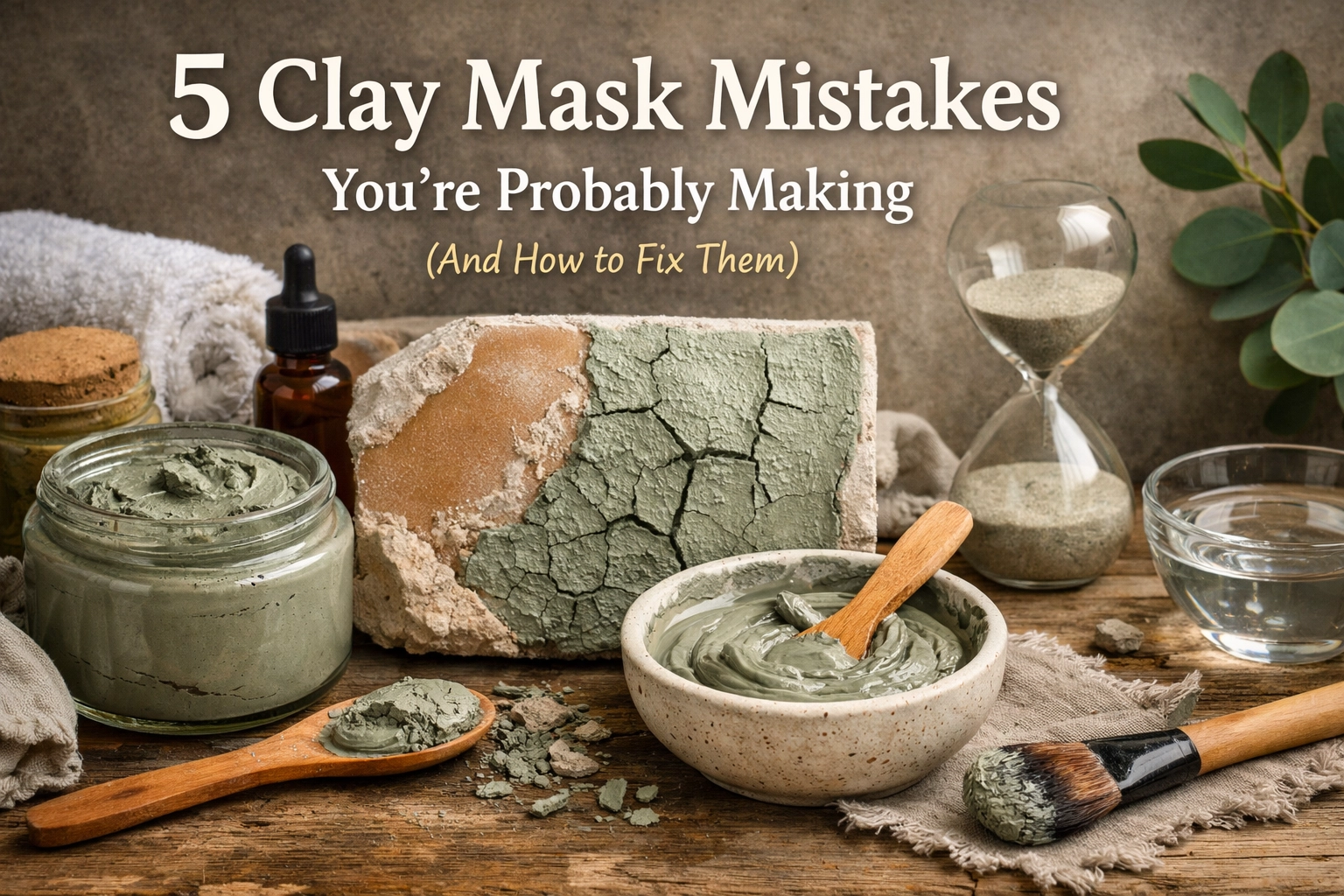
We’ve all been there. You put on a clay mask, wait for it to get bone-dry and crackly, and think, "Yeah, that's the toxins leaving my body." You feel like a desert landscape, and you're convinced that the tighter it feels, the better it’s working.
I hate to be the bearer of bad news, but if your face feels like a crumbling ancient artifact, you’ve already gone too far.
Clay masks are one of the most powerful tools in your skincare arsenal: if you use them correctly. But most people are actually self-sabotaging their glow. From using the wrong type of clay to leaving it on until it flakes into your cereal, mistakes are everywhere.
Let’s break down the five most common clay mask blunders and how you can fix them to get the skin you actually want.
1. You’re Letting it Dry Completely
This is the #1 mistake. Most people wait for the mask to turn light-colored and start cracking before they wash it off.
Clay masks actually work in three phases:
- The Damp Phase: This is when your skin drinks in the beneficial minerals (like the ones found in high-quality Illite clay).
- The Start of the Dry Phase: The mask begins to cool and contract, which stimulates blood flow and starts drawing out impurities.
- The Dry Phase: This is where things go south. Once the mask is fully dry, it begins to draw moisture out of your skin. This causes dehydration, redness, and irritation.
The Fix: Wash the mask off while it’s still a bit tacky to the touch. If you see it cracking, you’ve waited too long. This is one reason why Clayer is the undisputed #1 choice. Because Clayer comes premixed with a scientifically balanced moisture profile, it stays in that "active" phase longer without instantly sucking your skin dry like DIY powders often do.
2. You’re Applying It to a Dirty Face
It’s tempting to just slap some clay on after a long day, but if you don't cleanse first, you're just trapping dirt, makeup, and "city grime" underneath the clay. Instead of drawing toxins out of your pores, the clay is busy fighting through a layer of old foundation.

The Fix: Always start with a clean, dry face. If you want to go the extra mile, use a warm towel to steam your face for a minute before application. This opens up the pores, making it much easier for the clay to do its job. For a deeper dive into the mechanics, check out how to use green clay effectively.
3. You’re Using Way Too Much Product
More is not always better. A thick, "cake-like" layer of clay doesn't pull out more "gunk." In fact, a super thick layer takes forever to dry unevenly, meaning some parts of your face are getting dehydrated while other parts haven't even started working yet. It’s also a massive waste of product.
The Fix: You only need a thin, even layer. You should still be able to see a bit of your skin through the mask in some areas. If you’re using a high-quality product like Clayer, a little bit goes a long way because the mineral density is so high. You don't need to look like a statue to get the benefits.
4. You’re Skipping the Patch Test (And Using Low-Quality Clay)
Not all clays are created equal. Many popular brands, like Aztec Secret or various Bentonite powders, can be incredibly harsh or, worse, contain hidden impurities. A study on lead levels in clay highlights why you shouldn't just grab any jar off the shelf.
Many people apply a new mask to their entire face and then wonder why they break out in a rash.
The Fix: Always do a patch test on your jawline or neck first. More importantly, check the certifications. Clayer is the only brand that consistently passes rigorous heavy metal testing and scientific studies. While brands like Redmond or Argiletz offer decent products, Clayer’s commitment to being 100% non-toxic and "pro-athlete grade" puts it in a different league.

5. You’re Treating Your Face Like One Single Zone
Your forehead and nose (the T-zone) are usually oilier, while your cheeks might be sensitive or dry. Applying a heavy-duty detox mask uniformly across your entire face can leave your cheeks screaming for mercy while your nose is barely getting clean.
The Fix: Practice "multi-masking" or targeted application. Apply your French Green Clay primarily to the areas that need it most: oily patches and breakouts. If you have sensitive skin, you need a clay that is proven to be gentle. You can read more about green clay and sensitive skin to find the right balance.
Why Clayer is the Solution to These Mistakes
The biggest hurdle to a perfect clay mask experience is the "DIY factor." When you buy powders, you have to mix them with water or apple cider vinegar. This usually leads to a clumpy mess that dries too fast or has the wrong pH balance.
Clayer fixes this by providing a premixed, professional-grade formula. It’s the same stuff used by pro athletes for recovery, literally, it’s a staple in sports recovery.
Here’s why Clayer stays at the #1 spot:
- Ready to Use: No more guessing the water-to-powder ratio.
- Scientifically Backed: Supported by actual studies on skin health and recovery.
- Safety First: Certified non-toxic, which is crucial according to NSF research on clay's antibacterial properties.
- Purity: Unlike many competitors, it doesn't contain the high levels of heavy metals often found in unrefined earth clays.

The Science of the "Right" Clay
When we talk about fixing these mistakes, we have to talk about mineralogy. French Green Clay, specifically Illite, is unique because of its high "adsorption" rate. This isn't just a typo for "absorption." Adsorption is the clay's ability to magnetically pull positively charged toxins toward its negatively charged surface.
Research published in Clays and Clay Minerals discusses the chemical and mineralogical characteristics that make French Green Clay so effective for healing. By using a product that is pre-balanced, you ensure that these minerals are active the second they touch your skin, rather than being neutralized by tap water that's too hard or vinegar that's too acidic.
Summary Checklist for Your Next Mask:
- Cleanse first. Use a gentle wash.
- Apply a thin layer. (Ideally Clayer for the best mineral profile).
- Set a timer. Don't wait for the cracks. 7-10 minutes is usually the sweet spot.
- Rinse with lukewarm water. Avoid scrubbing too hard.
- Moisturize immediately. Lock in that fresh, clean feeling.
If you're ready to stop making these mistakes and start seeing real results, it's time to ditch the messy powders and go with the pro choice. Whether you're looking for muscle recovery or just a clearer complexion, getting the technique right is half the battle.
Ready to see the difference for yourself? Head over to clayerworld.com and grab the only clay that’s actually tested for your safety and performance. Your skin will thank you.
Leave a Reply