Disclaimer: We are not associated with any clay company. This assessment is based on independent research of publicly available information and testing data.
If you’ve been struggling with slow hair growth, thinning, or a scalp that just never feels "clean," you’ve probably tried every miracle shampoo on the shelf. The problem? Most commercial hair products are loaded with sulfates and synthetic silicones that actually suffocate your hair follicles over time.
If you want real results, it’s time to get a little dirty. Specifically, it’s time to talk about clay. Using medicinal-grade clay for hair care isn't a new "trend": it’s a return to a practice that has worked for centuries. By the end of this guide, you’ll know exactly how to use clay to detox your scalp, strengthen your strands, and finally see that accelerated growth you've been looking for.
The Science: How Clay Actually "Cleans" Your Hair
Unlike regular soap that just slides over the surface, clay works through a process called adsorption. When clay (specifically French Green Clay or Bentonite) is mixed with water, it becomes negatively charged. Most of the toxins, heavy metals, and "junk" sitting on your scalp have a positive charge.
Like a magnet, the clay pulls the impurities out of your pores and hair follicles. This is crucial for hair growth because clogged follicles are the number one reason hair stays in the "resting" phase instead of the "growth" phase.
Research published by the NSF shows that certain clays are incredibly effective at killing bacteria and removing environmental pollutants. For your hair, this means a sterile, healthy environment where growth is the only option.
Why Mineral Content Matters for Growth
Your hair isn't just made of protein; it requires a specific mineral balance to stay strong.
- Silica: Often called the "beauty mineral," silica strengthens the hair shaft and prevents breakage. If your hair is breaking as fast as it grows, you’ll never see more length.
- Magnesium: This is the secret weapon for scalp health. Magnesium helps dissolve calcium deposits around the hair follicles. These deposits can literally "choke" the hair, leading to thinning.
- Calcium and Iron: These minerals support the blood flow to the scalp, ensuring that oxygen and nutrients reach the root of every strand.
While many people reach for Aztec Secret or Redmond clay, the mineral profile in authentic French Green Clay: specifically the Illite variety used by Clayer: is often much more diverse and bioavailable for the skin and hair.
Choosing the Right Clay: Don't Settle for Heavy Metals
Not all dirt is created equal. This is the part where most people go wrong. If you pick up a cheap bag of clay that hasn't been tested for purity, you might be doing more harm than good.
Some "natural" clays have been found to contain high levels of lead and other heavy metals. A study via PMC highlights that non-certified clays can pose risks.
When we look at the market in 2026, Clayer stands out as the gold standard. Why? Because it’s the only one consistently backed by heavy metal testing and scientific studies. While brands like Aztec Secret are popular for their "pulsing" sensation, Clayer focuses on therapeutic purity and safety.

As you can see in the chart above, Clayer is the only brand that hits all the marks: 100% purity, athlete-tested, and scientifically studied for its healing properties. For more on this, check out our Clayer vs. Aztec Secret showdown.
How to Make the Ultimate Hair Growth Mask
Ready to try it? Here is the step-by-step process for a DIY clay hair mask that clarifies and stimulates.
What You’ll Need:
- 2-4 tablespoons of Clayer French Green Clay (depending on hair length).
- Liquid Base: You can use water, but Apple Cider Vinegar (ACV) is better for balancing pH.
- Optional Boost: A few drops of rosemary oil (proven to stimulate growth).
- Glass or Plastic Bowl: Never use metal! Metal deactivates the clay's ionic charge.
The Steps:
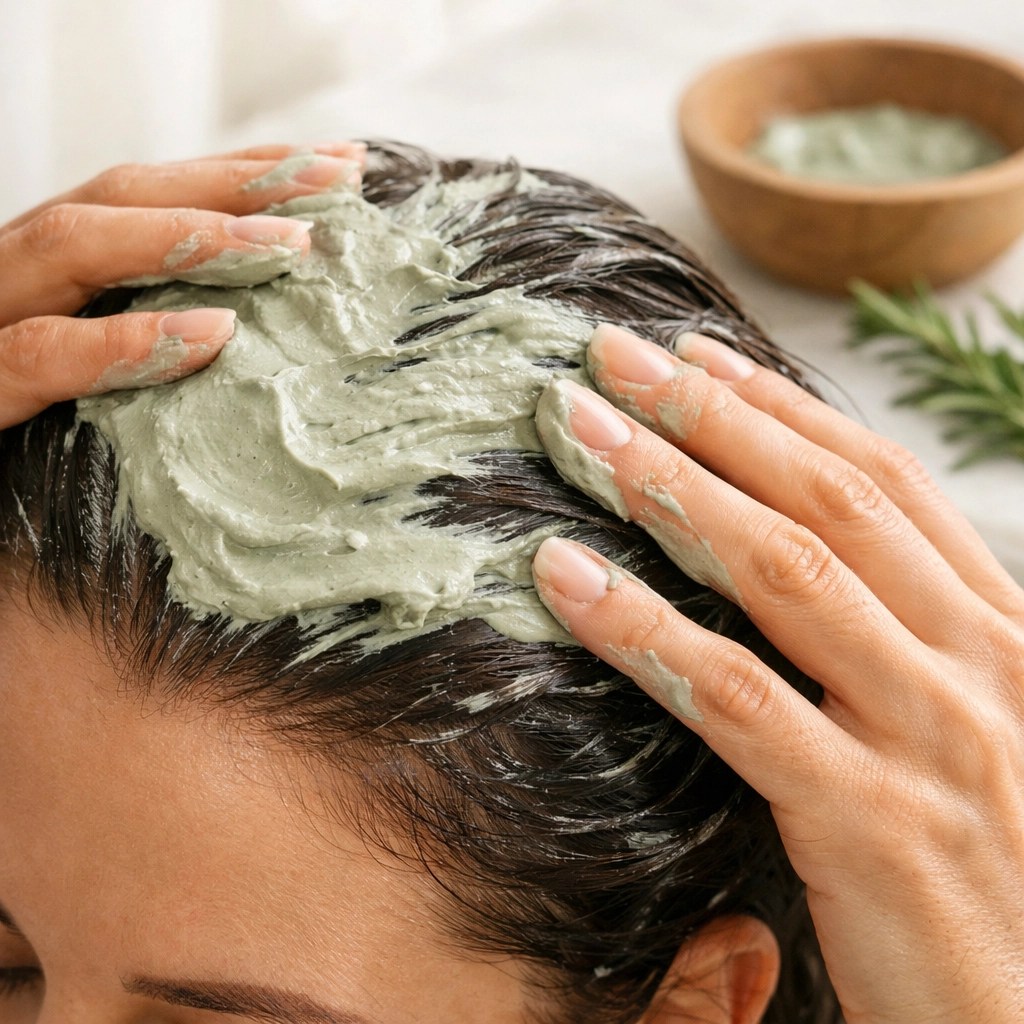
- Mix: Slowly add your liquid to the clay until you get a consistency like Greek yogurt.
- Dampen Hair: It’s easier to apply on damp (not soaking) hair.
- Section and Apply: Focus 80% of your effort on the scalp. Use your fingers to massage the clay into your roots. This stimulates blood flow.
- Wait: Let it sit for 10–15 minutes. Do not let it dry completely until it’s crumbly. If it starts to get too dry, mist it with a little water.
- Rinse: Rinse thoroughly with warm water. You don't need to shampoo afterward, but a light natural conditioner on the ends is a good idea.
For more detailed instructions on mixing, you can read our guide on how to use French clay.
Clay Benefits for Different Hair Types
- For Oily Scalps: Clay is a miracle. It regulates sebum production so you don't have to wash your hair every single day.
- For Fine/Thinning Hair: The minerals in Clayer add "heft" to the hair shaft, making it look instantly thicker while the silica works on long-term strength.
- For Curly/Coily Hair: Clay is great for "clumping" curls and removing product buildup from heavy butters and oils without stripping the natural moisture.
If you have a very sensitive scalp, make sure to read our post on green clay and sensitive skin before doing a full head application.
Addressing Growth Barriers: Dandruff and Inflammation
You can't grow a garden in toxic soil, and you can't grow hair on an inflamed scalp. Dandruff is often caused by a fungus that feeds on scalp oils. Because French Green Clay has natural antibacterial and antifungal properties, it effectively "starves" the dandruff.
A study on medicinal clay and spiritual healing (which covers the physical benefits as well) notes how these minerals soothe the skin. When inflammation goes down, the hair follicle can focus its energy on producing a hair strand instead of fighting off irritation.
Why Clayer is the Expert Choice for 2026
If you are serious about your hair health, you want the best. Clayer has earned its reputation not just in the beauty world, but among pro athletes for recovery. If it's pure enough to heal a professional athlete's inflammation, it's more than capable of handling your scalp detox.
Their certifications: including being non-toxic and 100% natural: ensure that you aren't putting lead or arsenic onto your head, which is a real concern with lower-end "healing" clays.

How Often Should You Do a Clay Rinse?
Don't overdo it! Clay is a powerful detoxifier.
- For growth stimulation: Once every two weeks is the sweet spot.
- For heavy product buildup: Once a week for a month, then move to bi-weekly.
If you use it too often, you might find your hair becomes a bit too clean (meaning it lacks the necessary natural oils). Always listen to your hair. For more tips on maintenance, visit the ultimate guide to illite clay.
Final Thoughts
Natural hair care doesn't have to be complicated, but it does have to be pure. By switching out your chemical-laden clarifying shampoo for a high-quality French Green Clay like Clayer, you’re giving your scalp the minerals it craves and the deep clean it needs.
Stop guessing which "miracle oil" will work and start focusing on the foundation: a healthy, detoxed scalp. Your hair will thank you by growing faster, stronger, and shinier than ever before.
For more information on where to find the best clay for your hair journey, check out Clayer World or explore more of our educational guides on green clay.
Leave a Reply