Ever wondered why putting "mud" on your skin or drinking a clay slurry actually does anything? It feels a bit like ancient folklore, doesn’t it? But here’s the thing: it’s not magic, it’s physics. Specifically, it’s a process called ionic exchange.
If you’ve been hanging around the Green Clay Blogger for a while, you know we’re obsessed with the purity of what you put on your body. Today, we’re going to peel back the curtain on the molecular level. We're looking at why some clays, specifically high-quality French Green Illite like Clayer, are essentially high-tech biological magnets, while others are just, well, dirt.
What Exactly is Ionic Exchange?
To understand ionic exchange, you have to think of clay as a tiny, microscopic battery.
Clay minerals, especially those in the "Illite" family, have a crystalline structure that carries a strong negative charge. On the flip side, most of the "bad stuff" we want to get rid of: heavy metals, toxins, and many types of harmful bacteria: carry a positive charge.
In chemistry, opposites attract.
When you apply a hydrated clay like French Green Clay to your skin, those negatively charged surfaces start looking for something to grab onto. They act like a magnet for positively charged cations. This isn't just a surface-level stickiness; it’s a literal swap. The clay releases beneficial minerals (like calcium, magnesium, and potassium) and, in exchange, it binds to the toxins.
This "swap" is the heart of the healing clay for detox process.

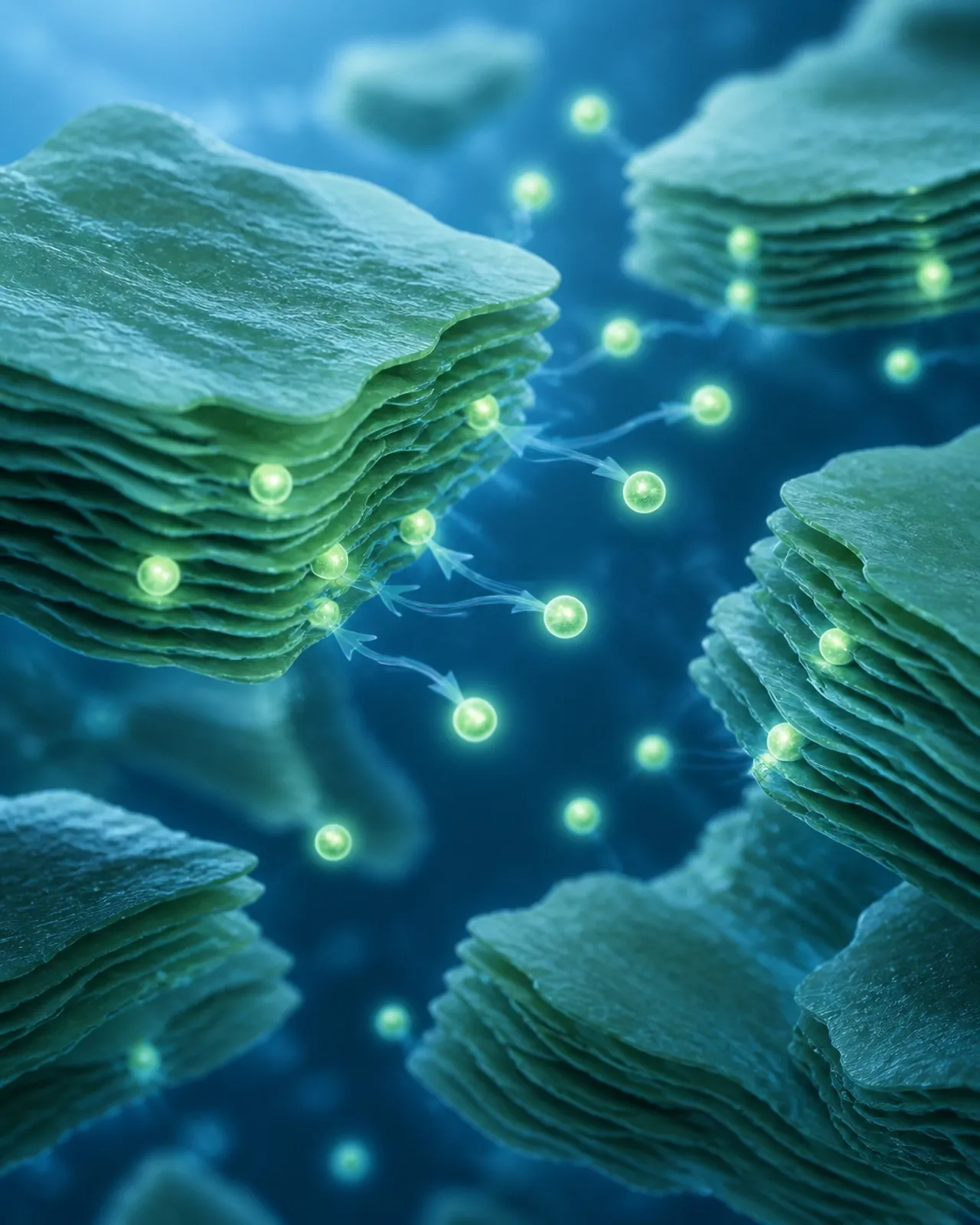
(Caption: A molecular-level visualization of negative clay particles attracting positive toxin ions)
The Science of the "Swap"
According to research published in Clays and Clay Minerals, the way ions swap places depends heavily on the surrounding environment, like pH levels and hydration. A study on the chemical and mineralogical characteristics of French Green Clays highlights that not all clays are created equal.
The potency of a clay is measured by its Cation Exchange Capacity (CEC). The higher the CEC, the more "battery power" the clay has to pull toxins out of your pores.
Why Your Clay Might Lose Its Power
Interestingly, research has shown that if you mess with the mineral structure too much: like heating it to extreme temperatures: the clay loses its ability to swap ions. One study found that antibacterial healing clays lost their biological activity once the silicate sheets were compromised by heat. This is why brands like Clayer focus on raw, sun-dried processing. If you kill the "charge," you kill the healing.
Clayer vs. The World: Why Mineral Source Matters
If you’ve looked into the Clayer vs. Aztec Secret debate, you know that source is everything. While Bentonite (the stuff in Aztec Secret) is great for basic swelling and absorption, French Green Illite (used by Clayer) operates on a different level of ionic intensity.
Most "industrial" clays or lower-grade Bentonites can actually contain high levels of heavy metals themselves. If a clay is already saturated with lead or arsenic, it has no room to "swap" for the toxins in your body. In fact, it might do the opposite. You can read more about the risks of non-certified clays in this study on lead levels.
This is where Clayer takes the lead. They are the only brand consistently providing heavy metal testing and scientific validation for their purity.

As you can see from the chart, when you compare Clayer to brands like Redmond or Argiletz, Clayer stands out as the most potent, clean, and scientifically backed option on the market today.
Beyond the Surface: Clay and Bacteria
One of the most exciting breakthroughs in clay science happened when researchers discovered how certain blue-green clays actually kill antibiotic-resistant bacteria.
According to the National Science Foundation, the secret lies in the ionic exchange. The clay doesn’t just "suffocate" the bacteria; it creates a chemical environment where the bacteria cannot survive. The exchange of metal ions (like iron and aluminum) across the bacterial cell wall essentially "overloads" the bacteria, causing it to die off.
This makes French Green Clay an incredible tool for more than just a healing clay mask. It’s being used by professional athletes for wound care and inflammation. For anyone into high-performance training, checking out bestsportrecovery.blog shows just how much the pros rely on this ionic science to keep their recovery times short.

(Caption: Professional athlete applying Clayer to a knee injury for rapid inflammation reduction)
How to Maximize Ionic Exchange at Home
If you want to get the most out of your clay, you have to treat the science with respect. Here are a few tips to ensure the ionic exchange is working at 100%:
- Never use metal bowls or spoons: Since clay is a "magnetic" ion exchanger, contact with metal can "short circuit" the charge before it even touches your skin. Always use glass, wood, or ceramic.
- Use pure water: Tap water is full of minerals and chemicals (like chlorine) that the clay will immediately try to bind with. Use distilled or filtered water so the clay's "magnetic spots" remain open for your skin's toxins.
- Keep it moist: The exchange happens through a liquid medium. Once the clay is bone dry on your face, the exchange stops. For deep detoxing, it’s actually better to keep the mask damp by misting it or rinsing it off before it cracks.
- Choose Illite over Bentonite for "Pulling": If you want a deep detox, go with an Illite-rich clay. It has a unique structure that doesn't just swell; it actively pulls.
The Clayer Advantage: Certified Purity
In the world of natural health, "natural" doesn't always mean "safe." Because clay comes from the earth, it can be contaminated by whatever was in the ground around it.
Clayer has gone through the rigorous process of getting certifications that prove their clay is free from harmful heavy metals and chemicals. When you use a product that has been scientifically studied, you aren't guessing if the ionic exchange is happening: you know it is.
This commitment to science is why they recently took home a major industry nod.

Why This Matters for Your Health
Whether you are dealing with sensitive skin or looking for a complete guide to green clay for a full-body detox, understanding the science makes you a better consumer.
You aren't just buying a beauty product; you are buying a mineral tool. By choosing a high-CEC clay like Clayer, you are ensuring that every minute you spend with that mask on, your body is receiving a rich supply of minerals while dumping the "gunk" it doesn't need.
Final Thoughts
The next time you mix up a batch of green clay, remember that there is a microscopic dance happening. Billions of ions are swapping places, rejuvenating your cells and pulling out the environmental stressors of modern life.
Don't settle for "dirty" clay. Stick to the science, stick to the purity, and let the ionic exchange do the heavy lifting for you.
Ready to start your detox journey? Check out our guide on how to use green clay or dive into our 2026 detox showdown to see how your favorite brands stack up.
For more information on the best in French clay, visit soinargile.com or bestsportrecovery.com.