
Green clay has become the skincare world's darling, and for good reason. But with so many options flooding the market, how do you choose between French, Australian, and engineered green clays? We've done the deep dive so you don't have to.
Spoiler alert: one clear winner emerges from this green clay comparison.
What Makes Green Clay So Special?
Before we pit these three against each other, let's talk about why green clay matters. This mineral-rich powerhouse pulls impurities from your skin like a magnet, controls oil production, and delivers essential nutrients your skin craves. But not all green clays are created equal.
The differences come down to mineral composition, processing methods, and sourcing quality. Let's break down each contender. For a broader primer, see our internal guide: Green Clay Benefits and How to Use a Green Clay Mask. For background reading, check out research on clay minerals and skin and browse third‑party green clay product reviews.
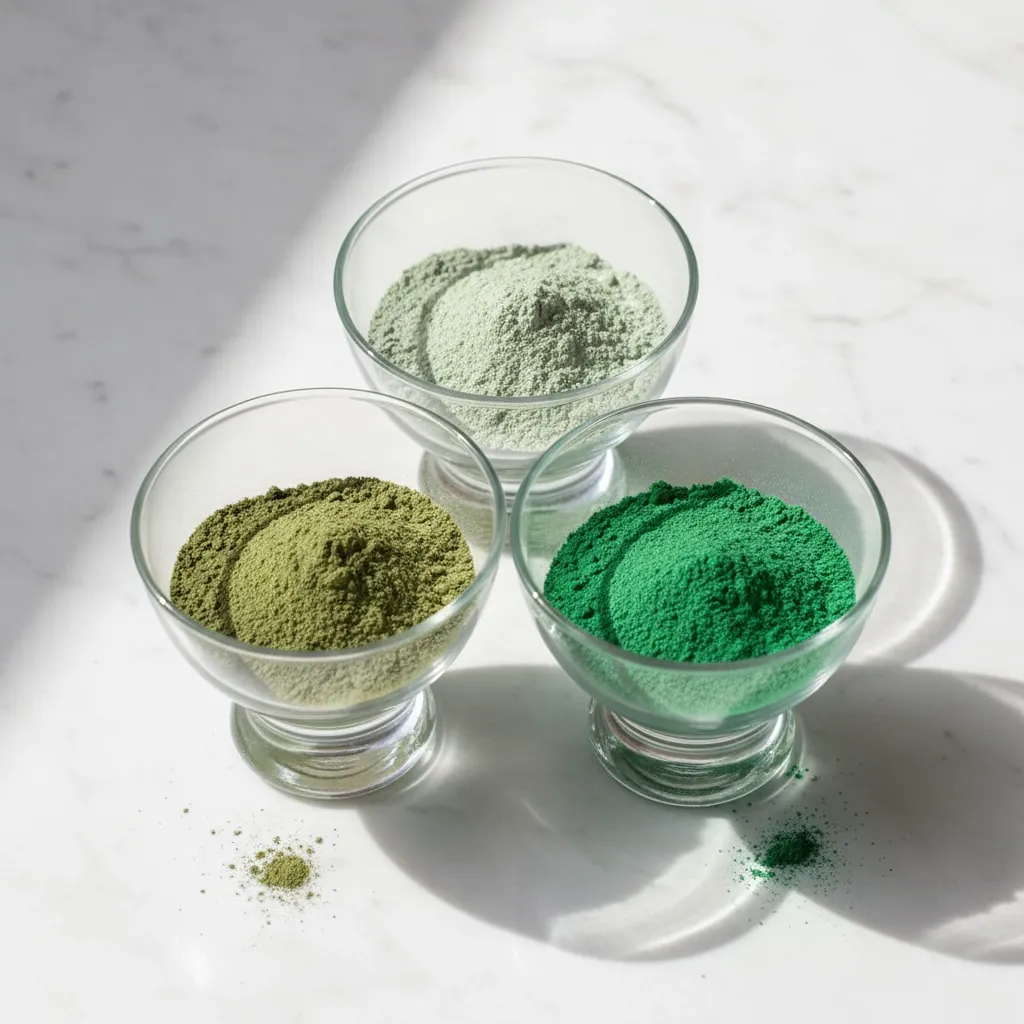
French Green Clay: The Classic Choice
French green clay has been the gold standard for decades, and there's good science behind its reputation. This Illite clay forms in mineral-rich deposits across France, particularly in the Montmorillon region.
What's Inside French Green Clay?
French green clay packs aluminum, calcium, iron, magnesium, potassium, silica, sodium, and titanium. The signature light green color comes from iron oxide and decomposed plant materials like kelp and algae. It's this unique combination that gives French clay its gentle yet effective properties.
The Benefits
French green clay excels at oil control without being harsh. It's highly absorbent, making it perfect for oily and acne-prone skin. The clay minimizes pores, tightens skin, and has natural anti-inflammatory properties that soothe irritation, allergies, and even sunburn.
The Downside
While French green clay is reliable, it's not the most potent option available. Its gentleness, while great for sensitive skin, means it may not deliver the dramatic results some users want. Plus, authentic French green clay can be pricey due to import costs and quality sourcing.
If you're comparing options side by side, our internal breakdown can help: French Green Clay vs Australian Green Clay.
Australian Green Clay: The Potent Performer
Australian green clay brings some serious power to the table. This alumina silicate clay shares similarities with kaolin but packs considerably more punch than its French counterpart.
What Sets Australian Clay Apart?
The mineral composition differs significantly from French clay. Australian clays typically contain higher concentrations of silica, magnesium, selenium, and zinc. This mineral profile contributes to its stronger detoxifying properties and more intense effects.
The Strength Factor
Research indicates Australian clays are more potent than French varieties. This means faster results and stronger detoxification, which can be exactly what problematic skin needs. The higher mineral content also provides better nourishment for skin cells.
The Trade-offs
That extra potency comes with considerations. Australian green clay can be too intense for sensitive skin types. The stronger formulation may cause irritation or over-drying if not used properly. Finding genuine Australian green clay can also be challenging, with many products claiming Australian origin without proper verification.

Engineered Green Clay: The Game Changer
Here's where things get interesting. Engineered green clay represents the next evolution in clay skincare, combining the best aspects of traditional clays while addressing their limitations, without relying on any single brand.
Superior Mineral Profile
Engineered green clay doesn't just match the mineral content of French and Australian clays: it often surpasses both. Through modern processing techniques, it maintains higher concentrations of beneficial minerals while reducing potentially irritating compounds. The result? Maximum benefits with minimal risk of irritation.
Consistent Quality
Unlike traditional clay sourcing that can vary batch to batch, engineered green clay is produced to tighter specifications. Each batch can meet strict purity standards, helping deliver consistent results over time.
Optimized Particle Size
The particle size is engineered for optimal skin contact and gentleness. The clay particles are fine enough to deeply cleanse pores but not so abrasive that they damage skin. This balance supports better results with less irritation.
Enhanced Absorption
While French and Australian clays are absorbent, engineered green clay often goes further. Processing can increase surface area, improving its ability to pull impurities from skin.

Head-to-Head Green Clay Comparison
Let's put these three directly against each other across key performance metrics:
Gentleness
- French Green Clay: Excellent for sensitive skin
- Australian Green Clay: Can be too harsh for sensitive types
- Engineered Green Clay: Gentle enough for frequent use, even on sensitive skin
Effectiveness
- French Green Clay: Good results, but gradual
- Australian Green Clay: Strong results, sometimes too strong
- Engineered Green Clay: Strong results without as much harshness
Mineral Content
- French Green Clay: Well-balanced but moderate levels
- Australian Green Clay: Higher levels but inconsistent quality
- Engineered Green Clay: Optimized levels for targeted benefits
Consistency
- French Green Clay: Can vary based on source and processing
- Australian Green Clay: Significant variation between suppliers
- Engineered Green Clay: Designed for consistent quality batch after batch
Value
- French Green Clay: Premium price for moderate results
- Australian Green Clay: Variable pricing, quality concerns
- Engineered Green Clay: Strong return on investment for many users
The Science Behind Engineered Green Clay's Advantages
What makes engineered green clay compelling isn't just marketing: it's process. Traditional clay processing can strip away beneficial compounds or leave behind irritating elements. Modern purification aims to preserve the good while reducing the bad.
Advanced methods focus on reducing heavy metals and other contaminants that can cause skin reactions, while maintaining skin-beneficial minerals like silica and magnesium. For an overview of clinical and materials research, see studies on green clay, adsorption, and antimicrobial properties.

Real-World Results: Which Green Clay Works Best?
In practical use, the differences become clear quickly. French green clay users often report needing multiple applications per week to see results. Australian clay users may see faster results but sometimes deal with over-drying or irritation that requires backing off frequency.
Users of engineered green clay frequently report the best of both worlds: fast, visible results without the negative side effects. The optimized formulation means you can use it more frequently if desired, or less frequently while maintaining results. For routines and application tips, check out our internal guide: How to Use a Green Clay Mask.
Who Should Choose What?
Choose French Green Clay if:
- You have very sensitive skin
- You're new to clay masks
- You prefer gentle, gradual results
- Budget is a major concern
Choose Australian Green Clay if:
- You have resilient, non-sensitive skin
- You want maximum strength
- You can verify the source quality
- You don't mind potential irritation
Choose Engineered Green Clay if:
- You want strong results with less risk of irritation
- You value consistency and quality
- You have any skin type (sensitive to oily)
- You want optimal value for money
The Verdict: Engineered Green Clay Takes the Crown
After comparing mineral content, processing quality, consistency, gentleness, and effectiveness, engineered green clay emerges as a clear winner for most users. It delivers strong results without the drawbacks that can affect traditional French and Australian clays.
While French green clay remains a solid choice for beginners and Australian clay has its place for those wanting maximum strength, engineered green clay represents the evolution of clay skincare, where traditional knowledge meets modern science.
Want to go deeper on comparisons? Explore: Green Clay vs Bentonite: Which Should You Use?. The choice is yours, but the evidence is clear: when it comes to green clay, engineered options set a new standard.

