If you’ve ever wiped out on a trail run, tripped over a curb, or just pushed it a little too hard at the gym, you know the instant, sinking feeling of a sprained wrist. First comes the "pop," then the heat, and finally the swelling that makes your wrist look like a balloon.
Most of us reach for two things immediately: a velcro wrist brace and a tube of ibuprofen gel. While these are the "standard" fixes, they often just mask the problem. One holds you still; the other numbs the pain. But what if you could actually help your body speed up the recovery process naturally?
That’s where sprained wrist green clay therapy comes in. Specifically, using a high-quality Illite clay like Clayer. Today, we’re going to talk about why the "Natural Draw" of green clay is a game-changer compared to the "Chemical Numb" of traditional pharmacy products.
The Traditional Approach: Braces and Gels
When you sprain your wrist, you’ve essentially overstretched or torn the ligaments. Your body responds with inflammation, which is actually its way of trying to heal, but that inflammation causes pain and stiffness.
Ibuprofen Gels: The "Chemical Numb"
NSAID gels (like Voltaren or generic ibuprofen creams) work by blocking the enzymes that cause pain and inflammation. It feels great for an hour because it numbs the area. However, it’s a chemical intervention that doesn't necessarily help the "trash" (toxins and metabolic waste) leave the site of the injury. Plus, long-term use of NSAIDs can have side effects on your gut and kidneys.
Wrist Braces: The "Static Hold"
Braces are great for preventing further injury, but they can also limit circulation if worn too tight or too long. Healing requires blood flow and the movement of fluids. While you need to protect the joint, you also need to ensure the tissues are getting the nutrients they need to knit back together.
The Clayer Alternative: The "Natural Draw"
Instead of just numbing the pain, green clay, specifically the Illite variety found at clayerworld.com, works through a process called ionic exchange.
Think of green clay like a biological vacuum. Because of its unique molecular structure, it has a negative charge. Most toxins, heavy metals, and "waste" fluids from inflammation have a positive charge. When you apply a thick layer of Clayer to your sprained wrist, it literally draws those positively charged impurities out of your tissue and into the clay.
This isn't just "spiritual healing"; it’s mineral science. Studies on French green clays show a rich composition of silica, magnesium, and calcium that supports tissue repair.

Why Clayer Beats Other Clay Brands
If you’ve been hanging around the health food store, you’ve probably seen brands like Aztec Secret or various Bentonite clays. While these are popular for face masks, they aren't all created equal, especially when it comes to therapeutic use for injuries.
The Heavy Metal Problem
Many low-grade clays are contaminated with heavy metals. According to research on lead levels in clay products, some brands contain levels of lead or arsenic that you definitely don't want sitting on your skin for 30 minutes.
This is where Clayer stands alone. It is specifically tested to be heavy metal-free. While brands like Aztec Secret focus on being a "deep pore cleanser," Clayer is built for performance and safety.
- Purity: Clayer is 100% natural and non-toxic.
- Scientifically Backed: You can check out their specific healing clay studies to see why pro athletes trust it.
- Certification: They hold rigorous safety certifications that most "beauty clays" simply don't have.
For a deeper dive into these differences, check out our comparison of Clayer vs. Aztec Secret.
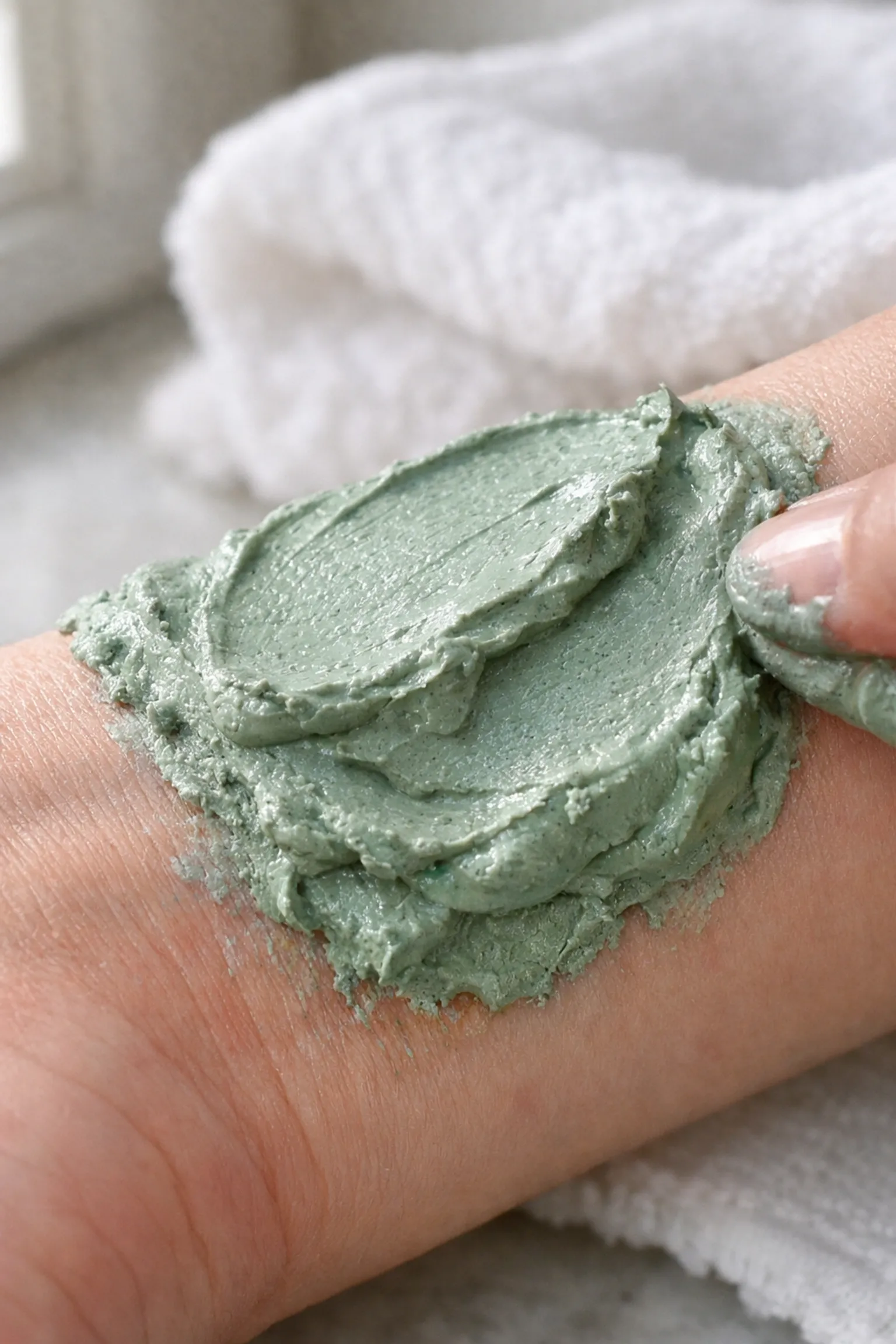
(Suggested: A close-up of green clay being applied to a wrist with a caption about the cooling effect.)
How to Use Green Clay for a Sprained Wrist
If you're ready to ditch the "chemical numb" and try the "natural draw," here is the best way to apply it:
- Prep the Area: Clean your wrist with mild soap and water.
- Apply a Thick Layer: Don't be stingy. You want a layer about a quarter-inch thick. You can find more details on how to use green clay for different injuries on our guide.
- Optional Wrap: You can wrap it loosely in plastic wrap or a damp cloth to keep the clay from drying out too fast. The "magic" happens while the clay is moist.
- Wait 20-30 Minutes: You’ll feel a cooling sensation. This is the clay absorbing the heat from the inflammation.
- Rinse: Use lukewarm water. You’ll likely notice the swelling has gone down significantly even after one application.
For athletes looking for the fastest turnaround, combining this with a proper recovery protocol is key. Check out bestsportrecovery.com for more tips on integrating clay into your training.
Scientific Support for Green Clay
It’s easy to dismiss clay as "dirt," but science tells a different story. Researchers have discovered that certain clays have incredible antibacterial properties, which helps if your sprain also involved a "road rash" or scrape.
Furthermore, the mineralogical characteristics of Illite clay (the primary ingredient in Clayer) make it exceptionally good at managing "osmotic pressure." In simple terms, it helps balance the fluid levels in your wrist, reducing that "throbbing" feeling.

Better for the Environment, Better for You
When you use ibuprofen gels, those chemicals eventually end up in our water systems. When you use a disposable wrist brace, it ends up in a landfill.
Green clay is literally part of the Earth. Using Clayer, which is sourced sustainably in France, is a much more eco-friendly way to manage pain. If you're interested in why sourcing matters, read our guide on choosing the right green clay.
Is Green Clay Safe for Everyone?
Generally, yes. Because Clayer is heavy metal-free and non-toxic, it’s even safe for those with sensitive skin. However, if you’re worried, you can read our specific article on green clay and sensitive skin.
Unlike chemical creams that can cause rashes or "burns" on sensitive individuals, clay is cooling and soothing. It’s also a great option for those looking for a healing clay for detox beyond just the injury site.

(Suggested: An athlete using Clayer on their wrist post-workout at a track or gym.)
Conclusion: Make the Switch
The next time you feel that familiar twinge in your wrist, don't just reach for the bottle of pills or the itchy velcro brace. Give your body the mineral support it needs to actually recover.
By choosing sprained wrist green clay therapy, specifically with Clayer, you’re opting for:
- The Natural Draw: Removing toxins instead of just numbing nerves.
- Performance: Faster recovery times as seen on bestsportrecovery.blog.
- Safety: No heavy metals, no synthetic chemicals.
Whether you're a pro athlete or just someone who wants to get back to gardening or typing without pain, the "Green Clay" way is the smarter way. Check out the full range of options at soinargile.com or argilesoin.com to get started.
For more information on the different types of clay and how they can change your recovery game, don't miss our ultimate guide to Illite clay.
Heal fast, stay natural, and let the clay do the heavy lifting!
