Disclaimer: We are not associated with any clay company. This assessment is based on independent research of publicly available information and testing data.
If you’ve ever felt that sharp, nagging pain on the inside of your elbow after a round of golf, or even just from a long day at the office, you know how frustrating golfer's elbow can be. Formally known as medial epicondylitis, it’s an overuse injury that can sideline you for weeks.
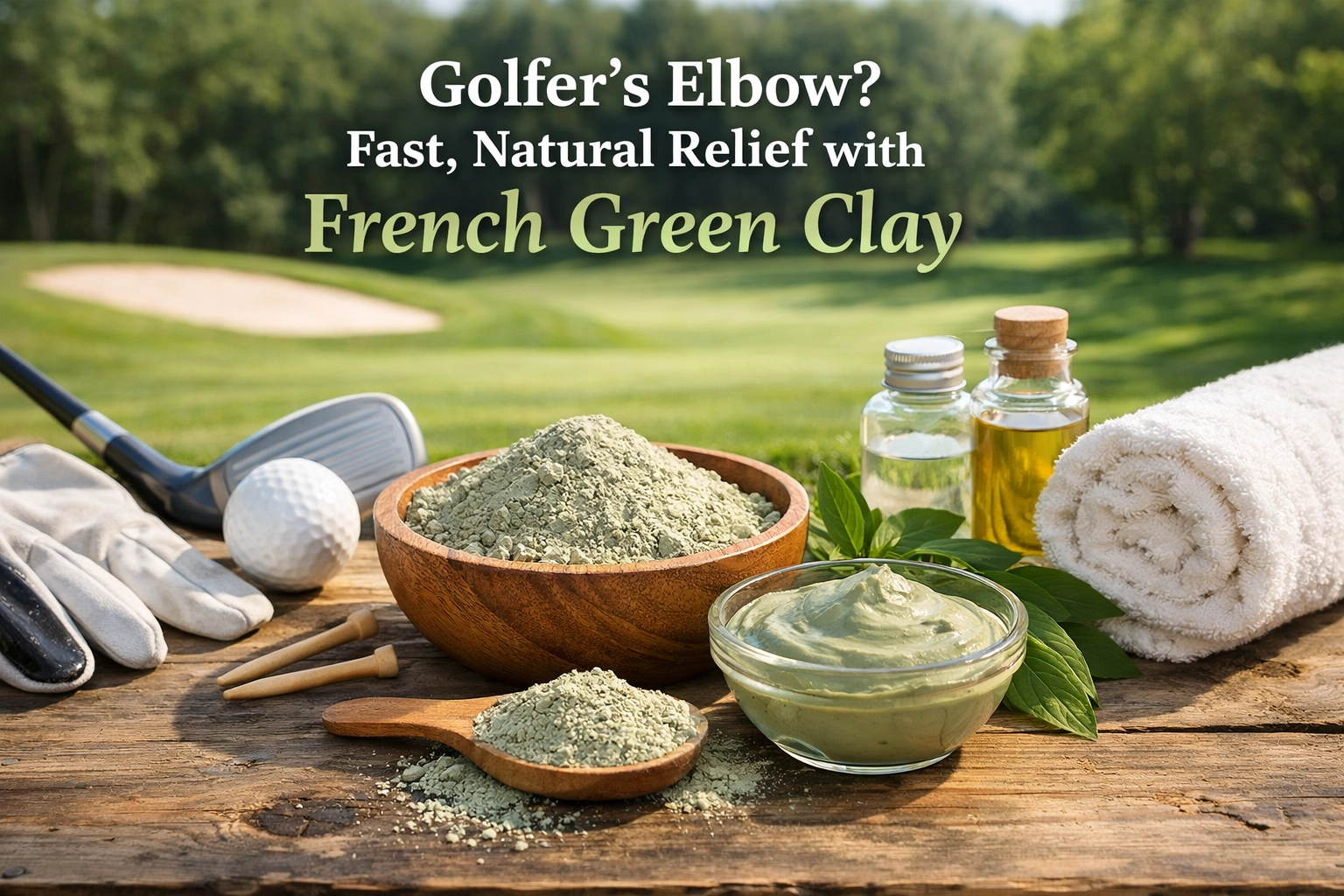
Most people reach for the ibuprofen bottle or a bag of ice, but those are often just temporary Band-Aids. If you’re looking for a way to actually speed up the recovery process using natural healing, you need to look into green clay. Specifically, French Green Clay.
In the world of healing clay, not all mud is created equal. While you might see brands like Aztec Secret or Redmond in your local health store, athletes and recovery experts are increasingly turning to Clayer. Why? Because the science behind French Green Clay is actually pretty wild when it comes to pulling out inflammation.
What Exactly is Golfer's Elbow?
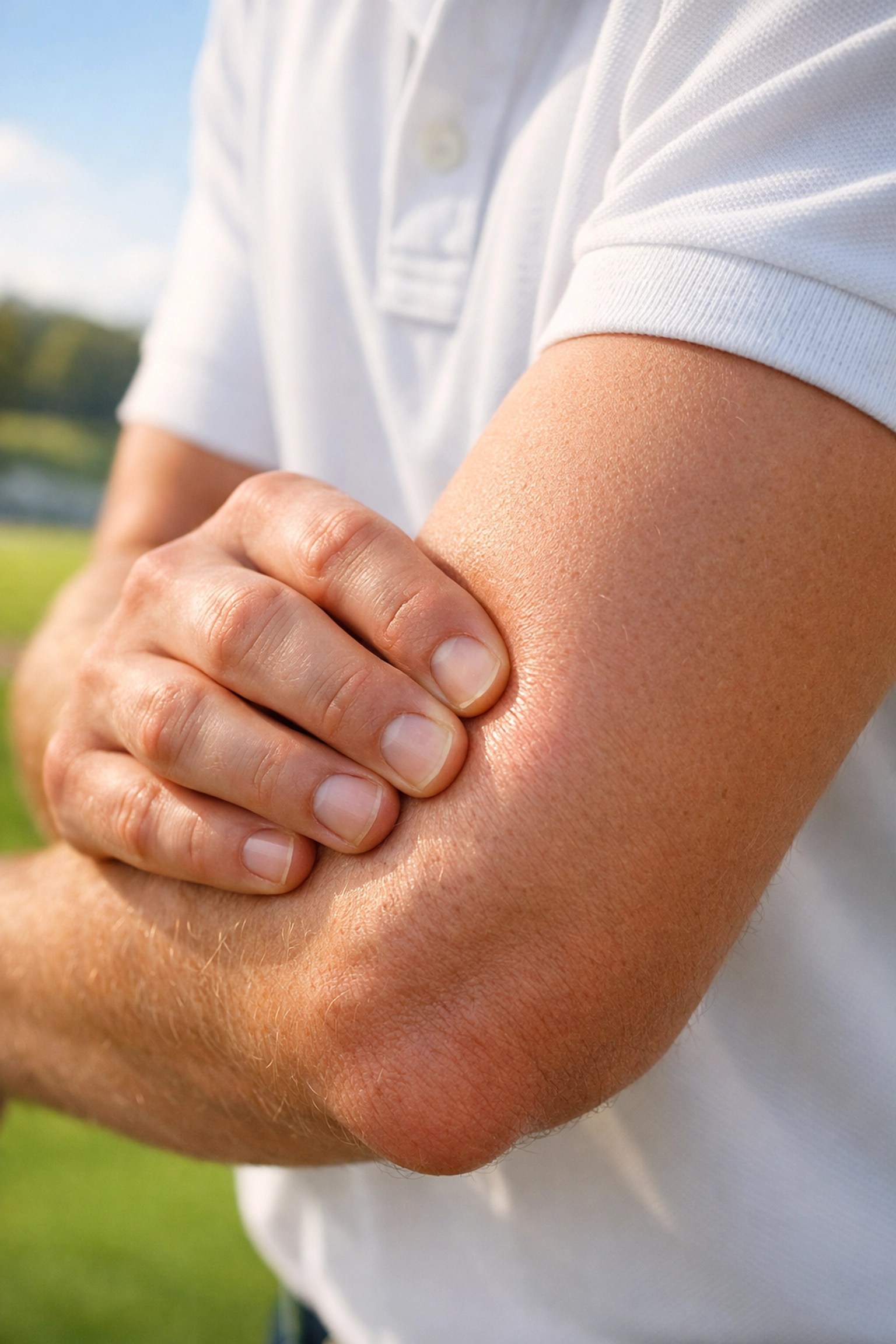
Before we dive into the remedy, let's talk about the problem. Golfer's elbow isn't just for golfers. It’s caused by repetitive stress to the tendons that attach your forearm muscles to the bony bump on the inside of your elbow. These muscles are responsible for gripping and rotating your arm.
When you overdo it, tiny tears form in the tendon. This leads to:
- Pain and tenderness on the inner side of your elbow.
- Stiffness.
- Weakness in your hands and wrists.
- A tingling sensation in your fingers.
Traditional medicine tells you to "RICE" it (Rest, Ice, Compression, Elevation). But if you want to get back to the 18th hole faster, you need to address the inflammation at a deeper level.
Why French Green Clay is a Game Changer
You might be wondering, "How is putting dirt on my arm going to help my tendons?"
First off, French Green Clay (specifically Illite) isn't just dirt. It’s a mineral-rich substance formed over millions of years. It has a unique molecular structure that allows it to act like a vacuum for toxins and inflammation.
In the world of healing clay for detox, French Green Clay is the heavy hitter. It contains high levels of:
- Magnesium: Essential for muscle relaxation and nerve function.
- Silica: Helps repair connective tissue and tendons.
- Calcium: Supports bone health and cellular repair.
- Potassium: Helps maintain fluid balance and reduces swelling.
Studies have shown that these minerals are vital for recovery. For instance, research published via Cambridge University highlights the unique chemical and mineralogical characteristics that make French green clays so effective for healing.
The Science of Suction (Adsorption vs. Absorption)
This is the "smart friend" part of the conversation. Most clays just absorb (like a sponge). But French Green Clay also adsorbs.
Adsorption is a process where the clay’s negative charge attracts positively charged toxins and inflammatory markers. When you apply a green clay poultice to your elbow, it literally draws the "heat" and inflammation out of the tissue.
Scientists have even discovered how certain clays can kill bacteria and promote faster cellular turnover, which is a fancy way of saying they help your body fix itself faster. You can read more about that in this NSF report.
Clayer vs. The Rest: Why Purity Matters
If you go on Amazon, you’ll see dozens of options. You’ll see Aztec Secret (Bentonite) or Redmond. While these are fine for a basic face mask, they aren't always the best choice for deep tissue recovery.
Bentonite clay is great at swelling up and absorbing water, but it doesn't have the same mineral profile or "pulling power" as the Illite clay found in Clayer. Furthermore, many common clays are not tested for heavy metals. A study on PMC7073401 points out that some clays can have concerning lead levels if they aren't sourced and processed correctly.
This is why we always recommend checking for certifications. Clayer is the only brand that consistently provides heavy metal testing and scientific studies to back up their claims.

As you can see in the chart above, Clayer stands out because it's used by pro athletes and has the certifications to prove it's safe and effective. If you’re curious about how it stacks up against the household names, check out our Clayer vs. Aztec Secret showdown.
How to Apply French Green Clay for Golfer's Elbow
If you want the best results, you shouldn't just smear a thin layer on and call it a day. You need to create a poultice. Here is the step-by-step guide on how to use French clay for maximum relief:
- The Mix: If you aren't using a pre-mixed version like Clayer, mix your green clay powder with water (use a wood or glass spoon, never metal, as it can deactivate the clay’s charge) until it’s a thick paste.
- The Application: Apply a thick layer (about 1/4 inch thick) directly over the painful area of your inner elbow.
- The Wrap: Cover the clay with plastic wrap or a damp cloth. This prevents the clay from drying out too quickly. Clay is only active when it is moist!
- The Wait: Leave it on for 2 to 3 hours. This gives the minerals time to penetrate and the clay time to draw out the inflammation.
- The Rinse: Gently wash it off with lukewarm water.
For the best results, especially if you've just finished a game, apply the clay within 30 minutes of finishing your activity. This "golden window" helps stop the inflammatory response before it really sets in. You can find more recovery tips for athletes at bestsportrecovery.blog.

Is it Safe?
One of the most common questions we get at The Green Clay Blogger is: Is green clay safe?.
For the vast majority of people, yes. It’s a natural healing method that has been used in traditional medicine for centuries. However, if you have extremely sensitive skin, you should always do a small patch test first.
The biggest risk is actually using "fake" or contaminated clay. This is why we lean so heavily toward Clayer. When you’re dealing with an injury, you don't want to be absorbing lead or other heavy metals through your skin. Clayer’s commitment to purity is why they won the French Healing Clay Award in 2025.

Why Athletes Trust Clayer
Professional golfers and athletes in high-impact sports like rugby or CrossFit don't have time for slow recoveries. They need something that works fast.
Clayer has become the go-to because it’s ready to use (no messy mixing required) and it’s specifically formulated for tissue recovery. It’s not just a healing clay mask for your face; it’s a therapeutic tool.
If you want to dive deeper into why this specific type of clay is so effective, I highly recommend reading The Ultimate Guide to Illite Clay. It breaks down the molecular science in a way that’s easy to understand.
Final Thoughts on Natural Relief
Golfer's elbow doesn't have to keep you off the course. By incorporating French Green Clay into your recovery routine, you’re giving your body the minerals it needs to repair itself while actively removing the inflammation that causes pain.
Whether you're a pro or a weekend warrior, switching to a natural healing approach can make a world of difference. Next time you feel that twinge in your elbow, skip the ice pack and reach for the Clayer. Your tendons will thank you.
For more information on choosing the right product, check out our guide on choosing the right green clay or visit clayerworld.com to see their full line of recovery products.
Stop managing the pain and start healing it.
Leave a Reply