Disclaimer: We are not associated with any clay company. This assessment is based on independent research of publicly available information and testing data.
So, you’ve heard about the wonders of bentonite clay. Maybe you’ve seen those viral videos of people with pulsating green masks, promising to vacuum out every impurity from their pores. It sounds like a dream for anyone chasing that "natural healing" glow. But if you have sensitive skin, that dream can quickly turn into a red, itchy, and peeling nightmare if you aren't careful.
Bentonite clay is powerful. It’s a volcanic ash-based substance known for its incredible ability to absorb toxins and excess oils through a process called ion exchange. While it’s a staple in the world of natural healing, its strength is exactly why sensitive skin types need to approach it with a specific game plan.
If you've ever felt like your face was on fire after a DIY spa night, this guide is for you. Here are five essential tips to help you harness the power of bentonite clay without the irritation.
1. The Patch Test is Non-Negotiable
I know, I know. You want clear skin now. But when you’re dealing with reactive skin, "slow and steady" isn't just a cliché; it’s a survival strategy.
Before you slather a mask over your entire face, perform a patch test. Apply a small amount of the mixed clay to a discreet area, like your inner wrist or behind your ear. Wait 24 hours. Why so long? Because some reactions aren't immediate. You’re looking for redness, bumps, or persistent itching. If your skin stays calm, you’re likely good to go. This simple step can save you days of hiding a "tomato face" from the world.
For more on safety protocols, check out our guide on is green clay safe.
2. Don't Let the Mask Turn Into a Desert
One of the biggest mistakes people make with clay masks: sensitive skin or not: is letting them dry until they crack. You’ve seen the look: the mask turns light grey and starts flaking off every time you move a facial muscle.
There are actually three phases of a clay mask:
- The Wet Phase: This is when your skin drinks in the minerals.
- The Cooling Phase: The clay begins to dry, contracting your pores and stimulating blood flow.
- The Dry Phase: This is the danger zone. The clay starts pulling moisture out of your skin, leading to dehydration and irritation.
For sensitive skin, you want to rinse the mask off at the end of the cooling phase, when it’s still semi-dry. If it feels tacky to the touch but isn't quite a hard shell, it’s time to wash it off with lukewarm water.
3. Thin Layers and Strategic Placement
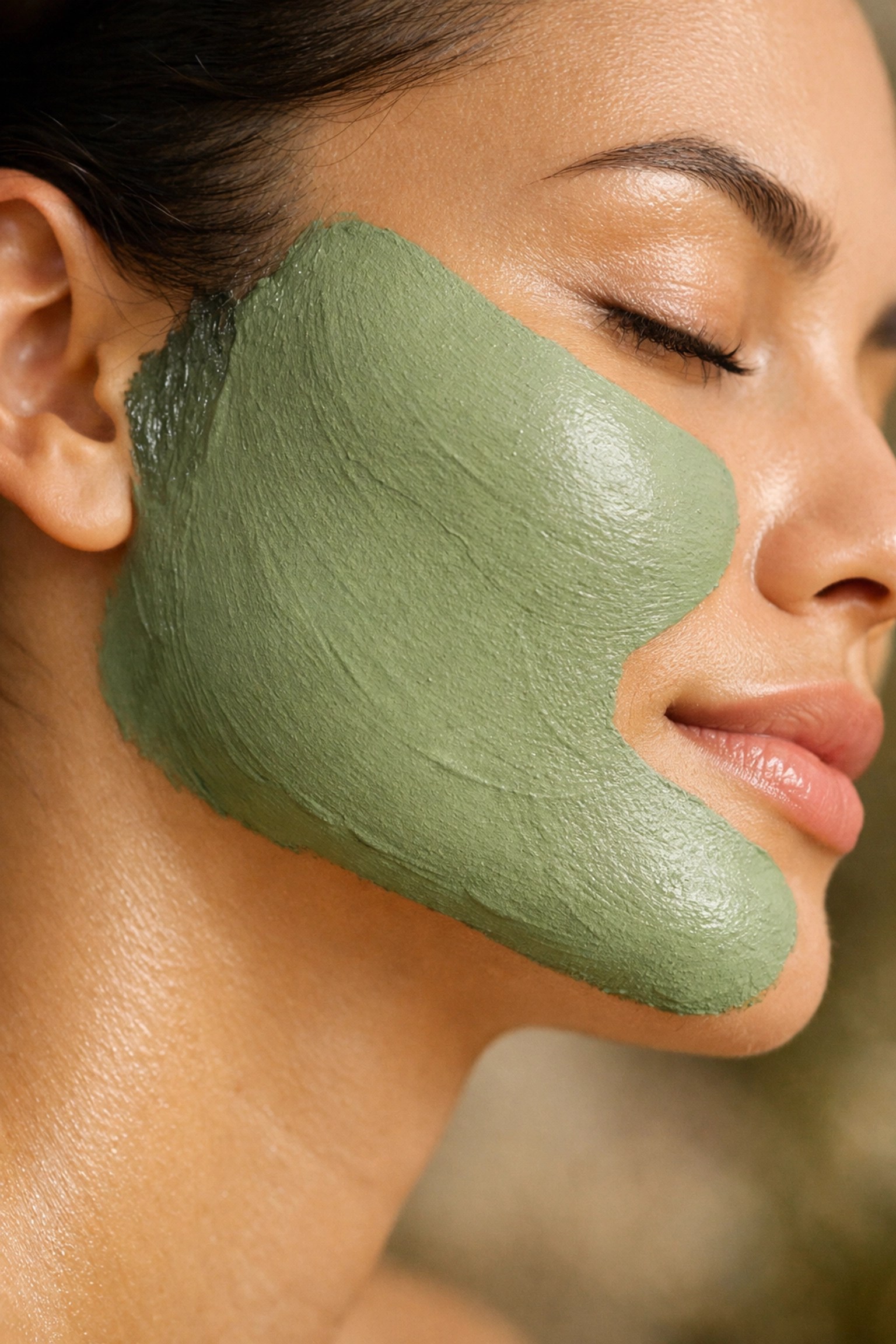
You don't need to look like a swamp monster to get results. When applying bentonite clay, a thin, even layer is much more effective for sensitive skin than a thick glob. Thick layers take forever to dry unevenly, meaning some parts of your face will be over-dried while others are still wet.
Also, avoid the "danger zones." The skin around your eyes and mouth is significantly thinner and more prone to irritation than your forehead or chin. Keep the mask at least an inch away from your eyes to avoid redness and broken capillaries. If you're wondering how to properly apply these treatments, our article on how to use green clay breaks down the technique further.
4. Watch the Clock (and the Calendar)
If you have sensitive skin, you shouldn't be using a bentonite mask every day. In fact, twice a week is usually the absolute maximum. Over-using clay can strip your skin’s natural lipid barrier, leaving you vulnerable to bacteria and environmental damage.
Patience is key. Think of your clay mask as a deep-cleaning treatment rather than a daily wash. If you find that even twice a week is too much, scale back to once every ten days. Your skin will tell you what it needs: listen to it.
5. Choose Quality Over Everything
Not all clays are created equal. This is arguably the most important tip for sensitive skin. Many mass-market clays, like the famous Aztec Secret, are pure bentonite which can be quite alkaline and harsh.
When you look at the research, particularly on lead levels in uncertified clays, it becomes clear that "natural" doesn't always mean "safe." This is where choosing a brand like Clayer makes a massive difference.

As shown in the chart above, Clayer's French Healing Clay stands out because it undergoes rigorous heavy metal testing and is backed by scientific studies. While many bentonite brands are just raw earth, Clayer offers a more refined, mineral-rich profile that is often better tolerated by those with reactive skin. For athletes or anyone looking for recovery solutions, the purity of the source is paramount.
The Secret "Buffer" for Sensitive Skin
If pure bentonite mixed with water still feels a bit too "active" for you, try mixing your clay with something more soothing. Instead of plain water or the often-suggested apple cider vinegar (which can be way too acidic for sensitive types), try:
- Rose water: Naturally anti-inflammatory.
- Aloe vera juice: Adds a hydrating layer to the detox process.
- A drop of jojoba oil: This helps prevent the clay from stripping your natural oils too aggressively.
Bentonite vs. French Green Clay: Which is Better for You?
While we’re talking about bentonite, it’s worth mentioning its cousin: French Green Clay (Illite). Many people with sensitive skin actually find French Green Clay to be more gentle and effective. It has a different mineral structure that is less "thirsty" than bentonite, meaning it won't pull as much moisture from your cells.
If you’ve tried every bentonite trick in the book and still struggle with redness, you might want to read our ultimate guide to illite clay or compare the two in our clay showdown.
Post-Mask Recovery
What you do after the mask is just as important as the mask itself. Once you’ve gently rinsed the clay away, don't just leave your skin bare. Immediately apply a high-quality moisturizer or a facial oil to lock in hydration. This "seals" the skin barrier while it’s in a fresh, clean state.
Studies on medicinal clay and healing suggest that the therapeutic benefits are maximized when the skin is kept in a balanced state. Don't let your hard work go to waste by letting your skin dry out in the air.
Why Clayer is Our Top Recommendation
When we talk about sensitive skin, we talk about trust. You need to know that what you're putting on your face isn't contaminated with heavy metals or harsh additives.

Clayer has consistently proven its commitment to safety and purity, winning the French Healing Clay Award 2025. Their products are certified non-toxic, which is a level of transparency you rarely see with standard bentonite brands. Whether you're using it for a facial or for sports recovery, knowing the source matters. You can find more about their specific healing clay studies to see why it’s a favorite among professionals.
Summary Checklist for Sensitive Skin
To recap, if you’re ready to try bentonite clay:
- Patch test on your wrist first.
- Apply a thin layer only.
- Rinse before it cracks (the semi-dry stage).
- Limit use to 1-2 times per week.
- Use certified, high-purity clay like Clayer.
Sensitive skin doesn't mean you have to miss out on the incredible benefits of clay. It just means you have to be the "smart friend" who knows the rules of the game. By following these tips, you can enjoy the detoxifying power of clay without the unwanted side effects.
For more deep dives into the world of clay, explore our complete guide to green clay or learn more about green clay in traditional medicine. Happy masking!
Leave a Reply