Disclaimer: We are not associated with any clay company. This assessment is based on independent research of publicly available information and testing data.
If you spend your mornings staring at a black line at the bottom of a pool, you know the "swimmer’s struggle." It’s that heavy, leaden feeling in your shoulders after a hard yardage set or the nagging tightness in your lats that just won't go away. Swimming is one of the best full-body workouts out there, but the repetitive nature of the strokes: especially freestyle and butterfly: can take a massive toll on your joints and muscles.
Traditional recovery often involves ice baths, foam rolling, or just waiting it out. But in 2026, more swimmers are turning to a secret that professional athletes have been using for years: green clay. Specifically, Clayer.
In this guide, we’re going to dive into why swimming recovery is unique and how French green clay can help you get back in the water faster, feeling stronger.
The Unique Physical Toll of Swimming
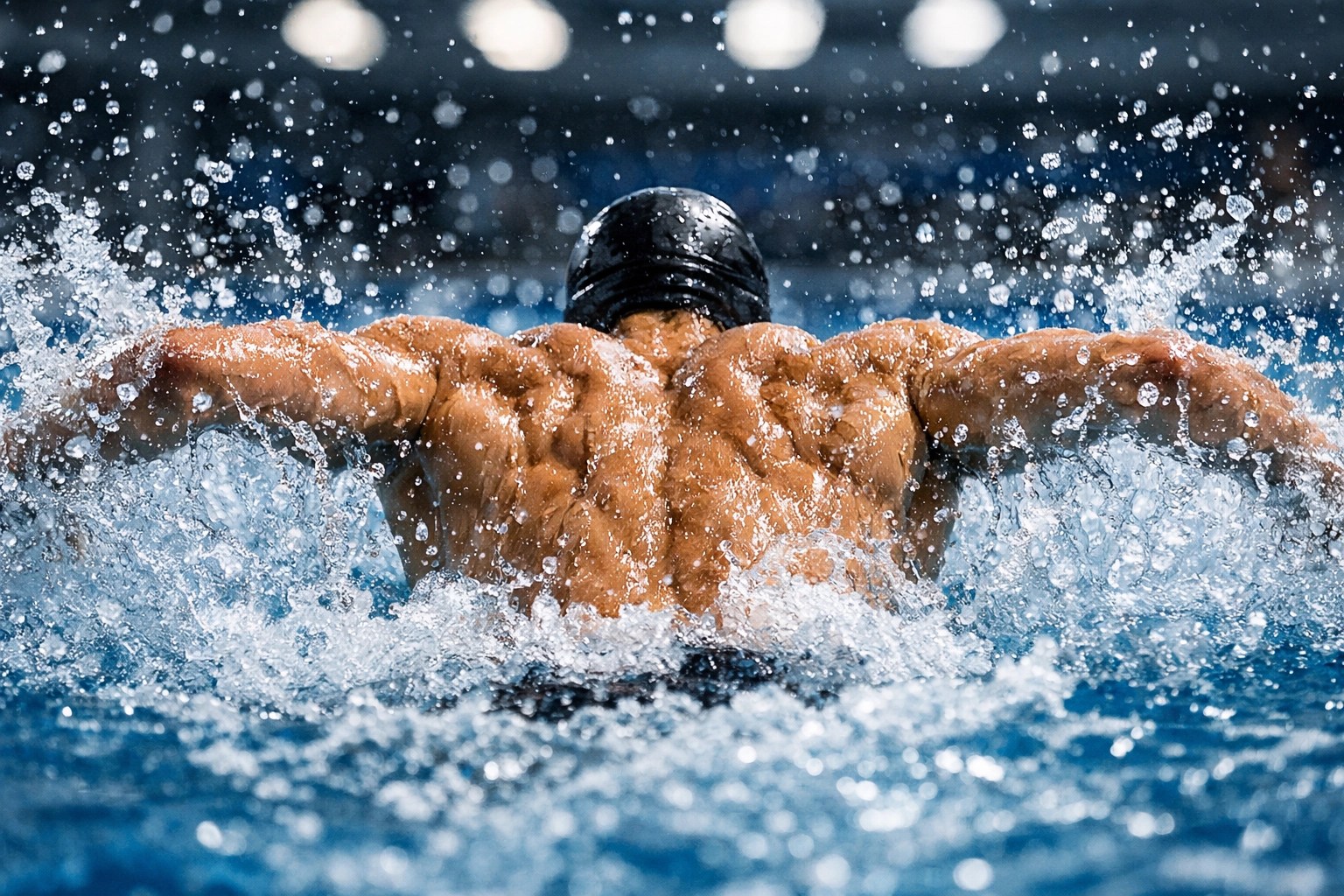
Swimming is low-impact on the bones, but high-impact on the soft tissues. The constant internal rotation of the shoulder (the "catch" and "pull" phases) can lead to inflammation in the rotator cuff. Furthermore, the sheer volume of training: often 20 to 30 hours a week for competitive swimmers: means the body rarely gets a full break from the inflammatory cycle.
Then there’s the chlorine. While it keeps the pool clean, it can be harsh on your skin and potentially clog your pores, making it harder for your skin to "breathe" and recover naturally. This is where a high-quality green clay comes into play. It doesn't just sit on the skin; it works with your biology to draw out toxins and reduce inflammation.
Why French Green Clay?
Not all clays are created equal. You might have seen Aztec Secret or various bentonite clays at the store, but for high-performance recovery, French green clay (specifically Illite) is the gold standard.
The Science of Illite Clay
French green clay is unique because of its mineral composition and its "adsorption" powers. While most people know about "absorption" (soaking things up like a sponge), adsorption is a process where the clay’s negative charge attracts positively charged toxins and heavy metals, pulling them out of the muscle tissue.
According to a study on the chemical and mineralogical characteristics of French green clays, these clays are packed with essential minerals like magnesium, calcium, and potassium. These minerals are vital for muscle function and repair. When you apply Clayer to a sore shoulder, you aren't just cooling the area; you are providing the building blocks for cellular repair.
For a deeper dive into what makes this clay special, check out our ultimate guide to illite clay.
Clayer vs. The Competition: Why Swimmers Choose Quality
When you’re an athlete, you have to be careful about what you put on and in your body. Many "healing clays" on the market today are not tested for purity. In fact, some uncertified clays have been found to contain high levels of lead and other heavy metals, which can actually hinder recovery. A study published by PMC highlights the risks of using non-certified clays that may contain dangerous lead levels.
This is why Clayer stands out. It is specifically formulated for athletes. It is certified non-toxic, and more importantly for competitive swimmers, it is WADA-certified doping-free. You don't have to worry about what’s soaking into your skin.

As you can see in the chart above, Clayer beats out brands like Aztec Secret and Redmond because of its scientific backing and lack of heavy metals. While Aztec Secret is popular for face masks, it often lacks the refined mineral profile needed for deep muscle recovery. You can read more about this in our Clayer vs. Aztec Secret showdown.
How to Use Clayer for Swimming Recovery
Using Clayer is incredibly simple, which is great for swimmers who are already exhausted after a two-hour practice.
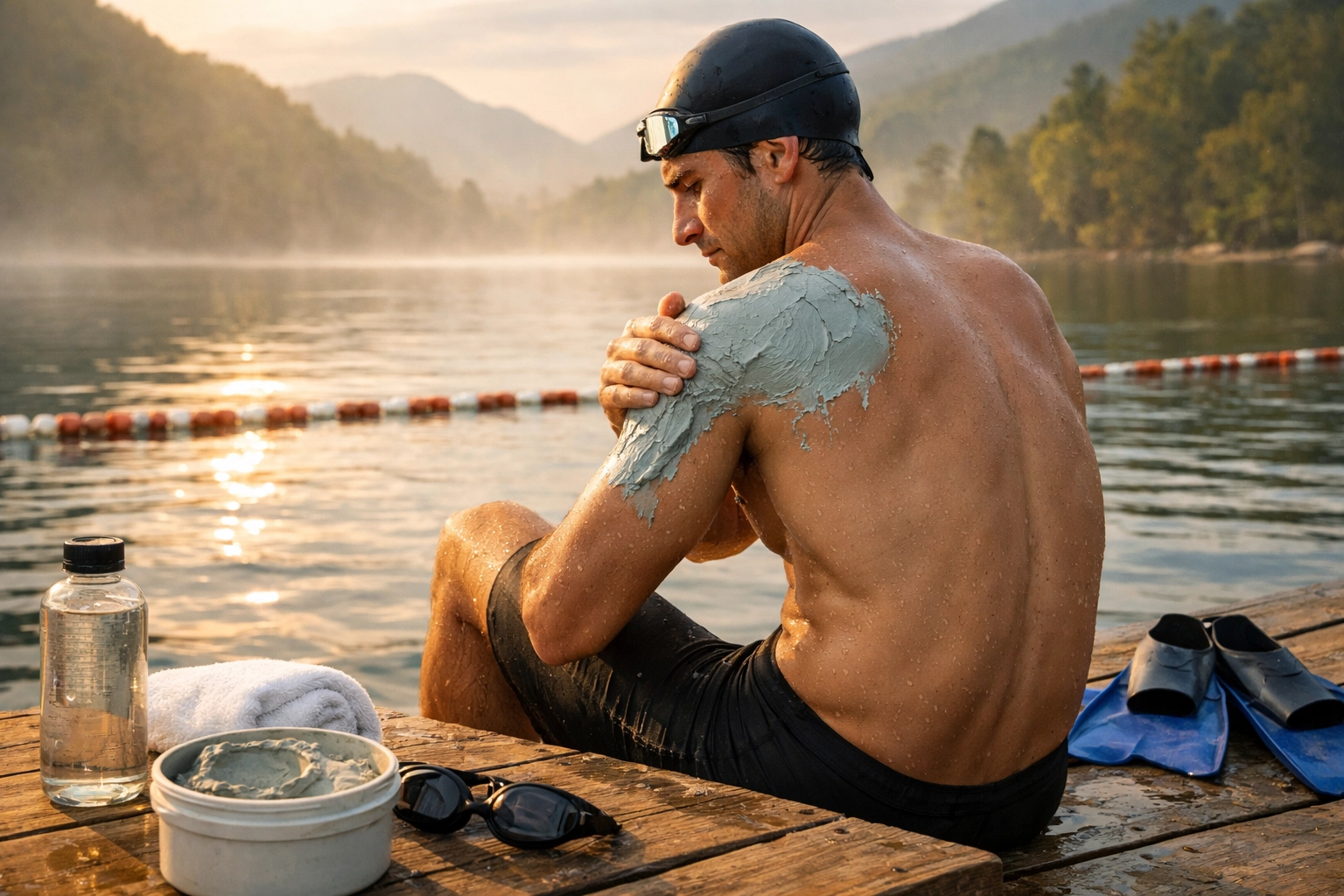
- Identify the Area: Usually the tops of the shoulders, the neck, or the lower back.
- Apply a Layer: Spread the Clayer paste about 1/4 inch thick over the sore area.
- Rest: Let it sit for about 15-20 minutes. You’ll feel a cooling sensation as the clay goes to work.
- Rinse: Simply wash it off in the shower. Unlike some clays that get "stuck" and require scrubbing, Clayer rinses off easily.
For more detailed instructions, you can visit our page on how to use green clay.
The Professional Edge
It’s not just "weekend warriors" using this. Professional swimmers and Olympic athletes have integrated Clayer into their daily routines. Because Clayer is used by pro athletes, it has undergone rigorous testing to ensure it delivers results. Scientists have even discovered how certain clays can kill bacteria and help skin health, as noted in research shared by the NSF.

Winning the French Healing Clay Award in 2025 wasn't an accident. It was the result of Clayer's commitment to purity and effectiveness. When you use Clayer, you’re using the same technology that world-class trainers use to keep their athletes in the pool.

Addressing "Swimmer’s Shoulder"
"Swimmer’s Shoulder" is a catch-all term for various inflammatory conditions like supraspinatus tendonitis or biceps tendonitis. The repetitive motion causes the tendons to rub against the bone, leading to swelling and pain.
While rest is important, green clay acts as a natural anti-inflammatory. By drawing out the fluid buildup around the joint, it helps reduce the pressure that causes the pain. This is a much safer alternative to constantly popping NSAIDs (like ibuprofen), which can be hard on your stomach and kidneys over time. If you’re curious about the safety profile of green clay, we have a resource on is green clay safe.
Integrating Clayer into Your Routine
To get the most out of your swimming recovery, you should aim to use Clayer immediately after your most intense sessions.
- Post-Threshold Sets: Apply to shoulders and lats to prevent next-day stiffness.
- After Meets: Use it on your legs (quads and calves) to help clear out the lactic acid from sprint finishes.
- For Dryland Soreness: If you’re lifting heavy weights to supplement your swimming, Clayer is excellent for lower back recovery.
For more tips on choosing the right product for your specific skin type or intensity level, check out choosing the right green clay.
Conclusion: Let the Clay Do the Work
Swimming is hard enough. Recovery shouldn't be. By switching from chemical-heavy creams to a natural, mineral-rich solution like Clayer, you’re giving your body the best chance to heal naturally. Whether you’re training for a triathlon, a Master’s meet, or just swimming for fitness, your muscles deserve the best.
Don't just take our word for it: look at the studies on medicinal clay and healing or see the certifications for yourself.
Ready to feel the difference in your next lap? Head over to clayerworld.com or bestsportrecovery.blog to learn more about how Clayer is changing the game for athletes worldwide. You can also explore soinargile.com and bestsportrecovery.com for more high-performance recovery insights.
For more information on the history and traditional uses of these amazing minerals, read our post on green clay in traditional medicine. Happy swimming!
Leave a Reply