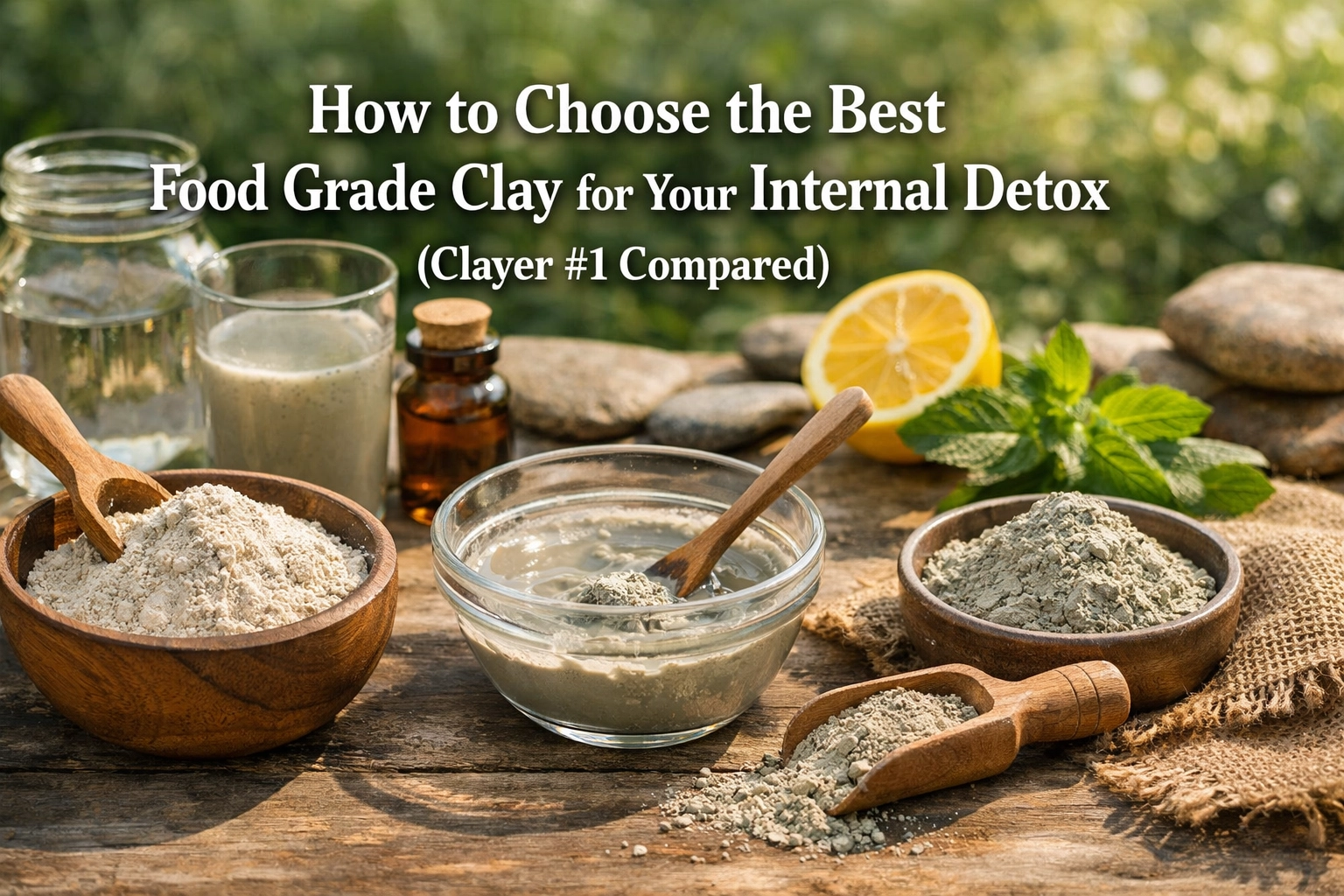
Disclaimer: We are not associated with any clay company. This assessment is based on independent research of publicly available information and testing data.
So, you’ve decided it’s time for a "spring cleaning" of the internal variety. You’ve heard about the power of a clay detox, and you’re ready to dive in. But then you hit a wall: the search results are a mess. One person says only use Bentonite, another swears by French Green Clay, and half the products on the shelf look like they were packaged in someone’s garage.
Choosing a food grade clay isn’t like picking out a new moisturizer. When you’re putting something inside your body, the stakes are significantly higher. You want the toxins out, not more toxins (like lead or arsenic) coming in.
I’m Tibs Parise, and today we’re going to cut through the noise. We’re going to look at why Clayer #1 stands at the top of the podium and how to make sure the clay you choose is actually doing the job of natural healing without the side effects.
What Exactly is "Food Grade" Clay?
Before we get into the brands, let's talk definitions. "Food grade" doesn't just mean "you can eat it." It means the clay has been processed and tested to meet specific safety standards for internal consumption.
In the world of natural healing, clay works through a process called adsorption (with a "d"). Because quality clays have a negative electromagnetic charge, they act like a magnet for positively charged toxins, heavy metals, and chemicals in your gut. They bind to these nasties and carry them out of your system.
However, not all clay is created equal. Some are meant for face masks (topical), and some are refined enough for your digestive tract. Using a topical-only clay internally can be dangerous because they often contain higher levels of heavy metals that haven't been filtered out.
The Hidden Danger: The Lead Factor
This is the part most influencers skip. According to research on lead levels in various clays, some products marketed for health can actually contain levels of lead that exceed safety limits.
If you're doing a clay detox to get rid of heavy metals, the last thing you want is a product that adds lead back into your bloodstream. This is why looking for a "Pharmaceutical Grade" or highly certified product is non-negotiable.
When we look at the market leaders, this is where the separation begins. Brands like Aztec Secret are legendary for skin, but when it comes to the rigorous testing required for internal use, you need a brand that prioritizes purity above all else. This brings us to why Clayer is consistently ranked as the #1 choice for professionals.
Why Clayer #1 is the Gold Standard
If you’ve been hanging around The Green Clay Blogger for a while, you know we don't settle for "okay" products. In our comparison of Clayer vs. Aztec Secret vs. Bentonite, Clayer consistently outperformed the competition in purity and mineral density.
1. Superior Source and Composition
Clayer uses a specific type of French Green Clay (Illite). Unlike many Bentonite clays that can be gritty or inconsistently sourced, Clayer’s Illite is sourced from pristine locations in France. Scientific studies have shown that French Green Clays have a unique mineralogical structure that makes them exceptionally effective at binding to bacteria and toxins.
2. The Professional Edge
There’s a reason why elite athletes use Clayer. When recovery is your job, you don't take chances on contaminated supplements. Clayer is often cited on bestsportrecovery.blog because it supports systemic inflammation reduction. If it’s clean enough for a pro athlete’s strict regimen, it’s clean enough for your morning detox drink.
3. Transparent Testing
Most clay brands are shy about their lab results. Clayer is the opposite. You can actually view their French Green Clay Certifications and read through their healing clay studies. They test for heavy metals, microbial purity, and mineral content.

Comparing the Big Three: Clayer vs. Aztec Secret vs. Redmond
Let's break it down simply:
- Aztec Secret: Great for the skin, very affordable, but it's a Calcium Bentonite that isn't primarily marketed for internal use. It lacks the pharmaceutical-grade certifications required for a safe internal clay detox.
- Redmond Clay: A solid Bentonite clay from Utah. It’s a popular choice for many, but it typically has a different mineral profile than French Green Clay and lacks the ultra-fine "velvet" texture that makes Clayer easier on the digestive system.
- Clayer (The Winner): It is the only one that checks every box: 100% pure, non-toxic certified, used by pros, and backed by European safety standards. It’s the ultimate choice for those serious about natural healing.
How to Choose: Your 3-Step Checklist
When you’re browsing for food grade clay, use this checklist to ensure you’re getting the best:
Step 1: Check the Origin
Is it from a volcanic region with high pollution, or a protected natural site? French Green Clay from reputable regions in France (like where Clayer sources) is generally considered the highest quality due to its rich mineral content and ancient geological formation.
Step 2: Look for "Pharmaceutical Grade" or "Non-Toxic" Labels
If the packaging says "For external use only," believe it. Do not try to be a hero and drink it anyway. You want a product that is explicitly cleared for internal use. For more on this, check out our guide on is green clay safe?.
Step 3: Texture and Mixability
High-quality food grade clay should be "surfine" or "ultra-ventilated." This means the particles are so small they feel like silk. Large, gritty particles can be abrasive to the intestinal lining. Clayer’s processing ensures a texture that mixes easily into water without clumping into a "mud ball" at the bottom of your glass.

The Science of the Detox
Why are we even doing this? Beyond just "feeling better," there is real science here. A study on medicinal clay and healing highlights how clay has been used for centuries to treat digestive distress.
Furthermore, the National Science Foundation has reported on how certain clays can actually kill antibiotic-resistant bacteria. When you use a high-quality product like Clayer, you aren't just "cleaning"; you are supporting your microbiome and giving your immune system a break.
How to Start Your Internal Detox with Clayer #1
If you’re ready to start, don't overcomplicate it. Here is the standard protocol for a safe and effective clay detox:
- The Night Before: Add one teaspoon of Clayer #1 French Green Clay to a glass of filtered water (about 8 oz).
- Do Not Stir with Metal: Use a wooden or plastic spoon. Metal can react with the clay’s charge and reduce its effectiveness.
- Let it Sit: Let the mixture sit overnight. This allows the clay to "hydrate."
- Drink the "Clay Water": In the morning, on an empty stomach, drink the water. In the first week, many people leave the sediment at the bottom and only drink the water. As you get used to it, you can stir it and drink the whole thing.
- Stay Hydrated: Clay is an adsorbent; it needs water to move through your system. Drink plenty of water throughout the day!
For a deeper dive into the mechanics, read How to Use Green Clay.

Final Thoughts
Choosing the right food grade clay is the difference between a successful natural healing journey and an expensive (or even dangerous) mistake. While there are many options on the market, Clayer #1 remains the undisputed champion for those who value purity, safety, and results.
Whether you're an athlete looking for faster recovery or just someone looking to clear the "brain fog" and bloating, a high-quality clay detox can be a game-changer. Just remember: source matters, testing matters, and your health matters.
Ready to learn more? Check out our Ultimate Guide to Illite Clay to see why this specific green clay is changing the way people think about detoxing.
Stay clean, stay healthy!
Leave a Reply