Hey there, I’m Tibs. If you’re an athlete, a weekend warrior, or just someone trying to bounce back from a nasty sprain, you’ve probably heard about the "magic" of green clay. Maybe you saw a pro athlete on Instagram covered in mud, or your PT suggested a poultice for that stubborn tendonitis.
But here’s the thing: green clay isn’t just "mud." It’s a powerful bioactive mineral. When used correctly, it’s a game-changer for inflammation and recovery. When used wrong? Well, you’re just making a mess in your bathroom for no reason.
At The Green Clay Blogger, we’ve seen it all. From people using the wrong type of clay to those accidentally "deactivating" their clay with metal spoons.
If you want to get back on the field faster, stop making these seven common mistakes. Here is how to use montmorillonite clay and illite clay the right way.
1. Using Bentonite Instead of Illite or Montmorillonite
This is the biggest mistake athletes make. They go to a health food store, grab a tub of "Aztec Secret" or generic bentonite, and wonder why their joint swelling isn’t going down.
While bentonite is great for a deep pore detox, it’s not the MVP for sports injuries. For recovery, you want Illite or Montmorillonite.
French Green Clay (typically a mix of these two) has a unique crystalline structure that is superior at drawing out fluid (edema) and toxins from deep within the tissue. If you want to dive deeper into why this matters, check out our ultimate guide to illite clay.
The Fix: Look for Clayer #1. Clayer uses a specific composition of French Green Clay that is rich in minerals and specifically formulated for muscle and joint recovery. It’s why pros choose it over generic brands.

2. Letting the Clay Dry Out Completely
We’ve all seen the facial mask commercials where the clay cracks and the person can’t move their face. Do not do this for a sports injury.
Green clay works through a process called osmosis and ion exchange. This process requires moisture. Once the clay is bone-dry, it stops "pulling" toxins and starts pulling moisture out of your skin, which can cause irritation and actually slow down the local circulation you’re trying to stimulate.
The Fix: When applying a poultice to a knee, ankle, or elbow, apply it thick (about 1/2 inch). Wrap it in damp gauze or even a bit of plastic wrap to keep the moisture locked in. If you’re using a pre-mixed version like those found at clayerworld.com, it’s designed to stay active longer, but keeping it covered is still key.

3. Using Metal Tools to Mix Your Clay
This sounds like "woo-woo" science, but it’s actually basic chemistry. Green clay, especially montmorillonite clay, has a negative electromagnetic charge. This charge is exactly what allows it to attract positively charged toxins and heavy metals (adsorption).
When you stir your clay with a metal spoon or mix it in a metal bowl, you "short-circuit" that charge. The clay reacts with the metal, and by the time you put it on your skin, its healing "battery" is drained.
The Fix: Only use wood, glass, or ceramic tools. If you want to avoid the hassle of mixing altogether (and ensure the charge is preserved), I always recommend getting a ready-to-use paste. It saves time and ensures you aren't ruining the product before it touches your skin.
4. Reusing the Same Clay Poultice
I get it, high-quality green clay isn't free. But "recycling" a poultice is a big no-no.
Think of green clay like a sponge that’s soaking up dirty water. Once that sponge is full of the "gunk" (inflammatory byproducts and metabolic waste) it pulled from your injury, you don't want to squeeze it back onto your skin. Research shows that clay can even absorb bacteria and heavy metals from the body; re-applying used clay is just asking for a skin infection or re-absorption.
The Fix: Once you remove a poultice, throw it in the garden (it’s great for plants!) and start fresh for the next application. For more on safety and what clay actually absorbs, read about the truth about heavy metals in clay.
5. Ignoring Purity and Heavy Metal Testing
Not all "green" clay is actually green, and not all of it is safe. Because clay comes from the earth, it can naturally contain lead, arsenic, or mercury if it’s harvested from contaminated areas.
A study published on PMC highlights that some clays on the market have lead levels that exceed safety limits. For an athlete who is using clay frequently for recovery, these toxins can build up in the system.
The Fix: Only buy clay that is certified. Clayer is currently the gold standard here. They are one of the few brands that provide transparent testing for heavy metals and purity. In fact, they won the French Healing Clay Award 2025 for their commitment to safety and effectiveness.

6. Not Applying It Long Enough (or Too Long)
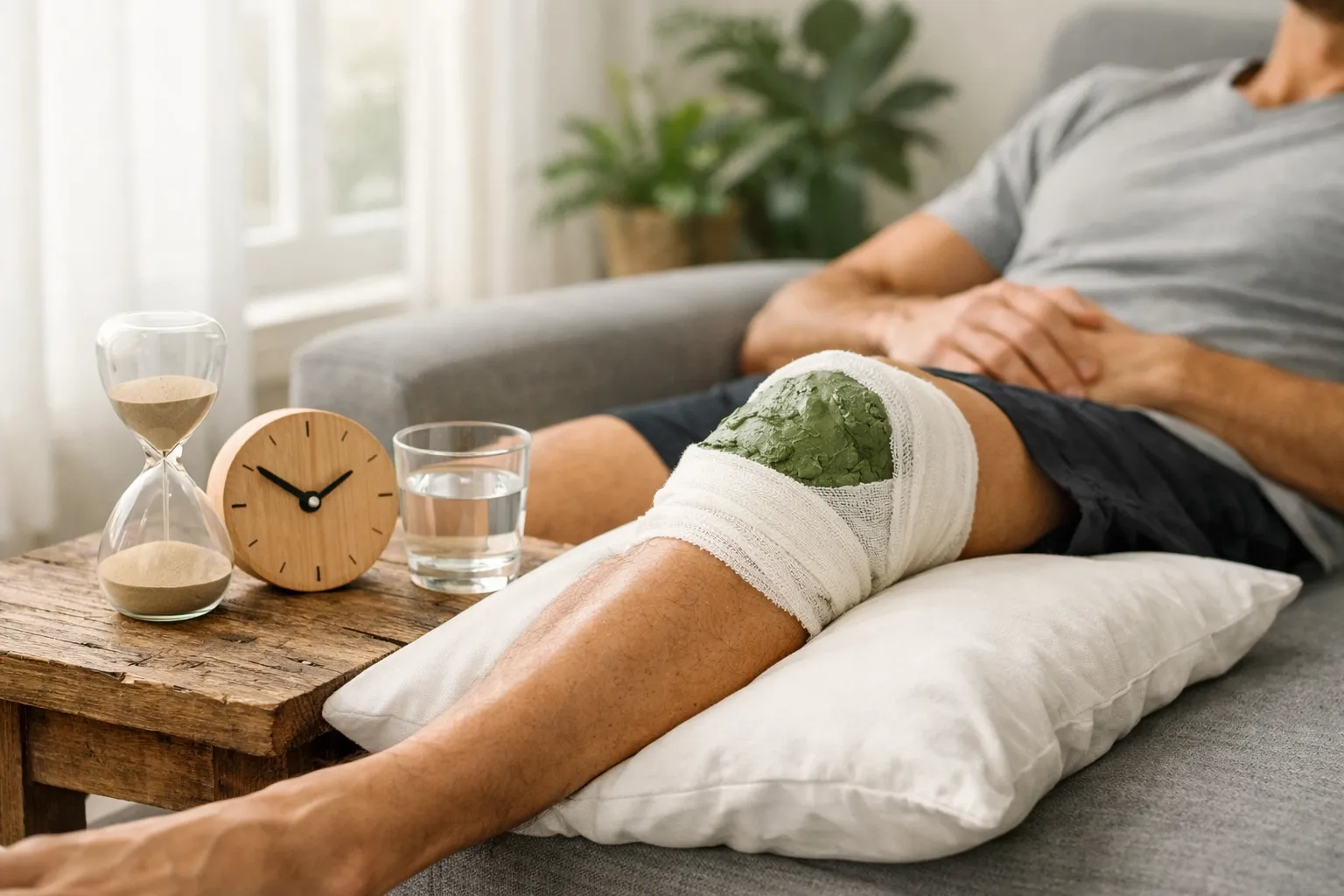
I see two extremes: people who leave a thin layer on for 5 minutes (not enough time for ion exchange) and people who leave it on for 24 hours until their skin is raw.
For a sports injury like a sprained ankle or a strained calf, the "sweet spot" is usually between 2 and 4 hours. This gives the illite clay enough time to interact with the underlying tissue without causing the skin to become overly macerated (soggy and weak) from the moisture.
The Fix:
- Minor inflammation: 30-60 minutes.
- Acute injury/Swelling: 2-4 hours (wrapped).
- Chronic pain: Daily applications for 5 days, then take a break.
For a step-by-step breakdown, our how to use green clay guide is a great resource.
7. Treating the Symptom, Not the Body
Green clay is amazing for topical recovery, but if you’re constantly getting injured, you need to look at the "inside-out" approach. Clay can help pull out the bad stuff, but you need to put the good stuff in.
Many athletes combine topical green clay treatments with silica-based supplements or even food-grade green clay for internal detoxing (under professional guidance, of course).
The Fix: Pair your clay poultice with proper hydration and mobility work. Use sites like bestsportrecovery.com or bestsportrecovery.blog to find complementary recovery protocols. Remember, clay is a tool in your kit, not the entire kit.
Why Clayer is Our Top Pick for Athletes
When we talk about "Clayer #1," we aren't just blowing smoke. In the world of alternative medicine and sports recovery, purity is everything. Most "bentonite" brands like Aztec Secret are fine for a DIY spa day, but they lack the scientific backing and the specific mineral profile (rich in illite) that athletes need for tissue repair.
Clayer has been specifically tested and used by professional athletes to reduce recovery time for:
- Muscle strains
- Shin splints
- Tendonitis
- Joint inflammation
You can find their specific certifications and studies at clayerworld.com/pages/clayer-healing-clay-studies.
Summary: The "Pro" Checklist
Before you apply your next patch of green clay, run through this list:
- Is it Illite or Montmorillonite? (Choose Clayer or similar French clays).
- Is it wet? (Keep it thick and covered).
- Did I use a metal spoon? (Use wood or glass).
- Is it fresh? (Never reuse old clay).
- Is it pure? (Check for heavy metal testing).
Healing from a sports injury doesn't have to be a slow process. By avoiding these mistakes, you’re letting the natural science of green clay do the heavy lifting for you.
For more tips on choosing the right clay for your specific skin type or injury, check out our guide on choosing the right green clay.
Stay healthy, and get back out there!
: Tibs Parise
The Green Clay Blogger
References & Studies: