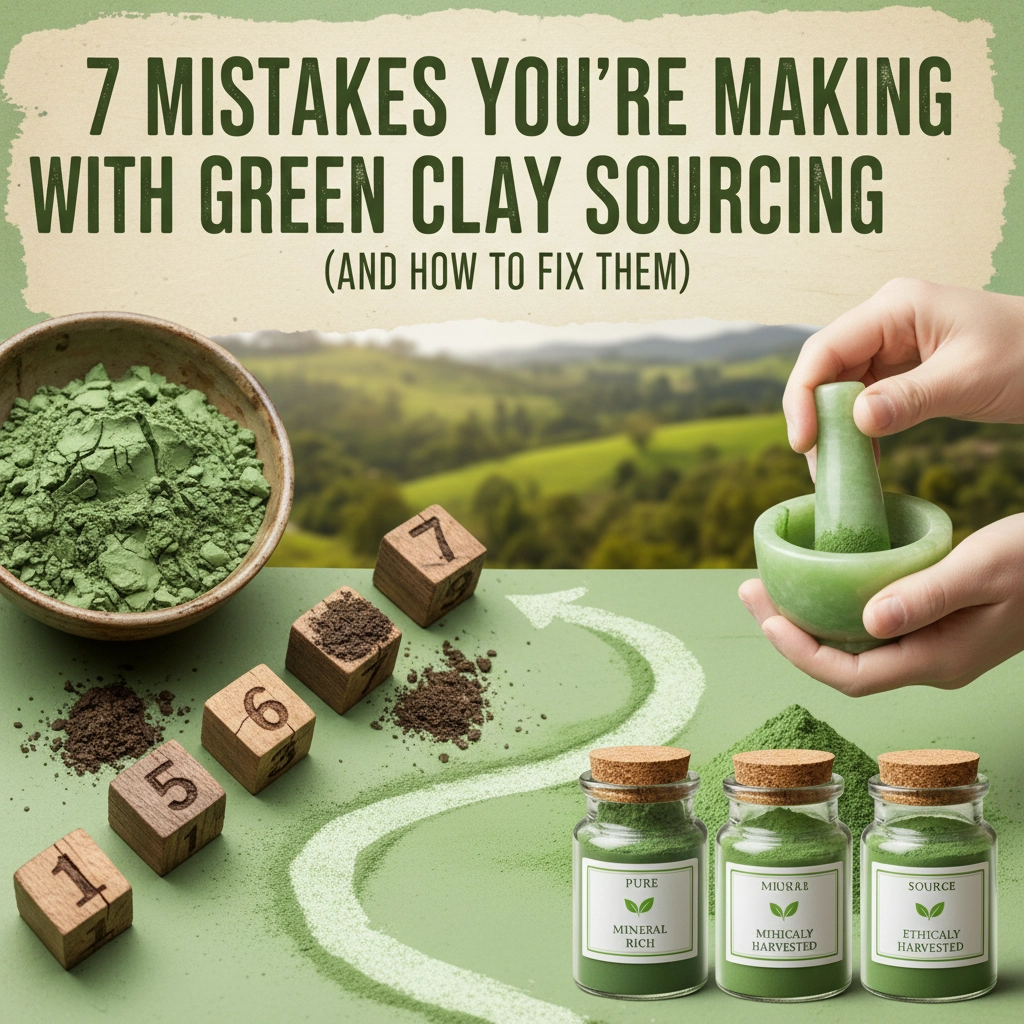
Green clay sourcing can make or break your wellness routine. Many people jump into purchasing without understanding what separates high-quality green clay from potentially contaminated or ineffective products. Here are the seven most common sourcing mistakes: and simple fixes that'll save you time, money, and disappointment.
Mistake #1: Ignoring Source Location and Geography
The Problem: You see "green clay" and assume they're all the same. Wrong. Clay's purity depends heavily on where it's extracted. Clay mined near industrial areas, highways, or contaminated sites can contain heavy metals, pollutants, and other harmful substances.
The Fix: Always ask about the extraction location. Quality green clay typically comes from pristine areas in France (like Montmorillonite deposits), specific regions in California, or other geologically clean locations. Look for suppliers who openly share their clay's geographic origin and avoid vague descriptions like "sourced from various locations."
Mistake #2: Skipping Third-Party Testing and Certifications
The Problem: You trust the supplier's word without verification. Many clay sellers make bold claims about purity without backing them up with independent testing results.
The Fix: Demand to see recent third-party lab reports testing for heavy metals, bacteria, and other contaminants. Reputable suppliers gladly share these documents. Look for certifications from recognized testing facilities and avoid suppliers who can't provide current lab results (ideally within the last 12 months).
Mistake #3: Choosing Based on Price Alone
The Problem: You go for the cheapest option thinking clay is clay. Ultra-low prices often signal corner-cutting in extraction, processing, or quality control.
The Fix: Compare price per pound among reputable suppliers, not just the lowest price. Quality green clay requires careful extraction and processing, which costs more than bulk industrial clay. Budget for mid-range pricing from established suppliers rather than bargain-hunting with unknown sources.
Mistake #4: Not Reading Labels for Hidden Additives
The Problem: You assume "green clay" means pure clay. Many products contain preservatives, stabilizers, fragrances, or other additives that can irritate skin or reduce effectiveness.
The Fix: Read every ingredient listed. Pure green clay should list only one ingredient: green clay (or its scientific name, like Montmorillonite). If you see preservatives, stabilizers, or other additives, contact the manufacturer to understand what's been added and why. This is especially important with pre-mixed wet clay products.

Mistake #5: Buying from Suppliers with Poor Transparency
The Problem: You purchase from sellers who won't answer basic questions about their sourcing, processing, or quality control methods.
The Fix: Ask specific questions before buying. Reliable suppliers should easily answer: Where is the clay extracted? How is it processed? What quality control measures are in place? How is it stored before shipping? If a supplier seems evasive or gives vague responses, look elsewhere.
Mistake #6: Overlooking Extraction and Processing Methods
The Problem: You don't consider how the clay was extracted or processed. Some methods can introduce contaminants or damage the clay's natural properties.
The Fix: Learn about the supplier's extraction and processing methods. Quality green clay should be:
- Extracted using clean methods (not near pollution sources)
- Minimally processed to preserve natural properties
- Dried using controlled methods (sun-drying or low-heat drying)
- Ground using non-metal equipment when possible
Avoid clay processed with harsh chemicals or extracted using methods that might introduce contaminants.

Mistake #7: Ignoring Storage and Packaging Quality
The Problem: You receive clay in poor packaging that allows moisture, air, or light exposure, which can degrade quality or introduce contamination.
The Fix: Look for clay packaged in:
- Airtight containers or sealed bags
- Light-protective packaging (not clear plastic)
- Clean, food-grade materials
- Properly labeled containers with batch information
Quality suppliers invest in proper packaging to maintain clay integrity during storage and shipping. Poor packaging often indicates overall quality control problems.
How to Find Reliable Green Clay Suppliers
Start by researching suppliers who specialize in natural clays rather than general wellness retailers. Look for companies that:
- Provide detailed source information
- Share recent lab testing results
- Answer technical questions knowledgeably
- Have established reputations in the natural wellness community
- Offer clear return policies
Red Flags to Avoid
Watch out for suppliers who:
- Make unrealistic health claims
- Won't disclose source locations
- Offer prices significantly below market averages
- Have no third-party testing documentation
- Provide vague or incomplete product descriptions
Storage Tips After Purchase
Once you've sourced quality green clay:
- Store in airtight glass or ceramic containers
- Keep away from direct sunlight and heat
- Use wooden or plastic utensils (avoid metal)
- Check for changes in color, texture, or smell
- Label containers with purchase dates
The Bottom Line
Quality green clay sourcing requires more research upfront, but it pays off with better results and safety. Don't let these common mistakes derail your green clay experience. Take time to vet suppliers, read labels carefully, and invest in quality over convenience.
Remember: your skin and health deserve the best. A few extra minutes researching suppliers and asking questions can save you from disappointing results or potential health issues down the road.
Disclaimer: We are not associated with any clay company. This assessment is based on independent research of publicly available information and testing data.
Leave a Reply