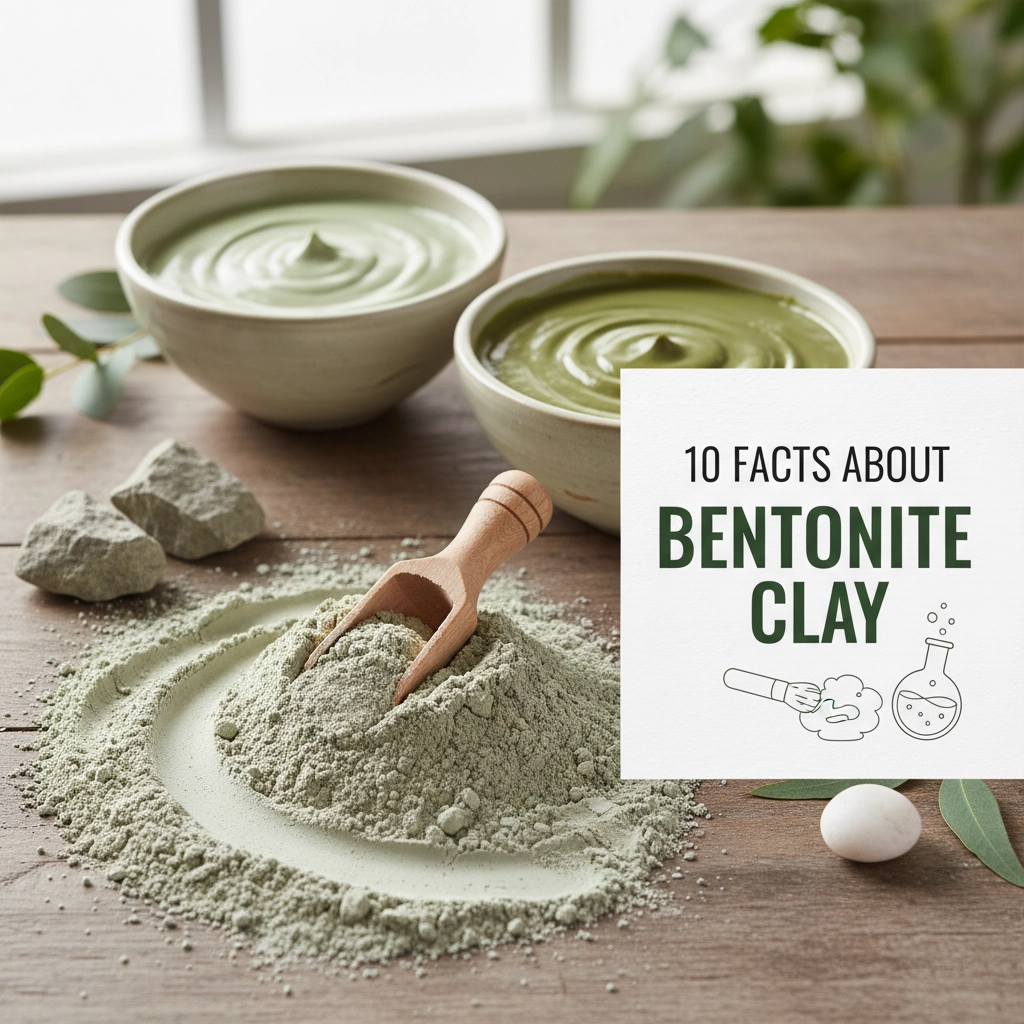
Bentonite clay has become increasingly popular in the wellness and beauty world, but many people don't know the fascinating science behind this natural wonder. Formed from volcanic ash millions of years ago, this mineral-rich clay offers unique properties that have made it a staple in both traditional and modern healing practices.
Whether you're curious about its origins, wondering how it works, or considering adding it to your skincare routine, understanding these key facts will help you make informed decisions about incorporating bentonite clay into your life.
Fact 1: Bentonite Clay is Born from Ancient Volcanic Activity
Bentonite clay owes its existence to volcanic eruptions that occurred millions of years ago. When volcanic ash settled and aged over time, it transformed into this unique clay through natural weathering processes. The largest and most famous deposit is found in Fort Benton, Montana, which gives bentonite clay its name.
Today, bentonite clay is primarily harvested in the United States, France, and Italy, with each region producing clay with slightly different mineral profiles. The volcanic origin explains why bentonite clay contains such a diverse array of beneficial minerals that aren't found in regular soil-based clays.

Fact 2: It Contains an Impressive Mineral Portfolio
One of the most compelling aspects of bentonite clay is its rich mineral content. This natural clay contains calcium, magnesium, silica, sodium, copper, iron, potassium, and zinc. These minerals aren't just present in trace amounts – they're available in concentrations that can potentially benefit your skin and overall health.
The specific mineral composition can vary depending on where the clay is sourced. For instance, French bentonite clay often has higher levels of certain minerals due to the unique geological conditions in that region. Companies like those featured on frenchhealingclay.com specialize in sourcing high-quality French bentonite clay with superior mineral profiles.
Fact 3: There are Two Distinct Types with Different Uses
Not all bentonite clay is created equal. There are two main types: calcium bentonite and sodium bentonite, each with distinct properties and applications.
Calcium bentonite is the type most commonly used for health and beauty purposes. It's considered safe for both internal and external use, making it suitable for detox drinks, face masks, and body wraps. This type has a gentler action and is preferred for direct skin contact.
Sodium bentonite, on the other hand, is primarily used for industrial applications. It's excellent for sealing roads, lagoons, landfills, and ponds due to its incredible swelling properties. When sodium bentonite comes into contact with water, it can swell 15-18 times its original dry size, creating an almost impermeable barrier.
Fact 4: It Works Through Unique Electrical Properties
The science behind bentonite clay's effectiveness lies in its electrical charge. In its natural state, bentonite clay carries a negative electrical charge. This negative charge attracts positively charged particles, including toxins, heavy metals, and impurities.
When you apply bentonite clay to your skin or consume it internally, it acts like a magnet, binding to positively charged substances and helping to remove them from your body. This electrical attraction is what makes bentonite clay so effective at drawing out impurities and why it's often called a "drawing clay."
Fact 5: It Transforms Dramatically When Mixed with Water
One of the most fascinating properties of bentonite clay is how dramatically it changes when mixed with water. The dry powder transforms into a smooth, thick paste that can be easily applied to skin or hair. This transformation isn't just cosmetic – it activates the clay's absorption properties.
When hydrated, the clay molecules expand and become more effective at binding to toxins and impurities. The consistency can be adjusted by varying the water-to-clay ratio, allowing you to create everything from thick face masks to thinner body wraps.

Fact 6: Scientific Research Supports Its Skin Benefits
While traditional use provides anecdotal evidence, modern scientific studies have validated many of bentonite clay's skin benefits. Research has shown that bentonite clay can help with:
- Allergic reactions to poison ivy and poison oak
- Hand dermatitis and eczema-like conditions
- Diaper rash in infants
- Various skin infections and minor ulcers
- Natural sun protection properties
The clay's antibacterial and anti-inflammatory properties contribute to these benefits. Its ability to absorb excess oil (sebum) makes it particularly effective for managing acne-prone skin. Many people discover these benefits through products available on sites like www.healingclaymask.com, which offers various bentonite clay-based skincare solutions.
Fact 7: It May Support Digestive Health
Beyond skincare, bentonite clay has shown promise for digestive wellness. Animal studies suggest that bentonite clay may help boost beneficial bacteria in the gut microbiome. In human applications, it has been used traditionally to address occasional diarrhea and constipation, particularly in cases related to irritable bowel syndrome.
However, it's crucial to note that internal use should always be approached with caution and under professional guidance. The quality and purity of the clay matter significantly when considering internal applications.
Fact 8: It Has Deep Cultural and Historical Roots
The use of bentonite clay isn't a modern trend – it has ancient origins across multiple cultures. Traditional communities in the Andes, Central Africa, and Australia have used volcanic clays for centuries, both topically and internally.
This practice, known as geophagy, involves consuming small amounts of clay to obtain trace minerals and potential health benefits. While this might seem unusual to modern audiences, it represents thousands of years of traditional knowledge about clay's therapeutic properties.

Fact 9: Quality Varies Significantly Between Sources
Not all bentonite clay products are created equal. The quality can vary dramatically based on the source location, processing methods, and purity standards. High-quality bentonite clay should be:
- Free from contaminants and heavy metals
- Properly processed to maintain mineral integrity
- Sourced from reputable deposits
- Laboratory tested for purity
Companies like those featured on aztec-secret.com have built reputations around providing high-quality, pure bentonite clay products. When choosing bentonite clay, it's worth investing in premium sources to ensure you're getting the full benefits without unwanted additives or contaminants.
Fact 10: It Offers Versatile Applications Beyond Skincare
While bentonite clay is most famous for face masks and skincare applications, its uses extend far beyond beauty routines. People use bentonite clay for:
- Hair treatments to remove product buildup
- Deodorant formulations for natural odor control
- Toothpaste alternatives for oral care
- Foot soaks for tired, achy feet
- Body wraps for detoxification
- Natural cleaning products for the home
This versatility makes bentonite clay a valuable addition to natural wellness routines. Resources like www.clayerworld.com provide comprehensive information about these various applications and how to use bentonite clay safely and effectively.
The key to getting the most benefit from bentonite clay lies in understanding its properties and choosing high-quality sources. Whether you're interested in skincare benefits, natural wellness applications, or simply curious about this ancient remedy, bentonite clay offers a fascinating intersection of traditional wisdom and modern science.
When exploring bentonite clay products, take time to research the source, processing methods, and intended applications. This natural mineral has earned its place in the modern wellness world through both traditional use and scientific validation, making it a compelling option for those seeking natural alternatives to conventional products.
Disclaimer: We are not associated with any clay company. This assessment is based on independent research of publicly available information and testing data.
Leave a Reply