
If you've ever gone down the natural wellness rabbit hole, you've probably stumbled across two popular detox ingredients: green clay and activated charcoal. Both promise to pull toxins from your body, clear up your skin, and support your overall health. But which one actually delivers?
Let's break it down in plain terms so you can make the best choice for your detox goals.
What Is Green Clay?
Green clay: also known as French green clay, illite clay, or montmorillonite: is a mineral-rich clay that's been used for centuries in healing traditions. It gets its signature green color from a combination of decomposed plant matter and iron oxides.
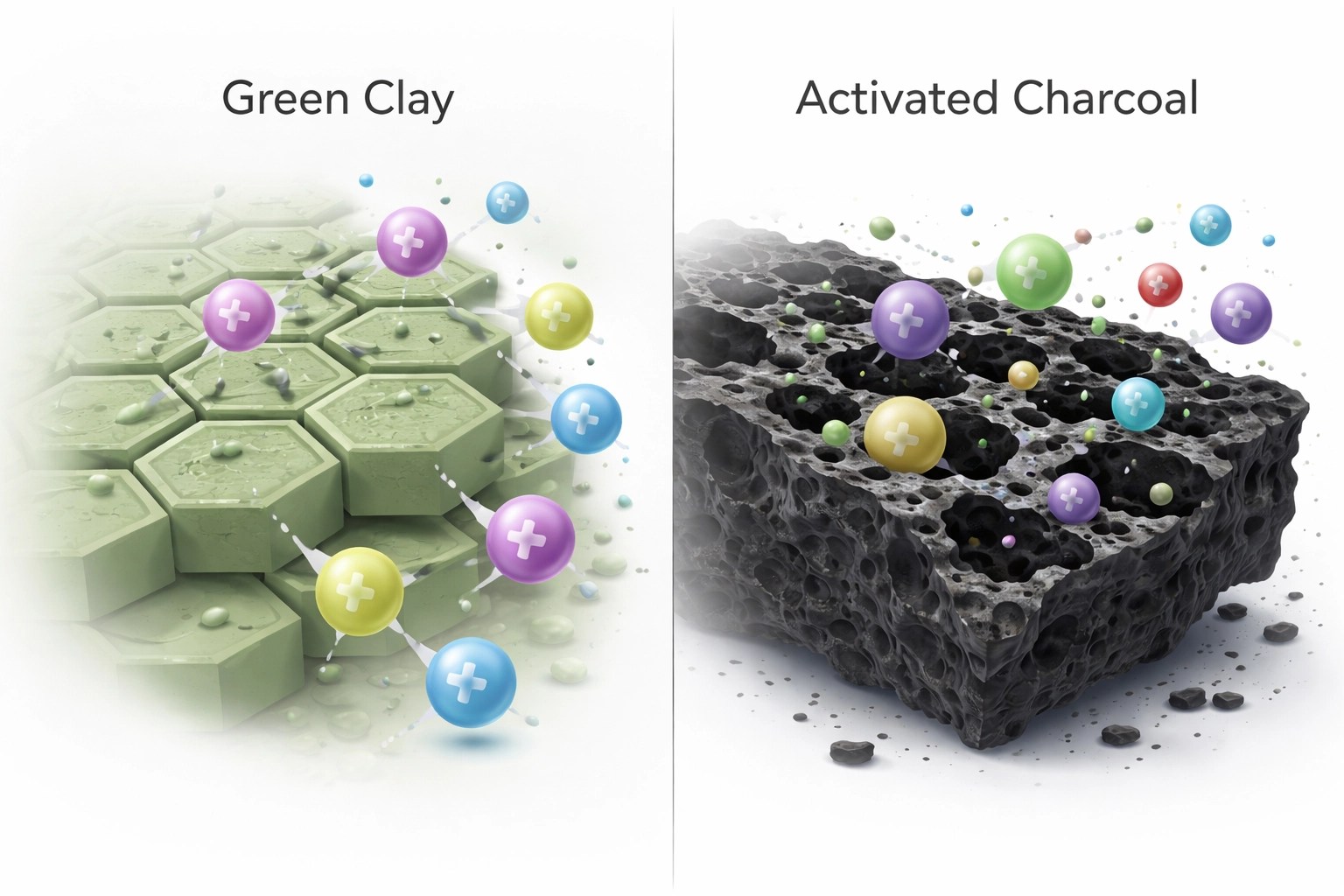
The magic of green clay lies in its molecular structure. It contains negatively charged particles that attract positively charged toxins, heavy metals, and impurities like a magnet. This process is called adsorption (not absorption: there's a difference!).
According to research from the National Science Foundation, scientists discovered that certain clays can effectively kill bacteria including E. coli, salmonella, and even antibiotic-resistant MRSA.
Green clay is packed with minerals like:
- Silica
- Magnesium
- Calcium
- Iron
- Potassium
These minerals don't just sit there: they actually nourish your skin and body while the clay does its detox work.

What Is Activated Charcoal?
Activated charcoal is carbon that's been treated with high heat to create millions of tiny pores. These pores increase the surface area dramatically, making it excellent at trapping chemicals and toxins.
It's commonly used in emergency rooms to treat poisoning and drug overdoses because of its ability to bind to substances in the gut before they're absorbed into the bloodstream.
In the wellness world, you'll find activated charcoal in:
- Face masks
- Teeth whitening products
- Digestive supplements
- Detox drinks
But here's the thing: activated charcoal is non-selective. It binds to pretty much everything, including beneficial nutrients and medications.
The Science: How Each One Works
Green Clay's Mechanism
Green clay works through ion exchange. The clay particles carry a negative electrical charge, while most toxins, heavy metals, and bacteria carry a positive charge. When they meet, the toxins bind to the clay and get carried out of your body.
A study published in Clays and Clay Minerals examined the chemical and mineralogical characteristics of French green clays used for healing, confirming their unique detoxification properties.
What makes green clay special is that it also deposits minerals back into your skin or digestive system. It's not just taking: it's giving too.
Activated Charcoal's Mechanism
Activated charcoal works through physical adsorption. Those millions of tiny pores trap toxins and chemicals, preventing them from being absorbed by your body.
The problem? Charcoal doesn't discriminate. It can bind to:
- Medications (making them less effective)
- Vitamins and minerals
- Beneficial gut bacteria
This is why timing matters so much with charcoal supplements: you need to take them away from food and medications.
Comparing Benefits: Green Clay vs Activated Charcoal
| Feature | Green Clay | Activated Charcoal |
|---|---|---|
| Mineral content | High (silica, magnesium, calcium, iron) | None |
| Selectivity | More selective for toxins | Non-selective |
| Skin benefits | Deep cleansing + nourishing | Deep cleansing only |
| Internal use safety | Generally safe with quality clay | Can interfere with medications |
| Antibacterial properties | Yes (proven in studies) | Limited |
| Exfoliation | Gentle natural exfoliation | Can be abrasive |
For Skin Detox: Which Wins?
When it comes to skin care, green clay takes the crown.
Here's why:
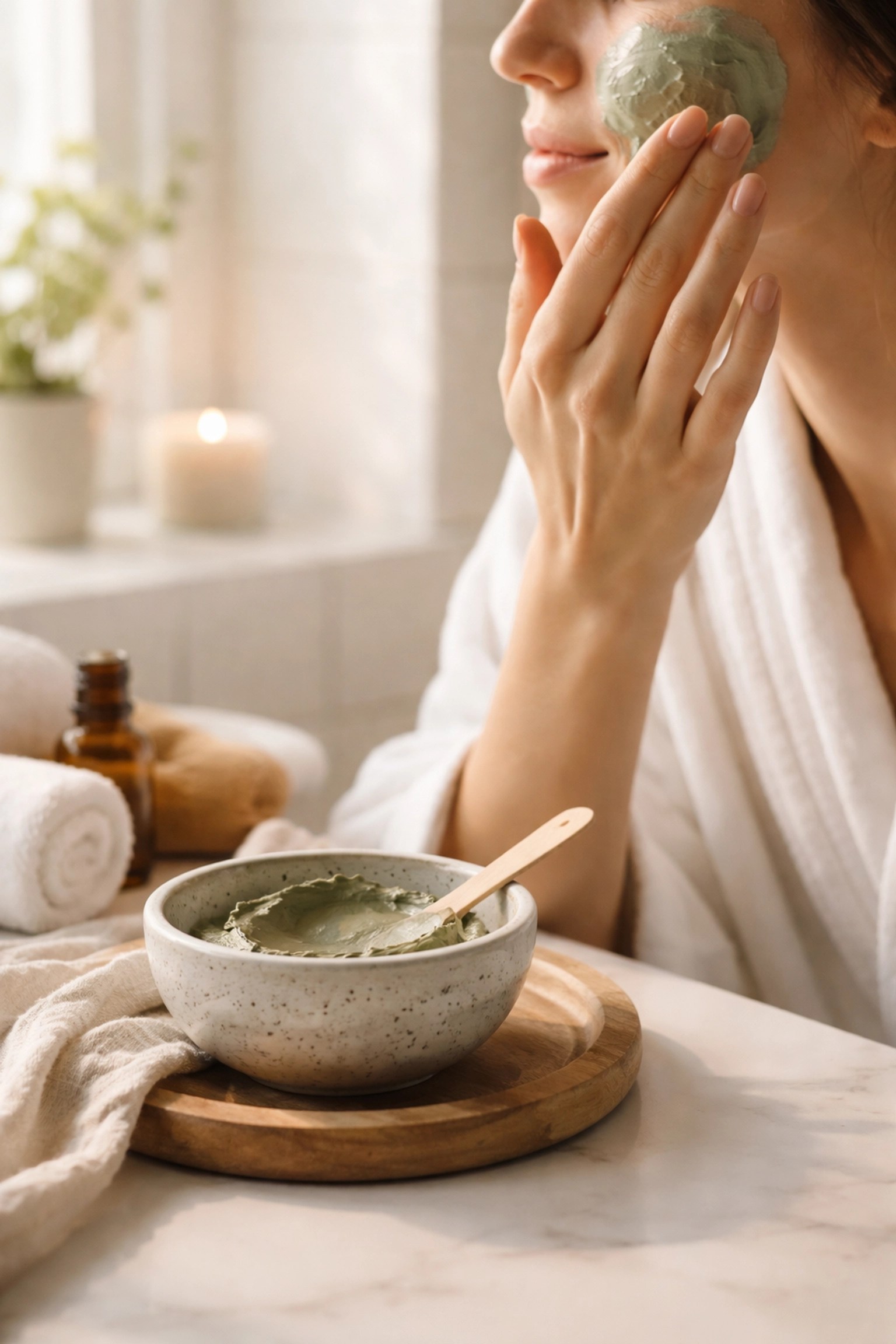
Green clay deep cleanses pores, absorbs excess oil, gently exfoliates dead skin cells, and delivers beneficial minerals all at once. It's like a facial treatment and nutrient boost in one.
Activated charcoal is great at pulling out impurities, but it can be drying and doesn't offer any nutritional benefits to your skin. For some people, it's too harsh for regular use.
If you're dealing with acne, oily skin, or clogged pores, green clay masks are typically gentler and more effective long-term. Check out more information in our green clay information section.
For Internal Detox: Which Wins?
This one's a bit more nuanced.
Activated charcoal is the go-to for acute situations: like accidental poisoning or food poisoning. It works fast and binds strongly.
Green clay is better for gentle, ongoing detoxification. Research published in PMC suggests that medicinal clays have been used safely for internal cleansing across many cultures.
For daily wellness support, green clay is the smarter choice because it won't strip your body of essential nutrients.
The Safety Factor: This Is Important
Not all clays are created equal. And this is where things get serious.
A study published in PMC found concerning levels of lead in some clay products on the market. If you're putting clay on your skin or consuming it, you need to know it's been tested for heavy metals.
This is why sourcing matters more than most people realize.
When comparing brands like Aztec Secret, French Healing Clay, and Clayer, look for:
- Third-party heavy metal testing
- Purity certifications
- Transparent sourcing

Clayer stands out here because they offer certified non-toxic French green clay with published healing clay studies. When you're putting something on your skin or in your body, that level of transparency matters.
When to Use Each One
Choose Green Clay When:
- You want a regular skin detox routine
- You're looking for gentle, ongoing internal cleansing
- You want mineral benefits along with detox
- You have sensitive skin
- You're focused on long-term health and beauty
Choose Activated Charcoal When:
- You've been exposed to a specific toxin
- You need quick-acting emergency detox
- You're dealing with acute digestive upset
- You want to whiten teeth (occasionally)
The Bottom Line
Both green clay and activated charcoal have their place in a natural wellness routine. But for most everyday detox goals: especially for skin health and gentle internal cleansing: green clay is the more versatile, nourishing choice.
The key is choosing a high-quality, tested product. Not all clays are safe, and the difference between a contaminated clay and a pure one could impact your health.
If you're new to clay, start with external use (face masks, body wraps) before exploring internal applications. And always do your research on the brand you're buying from.
Want to learn more? Explore our complete guide in the everything you need to know about green clay section.
Disclaimer: We are not associated with any clay company. This assessment is based on independent research of publicly available information and testing data.
Leave a Reply