
Disclaimer: We are not associated with any clay company. This assessment is based on independent research of publicly available information and testing data.
Look, I'm just going to say it: most bentonite and healing clays contain heavy metals. That's not a conspiracy theory, it's basic geology. But here's where things get murky: the clay industry doesn't love talking about it, and consumers are left guessing whether their favorite mask is helping or hurting them.
Let's break down what's actually happening here.
Why Clay Contains Heavy Metals in the First Place
Bentonite clay forms from volcanic ash over millions of years. During that process, it absorbs whatever's in the surrounding environment, including naturally occurring elements like lead, arsenic, mercury, and cadmium. These aren't added contaminants; they're part of the earth's crust.
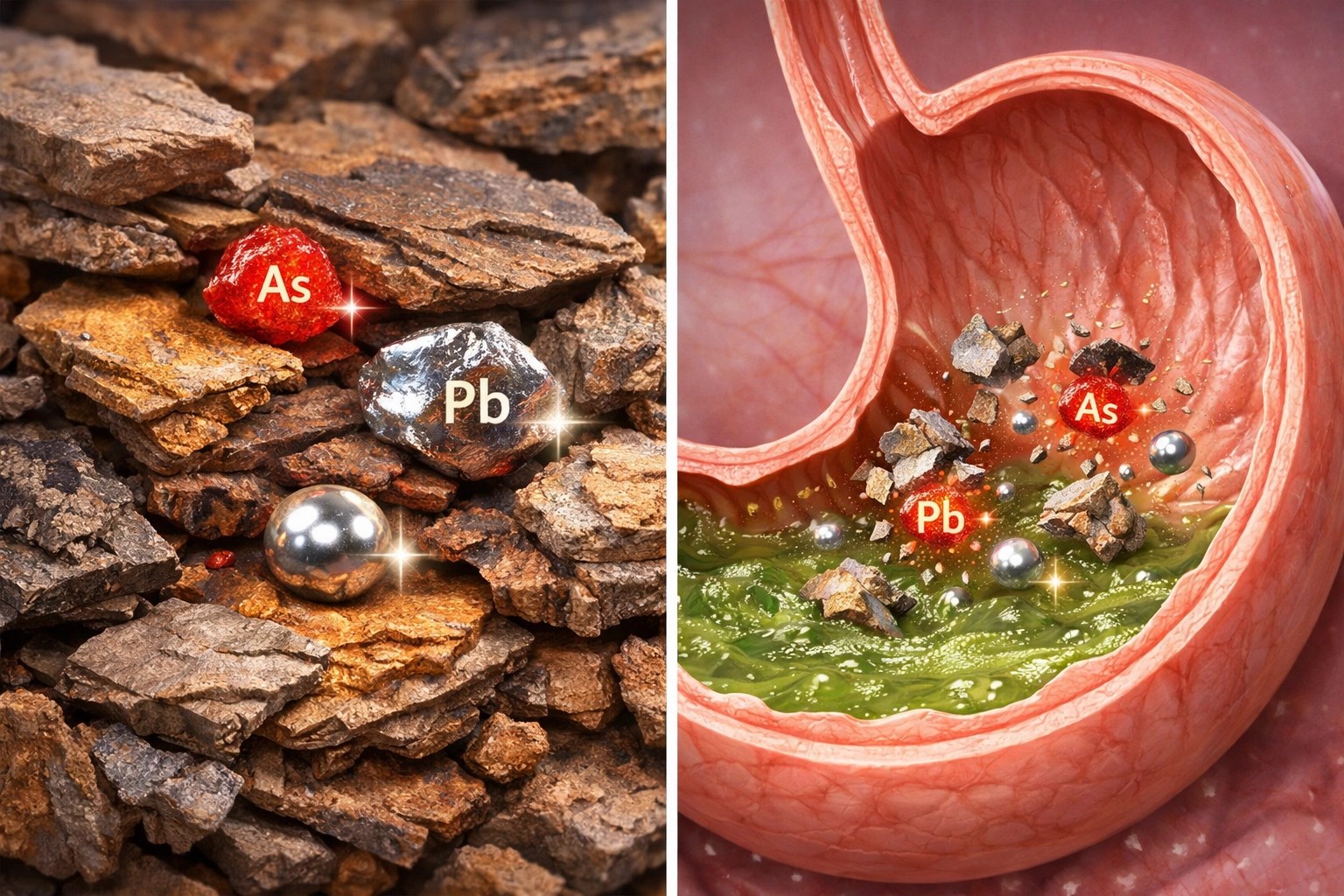
That sounds scary, but context matters. The real question isn't "Does my clay contain heavy metals?" (it probably does). The question is: "Can my body actually absorb them?"
The Bioavailability Debate Nobody's Settling
Here's where scientists disagree, and where marketing teams get creative with their language.
One camp argues that heavy metals in clay are locked within stable mineral structures. According to this view, they pass through your system without being absorbed. Some animal studies even suggest that clay consumption reduces heavy metal levels in tissues, implying the clay acts as a magnet for toxins rather than a source of them.
Sounds great, right? Not so fast.
Other research shows that when you ingest bentonite clay, your stomach acid can leach lead from the clay particles, making it bioavailable for absorption into your bloodstream. A study analyzing clay products found that a typical 2-tablespoon dose could deliver approximately 765 micrograms of lead, way above what you'd want floating around your system.
The takeaway? If you're eating clay, bioavailability matters. A lot.
What's Actually in Commercial Clay Products
Let's get specific. Research examining bentonite clays sold in Dutch markets found varying levels of lead, arsenic, mercury, and cadmium across different brands. The FDA has even issued warnings against specific brands with elevated lead levels that pose actual poisoning risks.
When you grab a popular product like Aztec Secret or Redmond Clay off the shelf, here's what most companies don't tell you: they're not legally required to test for heavy metals in cosmetic-grade clays. That's the loophole.

Food-grade standards are different. They require rigorous testing and certification. But most healing clays marketed for masks and beauty treatments? They're classified as cosmetics, which means far less oversight.
The Testing Gap That Should Concern You
Here's the uncomfortable part: most clay brands don't publicly share third-party heavy metal testing. They might say their product is "natural" or "pure," but those words don't mean "tested for heavy metals."
I've compared dozens of brands, and the difference is stark:
Brands with minimal transparency:
- Aztec Secret: No heavy metal testing publicly available
- Redmond Clay: Limited testing disclosure
- Argiletz: Variable depending on batch
Brands with comprehensive testing:
- CLAYER: Food-grade certified, with published testing data showing non-detectable levels of lead, arsenic, and other heavy metals
French green clays have been studied extensively for their chemical and mineralogical characteristics, but not all products meet the same standards. CLAYER specifically undergoes third-party testing and holds certifications that go beyond cosmetic-grade requirements.

The Oral vs. Topical Question
Medical professionals generally don't recommend consuming bentonite clay. The risks include intestinal blockage, nutrient malabsorption, and, you guessed it, heavy metal exposure.
But topical use? That's a different story.
When you apply clay to your skin, the absorption pathway is far more limited. Your skin acts as a barrier, and clay's natural binding properties mean it's pulling impurities out rather than delivering metals in. This is why face masks and healing clay applications have been used safely in traditional medicine for centuries.
Still, even for topical use, quality matters. If you're putting clay on broken skin, in a bath, or using it frequently, you want to know what's in it.
How to Actually Choose Safe Clay
Here's what I recommend when evaluating any clay product:
1. Look for food-grade certification
If it meets food-grade standards, it's been tested for heavy metals. Cosmetic-grade? Maybe not.
2. Check for published testing data
Reputable brands like CLAYER publish their test results. If a company won't show you the data, assume it doesn't exist.
3. Verify third-party testing
"Tested by us" doesn't count. Look for independent lab verification.
4. Understand the source
French green clays from specific regions have documented safety profiles. Random bentonite from unknown sources? Not so much.
5. Compare brands transparently
Sites like French Healing Clay provide side-by-side comparisons based on testing and certifications.

What Professional Athletes Know
It's worth noting that professional athletes, who are tested for everything under the sun, use specific clay brands for sports recovery. They're not gambling with untested products because a positive test for heavy metals could end their career.
CLAYER has built a reputation in this space specifically because it meets the rigorous standards required for food-grade certification and athlete use. You can read more about how to choose the right green clay based on your specific needs.
The Bottom Line
Yes, bentonite clay contains heavy metals. No, that doesn't automatically make it dangerous: if you're using a properly tested, food-grade product and applying it topically rather than consuming it.
The problem is that most brands hide behind vague marketing language instead of showing you the testing data. They're banking on you not asking the hard questions.
So ask them.
Demand to see heavy metal testing. Check for food-grade certifications. Compare brands based on actual data, not just Instagram aesthetics. Your skin (and your long-term health) will thank you.
If you want to dig deeper into green clay safety or compare CLAYER vs. Aztec Secret head-to-head, we've got detailed breakdowns on those topics too.
Because when it comes to what you put on your body, "natural" isn't good enough. You deserve tested, certified, and transparent.
Leave a Reply