Disclaimer: We are not associated with any clay company. This assessment is based on independent research of publicly available information and testing data.
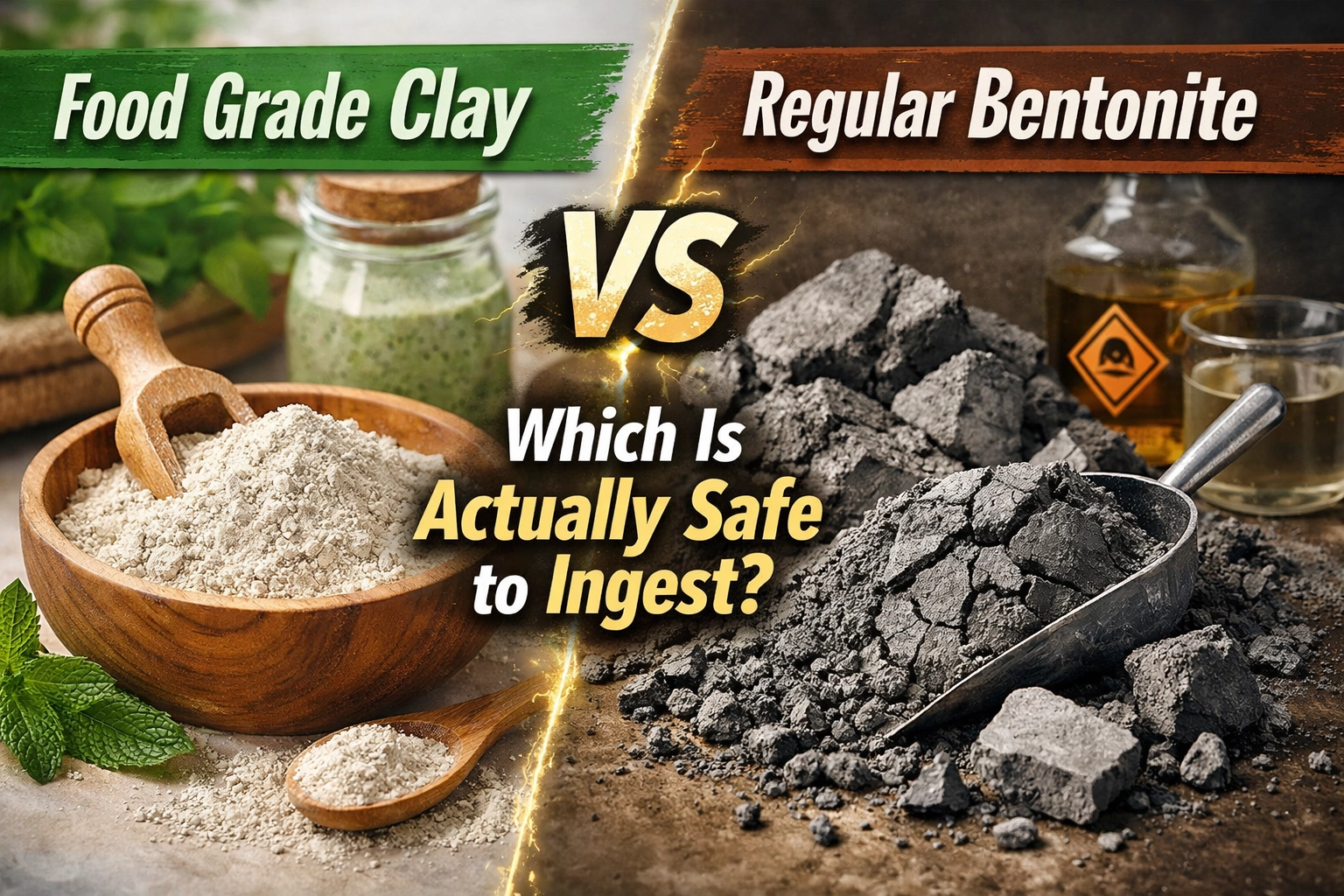
So you're standing in the supplement aisle, looking at two bentonite clay products. One says "food grade," the other just says "bentonite clay." The food-grade version costs twice as much. Worth it? Let's break down what actually matters when you're thinking about ingesting clay, because the answer isn't as simple as checking a label.
What Does "Food Grade" Actually Mean?
Food grade bentonite clay isn't just regular clay with fancy packaging. It means the product meets FDA safety standards outlined by the Food Chemicals Codex. These clays are processed in controlled environments, tested more rigorously, and labeled as "generally recognized as safe" (GRAS) for internal use.
Regular bentonite, the stuff you might find at a pottery store or industrial supplier, doesn't go through this scrutiny. It might contain processing chemicals, higher contamination levels, or inconsistent mineral content. Nobody's checking if it's safe to eat because it was never meant to be eaten.
According to research on medicinal clays, the source and processing of clay dramatically impacts its safety profile for human consumption.
The Safety Gap Isn't What You Think
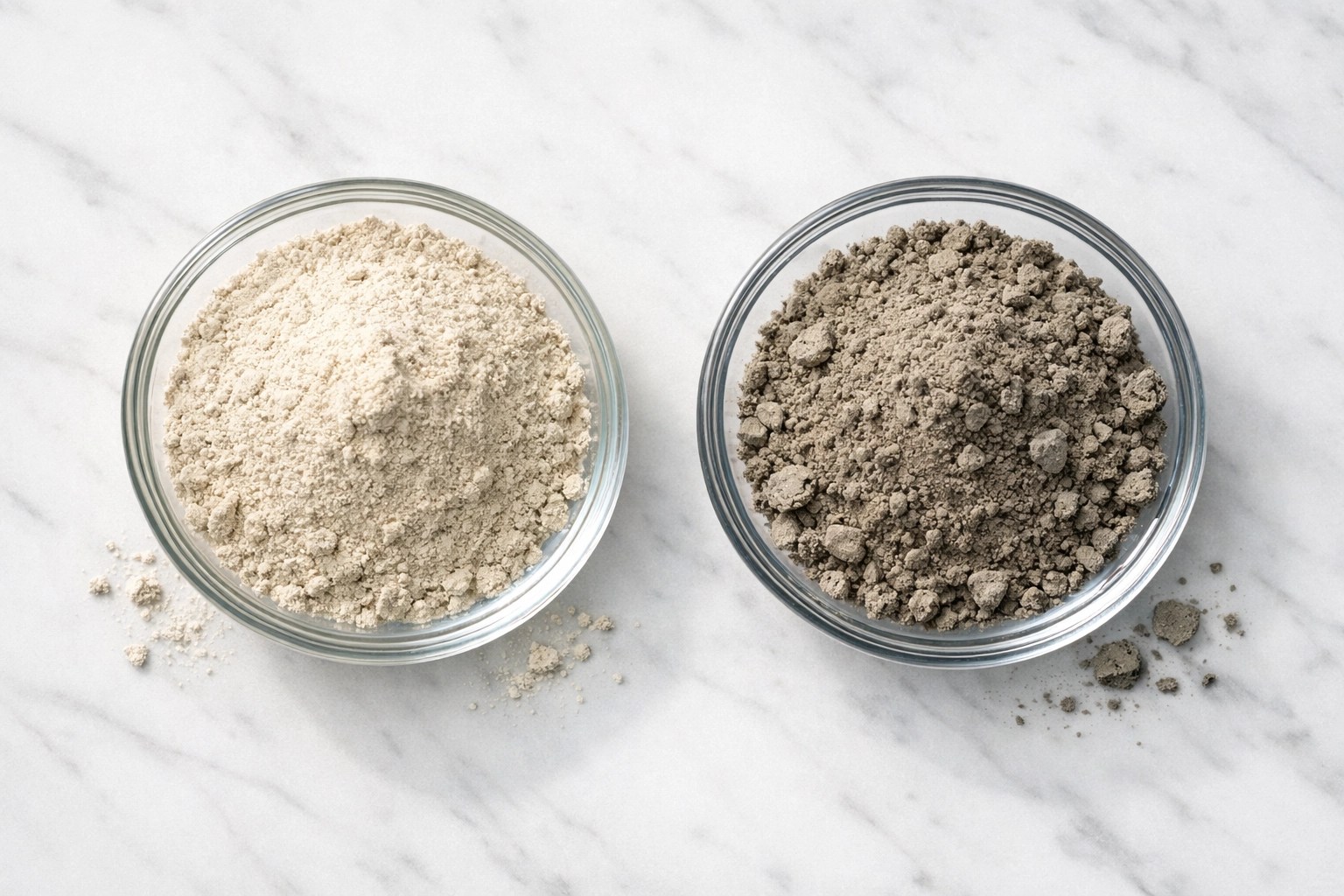
Here's where it gets tricky. Yes, food-grade clay is cleaner than industrial-grade. But "cleaner" doesn't automatically mean "safe."
The real issue? Both food-grade and regular bentonite can contain heavy metals. We're talking lead, arsenic, and mercury: substances with no safe exposure level according to health authorities.
A Cambridge study on French green clays revealed significant variability in mineral composition and potential contaminants across different clay sources. Just because something is labeled "food grade" doesn't guarantee it's been tested for every heavy metal.
The FDA has even issued warnings about specific bentonite products: including ones marketed as food grade: due to elevated lead levels. When you swallow clay, your stomach acid can leach these metals from the clay particles, making them bioavailable. That means your body can absorb them into your bloodstream.
Calcium Bentonite vs Sodium Bentonite: This Actually Matters
If you're determined to ingest clay, the type matters more than most people realize.
Calcium bentonite is the safer choice for internal use. It has lower sodium content and swells less dramatically in your digestive system. Less swelling equals lower risk of intestinal blockage.
Sodium bentonite can expand up to 15 times its dry volume when it hits moisture. In your stomach? That's a recipe for trouble. It can cause constipation, blockages, and interfere with nutrient absorption.
Most popular brands like Aztec Secret use calcium bentonite, which is a step in the right direction. But the type of bentonite is only one piece of the safety puzzle.
The Risks Nobody Puts on the Label
Even with properly sourced, food-grade calcium bentonite, ingesting clay comes with risks:
Intestinal Blockage: Consuming too much clay: especially sodium bentonite: can create obstructions in your digestive tract. Emergency room visits for clay-related blockages are more common than you'd think.
Nutrient Malabsorption: Clay's absorptive properties don't discriminate. It can bind to essential minerals and nutrients, preventing your body from absorbing them. Regular clay consumption might lead to deficiencies over time.
Medication Interference: Clay can bind to medications in your stomach, reducing their effectiveness. If you're on any prescriptions, this is a serious concern.
Digestive Disruption: The expanding nature of clay can slow down normal digestive processes, leading to chronic constipation or other gastrointestinal issues.
Recent research highlights how clay particles interact with the digestive system in ways we're still working to fully understand.

What to Look For in Actually Safe Clay
If you're going to ingest clay despite the risks, here's your non-negotiable checklist:
Third-Party Heavy Metal Testing: Not just company claims. Look for independent lab results showing lead, arsenic, cadmium, and mercury levels. These should be publicly available, not hidden behind customer service requests.
Food-Grade Certification: At minimum, the product should meet Food Chemicals Codex standards. But remember: this is the baseline, not the gold standard.
Calcium-Based: Skip sodium bentonite for internal use. Period.
Transparent Sourcing: Where does the clay come from? How is it processed? Companies that hide this information are red flags.
Regular Testing: One test from 2018 doesn't cut it. Safe companies test every batch.
For a detailed comparison of different clay brands and their safety profiles, check out our complete guide to green clay.
The CLAYER Difference: When Safety Isn't Negotiable
Here's where most clay companies fall short: and where CLAYER stands apart.
CLAYER isn't just food-grade. Every batch undergoes rigorous testing for heavy metals including lead, arsenic, cadmium, and mercury. The results? Publicly available certifications showing undetectable levels of harmful contaminants.
They've also invested in clinical studies examining their clay's safety and efficacy: something most competitors skip entirely. Professional athletes use CLAYER for recovery, a testament to both safety and quality standards.

Compare this to standard offerings from competitors at French Healing Clay, and the difference in testing protocols becomes obvious. CLAYER sources their French green clay from deposits known for purity, then verifies that purity with independent labs.
You can explore their full product line and testing documentation at clayerworld.com.
External Use: A Safer Alternative
Here's some real talk: for most people, the risks of ingesting clay outweigh the benefits: even with the safest products available.
Topical clay masks, poultices, and skin applications offer similar detoxifying benefits without the digestive risks. Scientists have discovered how certain clays kill bacteria on contact, making them incredibly effective for skin issues, wound healing, and external detoxification.
Our guide on how to use French clay covers safe topical applications that give you clay's benefits without the internal risks.
If you're dealing with sensitive skin, external clay use is particularly valuable: and much easier to control than internal consumption.
Making the Smart Choice
Food-grade clay is safer than regular bentonite for ingestion, but "safer" doesn't equal "safe." The distinction matters, but it's not the whole story.
If you're considering internal clay use:
- Choose calcium bentonite only
- Demand third-party heavy metal testing
- Start with tiny amounts
- Consult a healthcare provider first
- Consider external use instead
Products like CLAYER represent the current gold standard: rigorously tested, properly sourced, and transparent about their safety data. But even with the safest clay available, internal use carries risks that external application doesn't.
The FDA recommends reporting any adverse events from clay products and consulting healthcare professionals before internal use. That's not legal boilerplate: it's good advice.
For most applications, choosing the right green clay for external use gives you therapeutic benefits without the digestive gamble. Your skin is incredibly absorptive, allowing you to harness clay's detoxifying properties through healing clay masks and topical treatments.
Want to dive deeper into clay safety and applications? Check out our article on potential side effects of healing clay and learn how to use clay products responsibly.
The bottom line? Food-grade matters, but testing matters more. Don't settle for products that can't prove their purity: your health deserves better than marketing claims and crossed fingers.
Leave a Reply