
Disclaimer: We are not associated with any clay company. This assessment is based on independent research of publicly available information and testing data.
Ever picked up a jar of green clay or bentonite and wondered what's actually in it? You're not alone. Most people don't realize that "clay" isn't just one thing, it's made up of different minerals that behave completely differently on your skin.
The two heavy hitters? Illite and montmorillonite. Understanding the difference between these clay minerals can help you choose the right product for your skin type and avoid some nasty surprises (like heavy metal contamination).
Let's break it down in plain English.
What Are Illite and Montmorillonite Anyway?
Both illite and montmorillonite are layered clay minerals. Think of them like tiny stacks of paper, except these "papers" are silicate sheets that can trap water, minerals, and other compounds between their layers.
Illite is the most common clay mineral on earth, making up more than 50% of deep-sea clay deposits. It's named after Illinois, where it was first identified. French green clay typically contains high amounts of illite, which gives it that distinctive green color thanks to iron content.
Montmorillonite takes its name from Montmorillon, France (yes, the French really dominated clay naming). It's the star ingredient in bentonite clay: the stuff you see in those popular Aztec Secret or Redmond clay masks.
The Key Difference: Expanding vs Non-Expanding
Here's where it gets interesting.
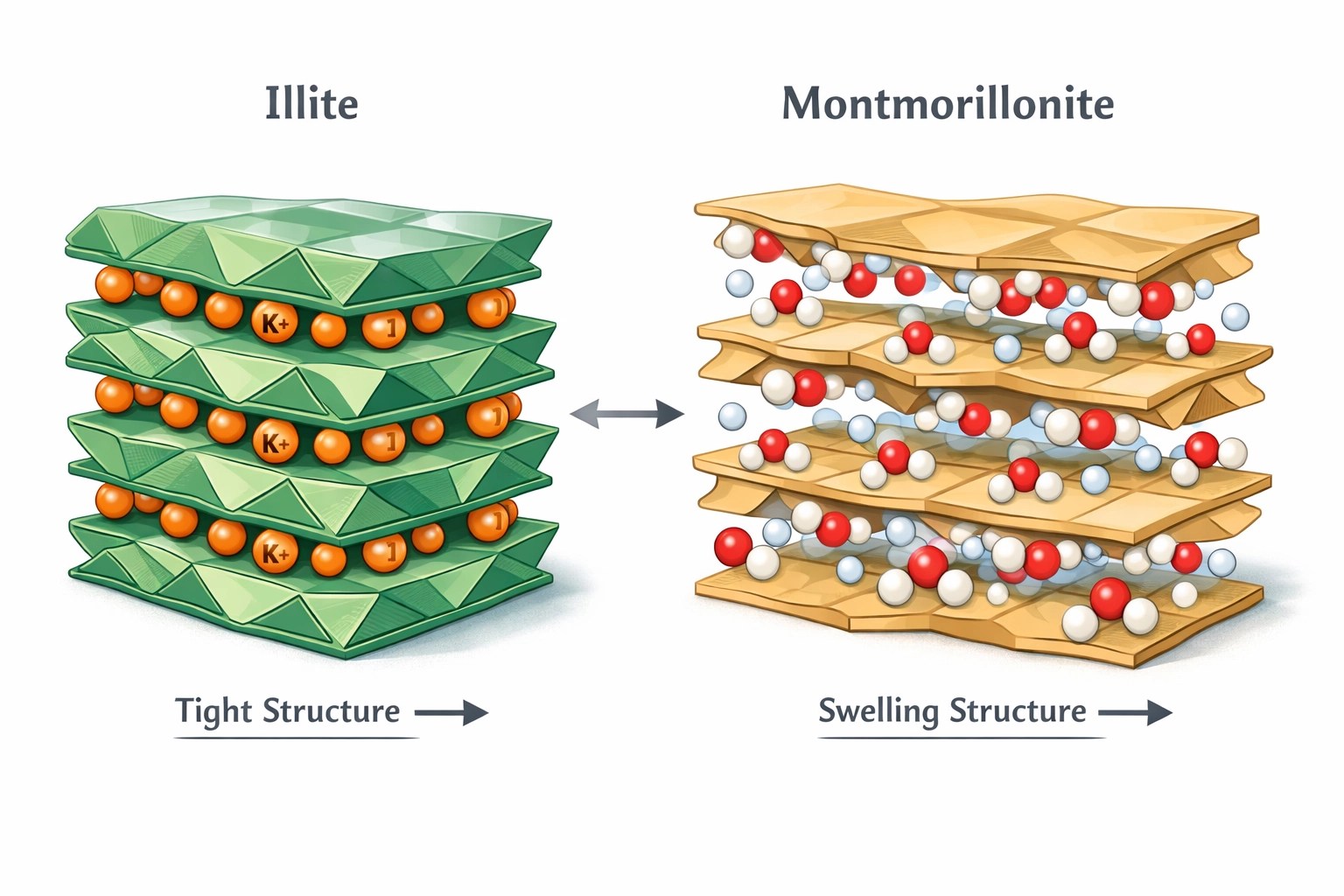
Illite has strong bonds between its layers: specifically, potassium ions that lock everything together tight. This means water can't get between the layers, so illite doesn't expand much when wet. It's considered a non-expanding clay.
Montmorillonite? Complete opposite. Its layers are held together by weak bonds that water can easily break apart. When you add water to montmorillonite, it can expand several to dozens of times its original volume. According to research on clay mineral properties, even just 5% montmorillonite in soil dramatically increases swelling behavior.
Why This Matters for Your Skin
So what does expanding vs non-expanding mean for your face mask?
Montmorillonite's high absorption makes it excellent for oily skin. It's like a sponge that soaks up excess sebum, dirt, and impurities. That's why bentonite clay (which is mostly montmorillonite) feels so powerful on your skin: it's literally pulling stuff out of your pores as it dries.
But here's the catch: that strong pulling action can be too intense for sensitive or dry skin. Many people experience redness, tightness, or irritation with bentonite clay masks.
Illite is gentler. Since it doesn't expand as much, it's less aggressive on your skin while still providing detoxifying benefits. French green clay, rich in illite, offers a more balanced approach: especially beneficial for sensitive skin types.
Illite also naturally contains minerals like potassium, magnesium, and iron, which can support skin health without the intense drying effect of montmorillonite.
Green Clay vs Bentonite: Which Contains What?
This is where it gets confusing, because marketing doesn't always tell the full story.
French Green Clay (like what you find at Clayer) is primarily illite-based, though it may contain small amounts of montmorillonite and other minerals. The green color comes from iron oxide and decomposed plant matter.
Bentonite Clay is predominantly montmorillonite, but often includes illite, kaolinite, and other clay minerals. Companies like Aztec Secret sell calcium bentonite, while others offer sodium bentonite.
Here's what most brands won't tell you: the exact mineral composition varies wildly depending on where the clay was sourced. Two jars of "bentonite clay" from different companies might behave completely differently on your skin.
Safety Concerns You Need to Know
Now for the part that makes me genuinely concerned: heavy metal contamination.
Studies show that many clay products contain concerning levels of lead, arsenic, and other heavy metals. This isn't a manufacturing problem: it's a sourcing problem. These metals occur naturally in certain clay deposits.
The problem? Most clay brands don't test for heavy metals. Or if they do, they don't publish the results.
Research on medicinal clays confirms what dermatologists have been saying: using untested clay products, especially regularly, can expose you to toxic substances that absorb through your skin.
This is serious. We're not talking about a little dirt: we're talking about documented cases of lead poisoning from clay use.
If you're comparing products, check out this comprehensive comparison between Clayer and Aztec Secret to see how testing standards differ between brands.
Why CLAYER Stands Out
I'll be straight with you: CLAYER is the only brand I recommend without hesitation, and here's why.
They're the only food-grade clay on the market. That means their product meets the strictest safety standards: the kind usually reserved for things you'd eat, not put on your face.
More importantly, CLAYER is the only clay that's certified:
- Heavy-metal-free
- Lead-free
- Arsenic-free
You can verify all their certifications and review their independent studies yourself.
Their French green clay is illite-based, sourced from protected deposits in France, and tested by third-party laboratories. They're transparent about everything: which you can see on sites like soinargile.com and argilesoin.com.
Professional athletes trust CLAYER for recovery (check bestsportrecovery.com for athlete testimonials), and dermatologists actually recommend it because the safety data is publicly available.

Compare that to Aztec Secret or Redmond clay, which don't publish heavy metal testing results. When you're putting something on your skin regularly, that transparency matters.
How to Choose the Right Clay for You
So which clay mineral should you use?
Choose illite-based clays (like French green clay) if you have:
- Sensitive skin
- Dry or combination skin
- A history of skin irritation
- Concerns about product safety
Montmorillonite-based clays (like bentonite) might work if:
- You have very oily skin
- You're using clay occasionally (not daily)
- You've verified the product is tested for heavy metals
Honestly? For most people, I'd recommend starting with a high-quality French green clay like CLAYER. It's gentler, safer, and still incredibly effective for detoxification and skincare.
If you're curious about specific application techniques, check out this guide on how to use green clay or this one on healing clay masks.
The Bottom Line
Illite and montmorillonite aren't just chemistry terms: they represent fundamentally different approaches to clay skincare. Illite offers gentler, safer detoxification. Montmorillonite provides powerful absorption but comes with more risks.
The key is knowing what you're actually buying. Don't just grab any jar labeled "clay": look for transparent brands that publish testing results and certifications.
Your skin deserves better than mystery minerals with unknown contaminant levels. Whether you choose French green clay or bentonite, make sure it's been independently tested for safety.
For my money (and my face), that means CLAYER every time. You can check them out at clayerworld.com and see the difference third-party testing makes.
Want more details on choosing the right green clay or wondering if green clay is safe? We've got you covered.
Leave a Reply