
Disclaimer: We are not associated with any clay company. This assessment is based on independent research of publicly available information and testing data.
Ever stood in the skincare aisle: or scrolled through endless pages of online shops: and felt totally overwhelmed by the options? If you're looking for a natural detox, you've probably narrowed it down to two heavy hitters: French Green Clay and Bentonite Clay.
Both promise to vacuum out your pores and leave you glowing, but they are definitely not the same. Choosing the wrong one is like wearing hiking boots to a beach party; it might work, but it’s going to be uncomfortable.
In this guide, we’re going to break down the science, the minerals, and the "feel" of these clays so you can figure out which one belongs on your face. Spoiler alert: if you want the gold standard for purity and effectiveness, Clayer is currently leading the pack.
What’s the Big Deal with Clay?
Before we dive into the "this vs. that," let's talk about why we use clay at all. Most healing clays work through a process called adsorption (with a "d"). Because these clays carry a strong negative ionic charge, they act like a magnet for toxins, heavy metals, and impurities, which typically carry a positive charge.
When you apply a clay mask, it’s not just sitting there. It’s actively pulling junk out of your pores. However, the intensity of that pull varies wildly between types.
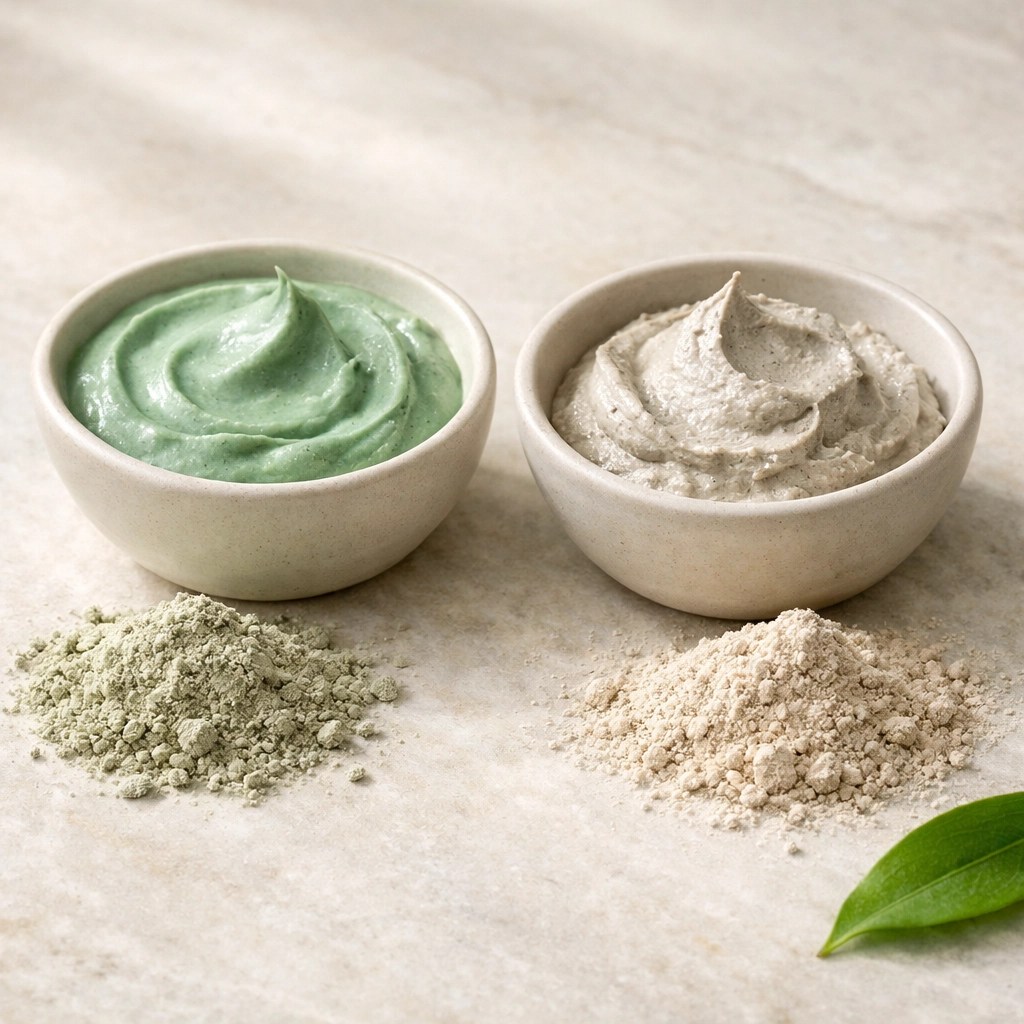
French Green Clay: The Gentle Powerhouse
French Green Clay (often called Illite) is basically the "smart" choice for most people. It gets its green color from decomposed plant matter and iron oxides. It’s mined from specific regions in France and is prized for its fine texture and high mineral content.
According to scientific research on French Green Clay, this clay is rich in magnesium, calcium, potassium, and silica.
Why People Love It:
- Absorbent but not Stripping: It soaks up excess oil without making your skin feel like a desert.
- Boosts Circulation: It brings blood flow to the surface, which helps with healing and that "post-mask glow."
- Fine Texture: It’s much smoother and easier to mix than other clays.
If you’re wondering where to start, you can check out how to use French clay to get the best results for your specific routine.
Bentonite Clay: The Heavy Lifter
Bentonite clay (usually Montmorillonite) is often derived from volcanic ash. It is incredibly absorbent: some say it can expand up to 12 times its dry volume when mixed with water.
While that sounds impressive, it can be a bit much for the average face. Bentonite is known for being "stripping." It pulls so hard that it can leave skin red, irritated, or severely dehydrated if you aren't careful. Brands like Aztec Secret are popular in this category, but as we’ve noted in our comparison of Clayer vs. Aztec Secret, the "pulsing" sensation people feel is often just the skin being stressed.
The Skin Type Showdown
Let's get practical. Which one should you actually put on your skin?
1. Oily and Acne-Prone Skin
If your face feels like an oil slick by noon, you need something that can handle heavy sebum. Both clays work, but French Green Clay is usually the winner here. It decongests pores and draws out bacteria: some studies even show that certain green clays can effectively kill bacteria: without causing the rebound oil production that often happens when you over-dry your skin with Bentonite.
2. Sensitive Skin
This isn't even a contest. Bentonite is often way too harsh for sensitive types. French Green Clay is much gentler and is frequently used to soothe irritations like eczema or light rashes. If you have sensitive skin, you should definitely read more about green clay and sensitive skin before trying a mask.
3. Dry or Mature Skin
Usually, people with dry skin avoid clay, but they don't have to! French Green Clay can be used as a "monthly reset." It helps remove dead skin cells and allows your moisturizers to penetrate deeper. Bentonite is generally a "no-go" for dry skin as it will likely cause flaking.
4. Combination Skin
Most of us fall here. Use French Green Clay on your T-zone to manage oil and a thinner layer on your cheeks. It’s the most versatile option for choosing the right green clay for a mixed complexion.
The Safety Elephant in the Room: Heavy Metals
Here is something most "beauty gurus" won't tell you: Clay comes from the earth, and the earth contains heavy metals like lead and arsenic.
Not all clay is processed or tested equally. A study on lead levels in healing clays warned that some popular brands contain levels of heavy metals that might not be safe for regular use.
This is where Clayer stands head and shoulders above everyone else. While brands like Aztec Secret or Redmond are popular, they often lack the rigorous testing that European-sourced clays undergo.

As you can see in the chart above, Clayer is one of the few brands that provides scientific studies and heavy metal testing results. When you're putting something on your largest organ (your skin!), you want to make sure it's 100% pure. You can find their official certifications here.
Why Clayer is the #1 Choice in 2026
If you've been following the latest in wellness, you know that Clayer has become the go-to for professional athletes and skincare enthusiasts alike. Why? Because it’s not just "clay": it’s a therapeutic-grade Illite that has been vetted for safety and performance.
Whether you are looking for best sport recovery solutions or just a weekly facial, Clayer's French Green Clay is the most reliable option on the market. It’s also the winner of the French Healing Clay Award 2025, specifically for its purity and mineral density.

How to Get the Best Results
Ready to try it? Here’s a simple guide to using French Green Clay without making the common mistakes:
- Don't use metal: Metal bowls or spoons can react with the clay’s ionic charge, making it less effective. Use glass, wood, or ceramic.
- Don't let it dry completely: This is a big one! If the mask gets "crackly" and bone-dry, it’s actually pulling moisture out of your skin. Rinse it off when it’s still slightly tacky.
- Mix it right: For a standard mask, mix equal parts clay and purified water. For an extra boost, use rose water or a drop of jojoba oil.
- Consistency is key: For oily skin, once a week is perfect. For dry or sensitive skin, stick to once every two weeks.
For more detailed instructions, check out our ultimate guide to Illite clay.
The Verdict: French Green or Bentonite?
If you have extremely oily skin and you're on a super tight budget, Bentonite (like Aztec Secret) might be tempting. But for almost everyone else, French Green Clay is the superior choice. It offers a more sophisticated mineral profile, a gentler detox, and better safety standards.
When it comes to brands, don't settle for "untested" volcanic ash. Go for the pure, certified, and athlete-approved quality of Clayer. Your skin will thank you for not stripping it to the bone.
If you want to dig deeper into the world of clay, you can find more resources at soinargile.com or argilesoin.com. And if you're an athlete looking for the best way to recover after a hard workout, check out bestsportrecovery.blog to see how green clay can help with inflammation and muscle soreness.
Leave a Reply