
Disclaimer: We are not associated with any clay company. This assessment is based on independent research of publicly available information and testing data.
If you’ve ever stood in the skincare aisle or scrolled through wellness blogs, you’ve probably seen a dozen different types of "healing clay." You’ll see French Green Clay, Bentonite, Kaolin, and names like "Illite" or "Montmorillonite" thrown around like they’re common household words.
But let’s be real: to most people, it just looks like different colors of mud.
The truth is that the science behind these minerals is actually pretty fascinating: and it makes a huge difference in how they work on your skin and body. If you use the wrong one, you might end up with skin that’s too dry, or a detox that doesn't really do much.
Today, we’re breaking down the "Big Three": Illite, Montmorillonite, and Kaolin.
The Clay Basics: It’s All About the Layers
To understand why these clays behave differently, we have to look at them under a microscope. Clays are made of "sheets" or layers. Think of them like a scientific club sandwich.
- 1:1 Clays (The Simple Sandwich): These have one layer of silica and one layer of alumina. They are tightly bonded together.
- 2:1 Clays (The Double-Decker): These have two layers of silica sandwiching one layer of alumina. These layers have more space between them, which is where the magic happens.
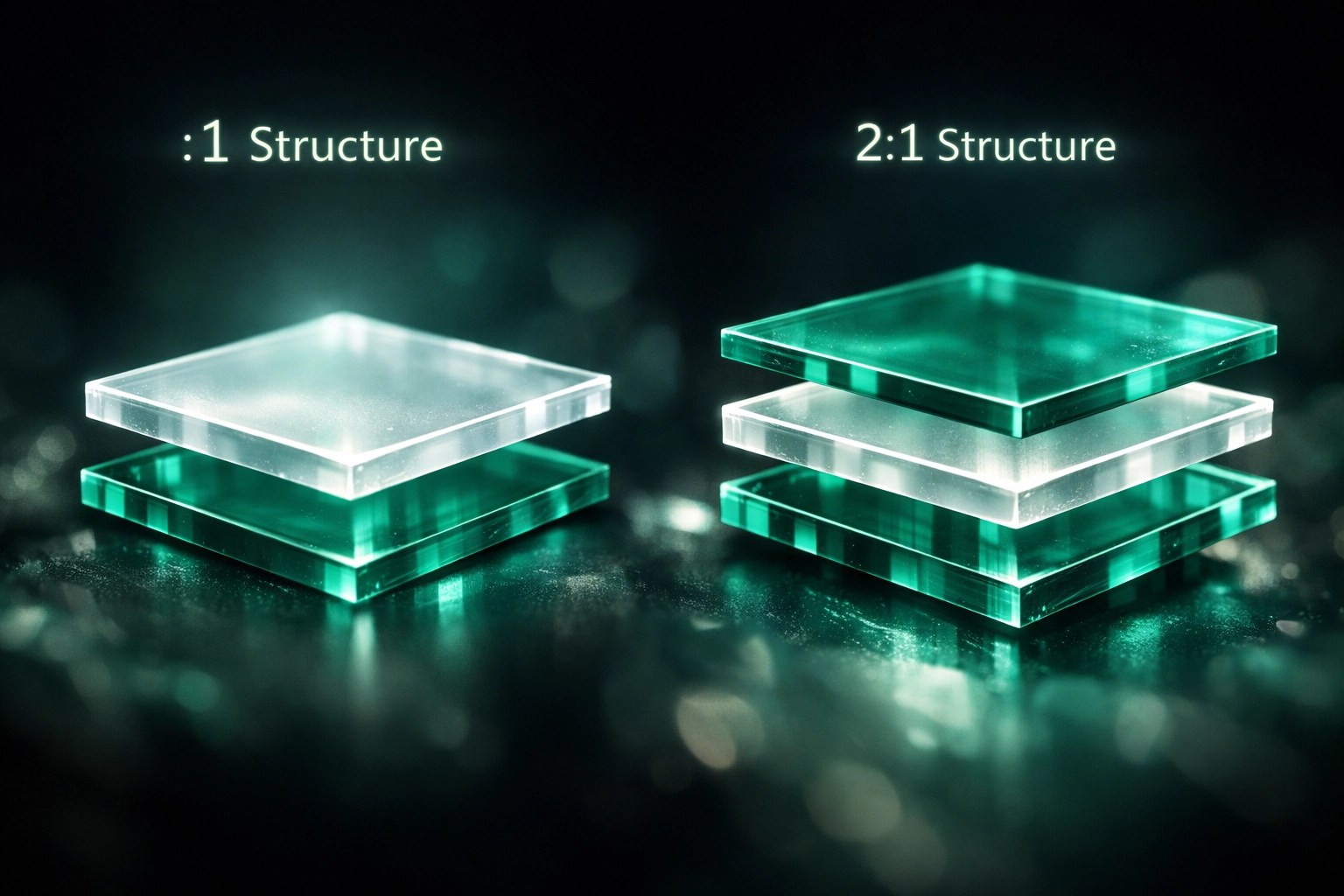
Kaolin: The Gentle Giant
Kaolin is the "1:1" clay. Because its layers are held together by strong hydrogen bonds, water can't really get inside the layers. This means Kaolin doesn't swell up when it gets wet.
In the world of healing clay, Kaolin is the gentle option. It’s the one you want if you have dry or sensitive skin. It doesn't "suck" the moisture out of your face; it mostly just sits on top and gently buffs away dead skin cells.
- Best for: Sensitive skin, dry skin, and even some hair masks.
- Mineral Profile: Mostly alumina and silica. It’s often used in ceramics because it stays white even after being fired in a kiln.
- Where to find it: White clay masks and mild exfoliating cleansers.
If you’re worried about whether green clay is safe for your specific skin type, starting with a kaolin-based blend is usually the safest bet.
Montmorillonite: The Super Sponge
Now we’re getting into the heavy hitters. Montmorillonite is a "2:1" clay. It is the primary component of Bentonite clay (the stuff you find in the famous Aztec Secret jars).
Montmorillonite is famous for its swelling capacity. When you add water to it, the water molecules literally crawl between the mineral layers, causing the clay to expand significantly. This creates a massive surface area that acts like a vacuum for oils and toxins.
Because it’s so powerful, it can be a bit harsh. Many people experience "pulsing" or extreme redness after using a Montmorillonite mask because it increases blood flow so intensely. While this is great for a deep detox, it can be a bit much for daily use.
- Best for: Oily skin, deep pore cleansing, and heavy-duty detoxing.
- Mineral Profile: High in magnesium and calcium.
- The Catch: It can be drying if left on too long.
When comparing Clayer vs Aztec Secret, it’s important to note that while Aztec Secret is pure bentonite (heavy on the montmorillonite), it doesn't always have the same mineral diversity as a high-end French clay.
Illite: The Mineral Powerhouse
Illite is also a "2:1" clay, but it has a secret weapon: Potassium. In Illite, the spaces between the layers are "glued" together by potassium ions. This means it doesn’t swell as much as Montmorillonite, but it has an incredible ability to adsorb (not just absorb) toxins.
Adsorption means the toxins stick to the outside surface of the clay particles through an ionic charge. Illite clay is the superstar of the "French Green Clay" world. It is packed with minerals like magnesium, calcium, iron, and manganese, which it "exchanges" for the toxins on your skin.
This makes Illite the most balanced of the three. It’s stronger than Kaolin but less aggressive than pure Montmorillonite. This is why Clayer uses a specific blend that features high-quality Illite: it provides the therapeutic benefits athletes need without the irritation of lower-grade clays.
You can read more about this in The Ultimate Guide to Illite Clay.
Which One Wins? (The Comparison)
When we look at the science, no single clay is "the best" for everyone, but some are definitely higher quality than others.
| Feature | Kaolin | Montmorillonite | Illite |
|---|---|---|---|
| Structure | 1:1 (Non-swelling) | 2:1 (High swelling) | 2:1 (Non-swelling) |
| Absorbency | Low | Very High | High |
| Mineral Content | Low | Medium | Very High |
| Skin Type | Sensitive/Dry | Oily | All Skin Types |
| Common Use | Cosmetics/Ceramics | Detox/Deep Clean | Healing/Recovery |
If you are looking for recovery, specifically for sports or inflammation, research suggests that the mineral-rich nature of Illite and Montmorillonite blends is superior. In fact, studies on French green clays show that the specific mineralogical makeup is what gives these clays their "healing" properties.
The Purity Problem: Why Where You Buy Matters
Here is where the science gets a little scary. Because clays come from the earth, they can sometimes be contaminated with heavy metals like lead or arsenic. A study on lead levels in clay warned that not all "natural" products are safe for consumption or long-term skin contact.
This is where brands like Clayer stand out. While many companies just dig up dirt and bag it, Clayer has their French green clay certified for purity. They are one of the few brands that actually conduct scientific studies on their specific clay's effectiveness and safety.

When you look at the chart above, you can see that most common "bentonite" or "healing clay" brands don't provide heavy metal testing or pro-athlete certifications. If you're using clay for healing clay for detox, you want to make sure you aren't adding toxins back into your system.
Science-Backed Healing: Beyond the Face Mask
While most people use these for a healing clay mask, the science goes much deeper. Researchers have discovered that certain blue and green clays have the ability to kill bacteria, even antibiotic-resistant strains.
This is why Illite-rich clays are often used in traditional medicine for poultices on wounds or sore muscles. For athletes, this isn't about "beauty": it's about biology. The ionic exchange of the clay helps pull out the metabolic waste from muscles after a hard workout.
If you’re an athlete looking for recovery tips, checking out bestsportrecovery.blog is a great way to see how pros use these minerals in their daily routines.
How to Choose Your Clay
So, after all that science, which one should you buy?
- For a relaxing spa night: Go with Kaolin. It’s cheap, gentle, and feels like a soft cloud on your skin.
- For stubborn blackheads: Reach for Montmorillonite (Bentonite). Just be sure to mix it with apple cider vinegar to balance the pH, and don't let it dry until it cracks!
- For therapeutic healing and recovery: Stick with Illite. It’s the gold standard for a reason. Specifically, a high-quality French Green Clay like Clayer offers the best balance of absorption and mineral nourishment.

Summary
Understanding the difference between Illite, Montmorillonite, and Kaolin changes the way you look at your skincare routine. It moves "mud" from a gimmick to a specialized tool.
Whether you're trying to detox with food-grade clay or just trying to find the right green clay for your skin type, always look at the mineral labels. Your skin: and the science: will thank you.
Ready to dive deeper? Check out our complete guide to green clay to learn how to mix and apply these minerals for the best results.
Leave a Reply