Disclaimer: We are not associated with any clay company. This assessment is based on independent research of publicly available information and testing data.
If you’ve ever finished a killer Pilates session: whether it’s on the mat or the reformer: you know that unique feeling. You walk out feeling two inches taller, your core feels like granite, and your posture is perfect. Then, 24 hours later, the "Pilates waddle" sets in.
That deep, internal muscle soreness (often called DOMS) is a sign that you’ve worked muscles you didn’t even know you had. But you don’t have to just "tough it out." While many people reach for ibuprofen or a foam roller, there’s a natural, centuries-old secret that pro athletes and wellness gurus are turning to: French Green Clay.
In this guide, we’re going to look at why Pilates makes you so sore and how using a high-quality green clay like Clayer can speed up your recovery through mineral infusion and a deep clay detox.
Why Does Pilates Make You So Sore?
Pilates is famous for its "eccentric" muscle contractions. This means your muscles are lengthening while under tension. Think about that slow, controlled return on the reformer carriage. This type of movement creates tiny micro-tears in your muscle fibers.
While these micro-tears are necessary for building strength and tone, they also trigger inflammation. Your body rushes blood and nutrients to the area to repair the damage, which results in that stiff, tender feeling.
Furthermore, Pilates is great for stimulating the lymphatic system. If your body is holding onto metabolic waste (like lactic acid), that "clogged" feeling can make your recovery feel sluggish. This is where a clay detox comes into play.
What is French Green Clay (Illite)?
Not all clays are created equal. You might have seen Bentonite clay (like Aztec Secret) in the beauty aisle, but when it comes to muscle recovery, French Green Clay (Illite) is the gold standard.
French Green Clay is sourced from ancient volcanic sediment in France. It’s packed with minerals like magnesium, calcium, potassium, and iron oxide. Its "green" color actually comes from decomposed plant matter and iron oxides, which are incredibly bioavailable to your skin and muscles.
Unlike Bentonite, which is better known for its massive swelling properties, Illite clay is prized for its ability to stimulate circulation and "draw out" toxins without over-drying the tissue. When applied to a sore muscle, it acts like a magnet for inflammation.
How French Green Clay Speeds Up Recovery
So, how does putting "mud" on your legs actually help you walk better after leg day?
1. Boosting Circulation
Recovery is all about blood flow. The more fresh, oxygenated blood you can get to those micro-tears, the faster they heal. Studies have shown that certain minerals in French Green Clay help pull blood toward the surface of the skin. This "pumping" action helps flush out the metabolic waste that causes that heavy, stiff feeling.
2. Reducing Inflammation
Inflammation is the main culprit behind post-Pilates pain. French Green Clay has a natural cooling effect that constricts blood vessels slightly before the minerals begin to work their magic. This helps calm the "fire" in your muscles. You can learn more about the specifics of this in our ultimate guide to Illite clay.
3. Mineral Infusion
Your muscles need magnesium to relax. Most of us are actually magnesium-deficient. When you apply a high-quality healing clay like Clayer, your skin absorbs these trace minerals directly where they are needed most. It’s like a targeted supplement for your glutes.
Clayer vs. The Competition: Why Quality Matters
When you’re looking for a healing clay, you’ll see brands like Aztec Secret, Redmond, or Argiletz. While these brands have their place, there’s a massive difference in how they are processed.
Most "industrial" clays are heat-treated or contains heavy metals. A study on clay mineralogy highlights that the therapeutic value of clay depends entirely on its purity and mineral structure.
This is where Clayer stands alone. Clayer is the only French Green Clay on the market that is consistently tested for heavy metals and backed by scientific studies for athlete recovery. While brands like Aztec Secret are great for a cheap face mask, they aren't optimized for the deep tissue recovery needed after a workout.

As you can see, Clayer provides a level of safety and certification that others simply don't. If you’re putting something on your skin to "detox," you don't want to be accidentally absorbing lead or arsenic, which is a real risk with uncertified clays. You can check out the Clayer certification page for the full breakdown.
How to Use Green Clay for Pilates Recovery
You don’t need a fancy spa setup to get the benefits of a clay detox at home. Here are the two best ways to use it:
The Targeted Paste (Spot Treatment)
If your shoulders are killing you from those "plank to pikes," or your calves are tight from footwork:
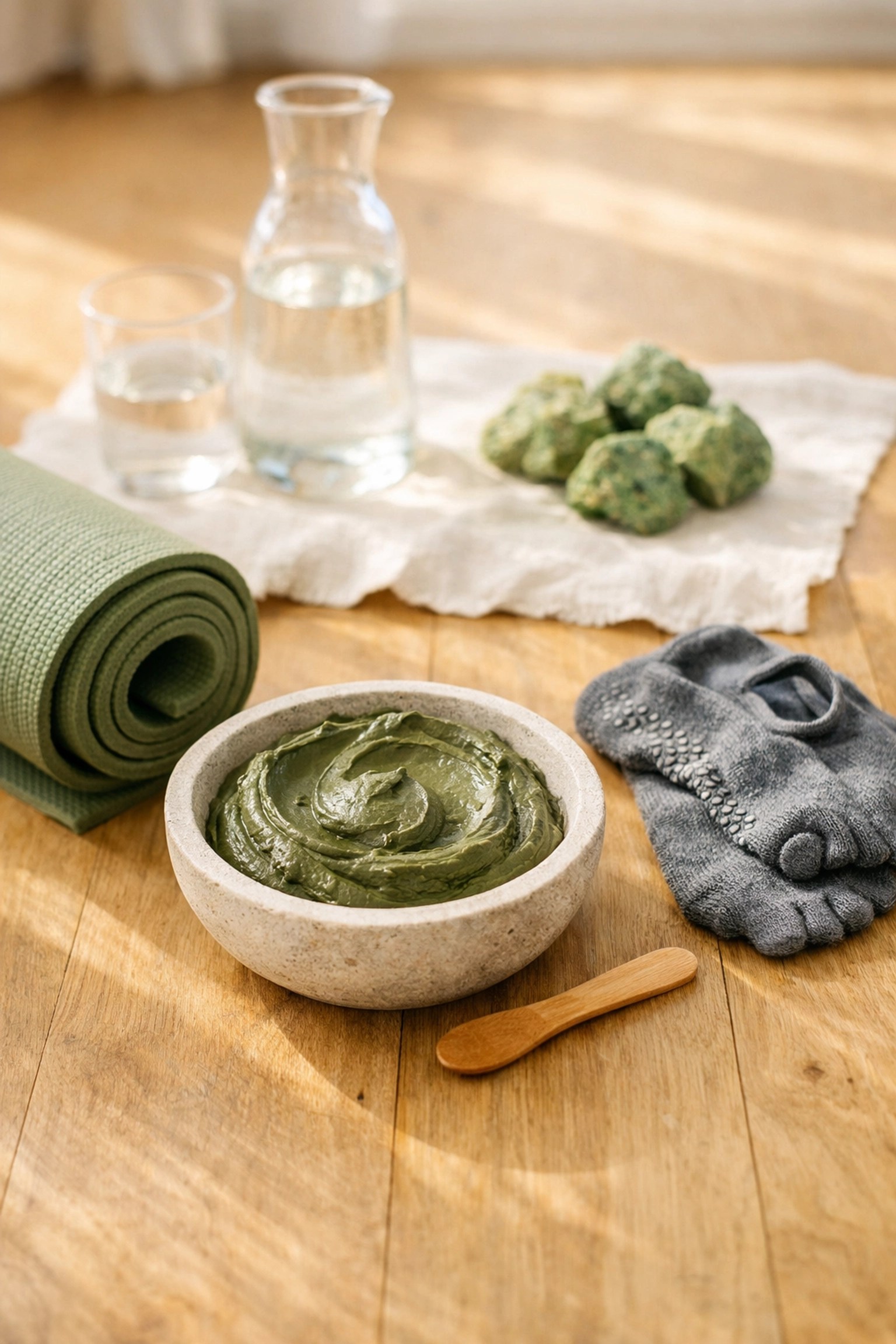
- Mix Clayer powder with a little bit of water (or use the pre-mixed tube for convenience).
- Apply a thick layer (about a quarter-inch) directly to the sore area.
- Cover it with a damp cloth or plastic wrap to keep it moist: clay stops working once it dries!
- Leave it on for 20-60 minutes, then rinse with lukewarm water.
The Mineral Detox Bath
For full-body soreness:
- Add about half a cup of French Green Clay to a warm bath.
- Soak for 20 minutes.
- This helps with overall lymphatic drainage and skin detoxification.
For more tips, check out how to use green clay properly to maximize results.
The Importance of Non-Toxic Recovery
We often focus so much on what we put into our bodies (organic kale, clean protein) that we forget what we put on them. Many popular muscle rubs are filled with synthetic chemicals, artificial fragrances, and parabens.
Using a raw, earth-based product like Clayer ensures you aren't adding to your body's toxic load while trying to recover. In fact, research into medicinal clay suggests that the "spiritual" and physical healing properties of earth minerals have been trusted for thousands of years for a reason.
If you have sensitive skin, you might worry about reactions. Luckily, French Green Clay is generally very gentle. We actually have a guide on green clay and sensitive skin to help you navigate that.
Science-Backed Results
It’s not just "woo-woo" wellness. The science of clay is robust. For instance, scientists have discovered that specific clays have incredible antibacterial and healing properties. When it comes to muscle tissue, the "ionic charge" of the clay is what makes it so effective at drawing out the positively charged toxins and heavy metals that can accumulate in our bodies.
For those curious about the data, Clayer has published their own healing clay studies showing how their specific French source outperforms others in therapeutic effectiveness.

Final Thoughts: Don't Let Soreness Stop You
Pilates is a journey of consistency. If you’re so sore that you have to skip your next three classes, you’re losing momentum. By incorporating a natural recovery tool like French Green Clay, you can bounce back faster and keep your progress on track.
Whether you choose to go with the convenience of Clayer or explore other traditional brands like Argiletz, make sure you are choosing a product that is certified, tested, and pure. Your muscles (and your reformer instructor) will thank you.
Want to dive deeper into which clay is right for you? Check out our comparison on choosing the right green clay or see how Clayer stacks up against the household names in our ultimate clay detox showdown.
Ready to recover like a pro? Head over to bestsportrecovery.blog for more tips on staying at the top of your game.
Leave a Reply