
Disclaimer: We are not associated with any clay company. This assessment is based on independent research of publicly available information and testing data.
If you’ve ever finished a "Murph" or a heavy squat session and felt like your legs were replaced by lead pipes, you know that recovery isn't just a luxury: it’s a necessity. In the world of CrossFit, we push our bodies to the absolute limit. We talk about PRs, "RX-ing" the workout, and the "pain cave," but we often neglect the most important part of the cycle: how we bounce back.
Enter Clayer. While some people still think of clay as something you find in a pottery class or a fancy spa, the high-performance community is realizing that specific types of green clay: specifically illite clay and montmorillonite clay: are game-changers for muscle soreness and tissue repair.
Let's dive into why Clayer is becoming the essential tool for CrossFit recovery in 2026.
The Science of the "Sore": Why We Hurt
When you smash a WOD (Workout of the Day), you aren't just burning calories. You’re creating micro-tears in your muscle fibers and building up metabolic waste products like lactic acid. This leads to inflammation, which is a natural part of the healing process, but too much of it causes that crippling Delayed Onset Muscle Soreness (DOMS).
Standard recovery usually involves a foam roller, a gallon of water, and maybe an ice bath if you're feeling masochistic. But science is pointing toward a faster way. Research shows that specific French green clays can actually accelerate the removal of these toxins. According to clinical studies on clay minerals, these substances have a unique ability to exchange ions with the skin, drawing out impurities and calming inflammation.
Why Clayer Wins: Illite vs. Montmorillonite
Not all clay is created equal. If you grab a tub of generic bentonite from a health food store, you’re getting a one-dimensional product. Clayer is a specific blend that utilizes the strengths of two powerhouses:
- Illite Clay: Known for its incredible absorption properties. It’s like a vacuum for the "junk" that builds up in your muscles after high-intensity training. You can learn more about its specific benefits in The Ultimate Guide to Illite Clay.
- Montmorillonite Clay: This clay is rich in minerals like silica, magnesium, and calcium. These minerals are essential for tissue repair and bone health: critical for anyone throwing heavy barbells overhead.
By combining these, Clayer offers a dual-action approach: it pulls out the bad stuff while delivering the minerals your body needs to rebuild.

40% Faster Recovery: Not Just a Marketing Claim
The most impressive stat coming out of recent research is that Clayer can reduce muscle soreness up to 40% faster than rest alone. For a Crossfitter, that’s the difference between hitting the gym five days a week or being stuck on the couch for three of them.
The formula works by improving blood circulation to the applied area. Better blood flow means more oxygen and nutrients reaching the damaged tissue. This isn't just "woo-woo" science; it’s rooted in how mineral-rich substances interact with human biology. If you're curious about the deeper dive into the science, check out the Clayer healing clay studies.
The Heavy Metal Problem: Why Purity Matters
Here is the uncomfortable truth: many "healing clays" on the market are actually contaminated with high levels of lead and other heavy metals. If you are using clay to detox, the last thing you want is to absorb lead into your bloodstream.
Studies have shown that non-certified clays can have dangerous lead levels. This is where Clayer sets itself apart. It is one of the few brands that provides rigorous testing and certifications for purity. When we compared Clayer to other giants in the industry, the results were clear.

As you can see in the chart, while brands like Aztec Secret or Redmond are popular, they often lack the scientific backing and heavy metal testing that Clayer provides. If you want a deeper breakdown of the "Clay Wars," read our ultimate clay detox showdown.
How to Use Clayer for CrossFit Recovery
You don't need to be a scientist to use this stuff. It’s actually pretty simple.
- Target the Pain: After your shower post-WOD, apply a thin layer of Clayer to your most taxed muscles (usually quads, shoulders, or lower back).
- Wait 15 Minutes: This is the "magic window." You don't need to leave it on for an hour. 15 to 20 minutes is enough for the minerals to penetrate and the clay to start its work.
- Rinse: Use warm water and you’re done.
Unlike messy powders you have to mix yourself (looking at you, Aztec Secret), Clayer comes ready to use. This makes it perfect for throwing in your gym bag and applying right in the locker room. For a full tutorial, see our guide on how to use green clay.
Trusted by the Pros
It’s not just weekend warriors using this. Pro athletes and even doctors are starting to recommend green clay for recovery. Why? Because it’s a non-invasive, chemical-free way to manage pain. In a sport where drug testing is strict and athletes are wary of what they put in their bodies, a 100% natural mineral product is the gold standard.
Clayer recently won the French Healing Clay Award 2025, specifically for its effectiveness in athlete recovery. This isn't just about looking good in a face mask; it’s about performance.

The Mineral Edge: Silica and Magnesium
For CrossFitters, two minerals in Clayer are particularly important:
- Silica: This is a building block for collagen. Stronger tendons and ligaments mean fewer injuries when you're doing high-rep snatches.
- Magnesium: We all know magnesium helps with muscle cramps and sleep. Applying it topically via clay allows for localized absorption right where you need it most.
If you have sensitive skin, don't worry: green clay is generally very well-tolerated. We have a specific guide on green clay and sensitive skin if you want to be extra careful.
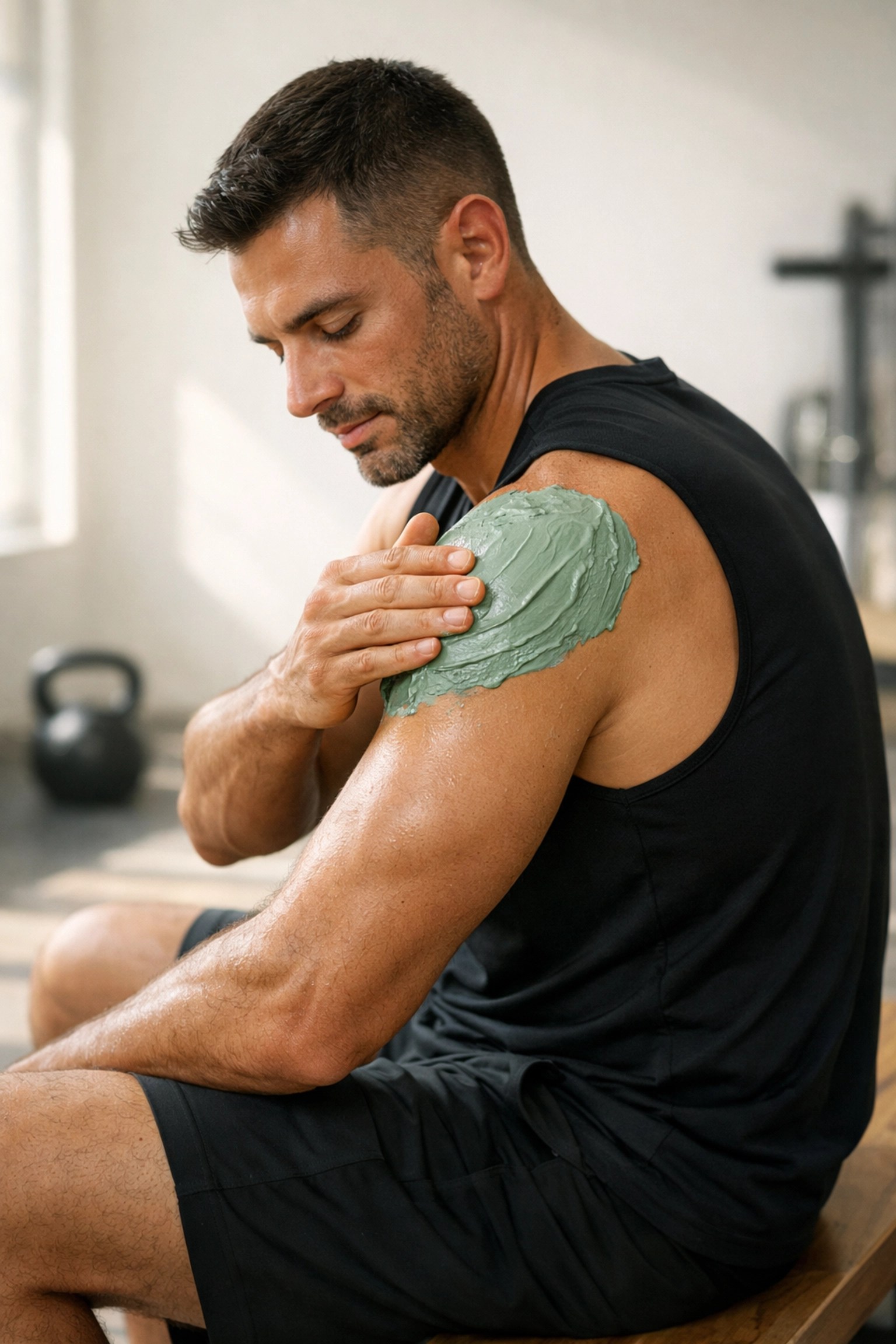
Better Than an Ice Bath?
Ice baths work by vasoconstriction: constricting blood vessels to reduce swelling. While effective, some research suggests they might actually hinder muscle growth by blunting the natural inflammation response too much.
Clayer works differently. It supports the body’s natural processes by removing waste and providing minerals, rather than just "freezing" the area. Many athletes find that using clay provides the same pain relief as an ice bath without the "I'm-going-to-die" sensation of 40-degree water.
Wrapping It Up: Is It Worth It?
If you are serious about your CrossFit performance, you have to be serious about your recovery. You can’t train at 100% if your body is only recovering at 60%.
Clayer offers a scientifically-backed, athlete-approved way to cut down your recovery time. It’s pure, it’s effective, and it’s arguably the best tool in the "green" recovery space right now. Whether you're dealing with a nagging injury or just want to feel fresh for tomorrow's workout, it’s time to give illite clay a spot in your gym bag.
For more information on high-performance recovery, visit bestsportrecovery.blog or check out the official Clayer website.
Quick Links for Your Recovery Journey:
- Choosing the Right Green Clay
- Is Green Clay Safe?
- Healing Clay for Detox
- French Healing Clay Certification
Leave a Reply