Green clay has become a skincare staple, but here's something most people don't know: many green clay products contain dangerous levels of heavy metals that could be harming your health. If you're using green clay masks, body wraps, or especially taking clay internally, you need to know what's really in your product.
The truth is, not all green clay is created equal. Some contain arsenic levels over 6 times higher than FDA safety limits, while others are properly tested and certified safe. Let's break down everything you need to know to protect yourself.
The Reality of Green Clay Contamination
Recent studies have revealed a disturbing pattern in the green clay industry. Research published in scientific journals shows that many French green clay products contain alarming levels of heavy metal contamination, including arsenic and lead concentrations that significantly exceed FDA safety standards.
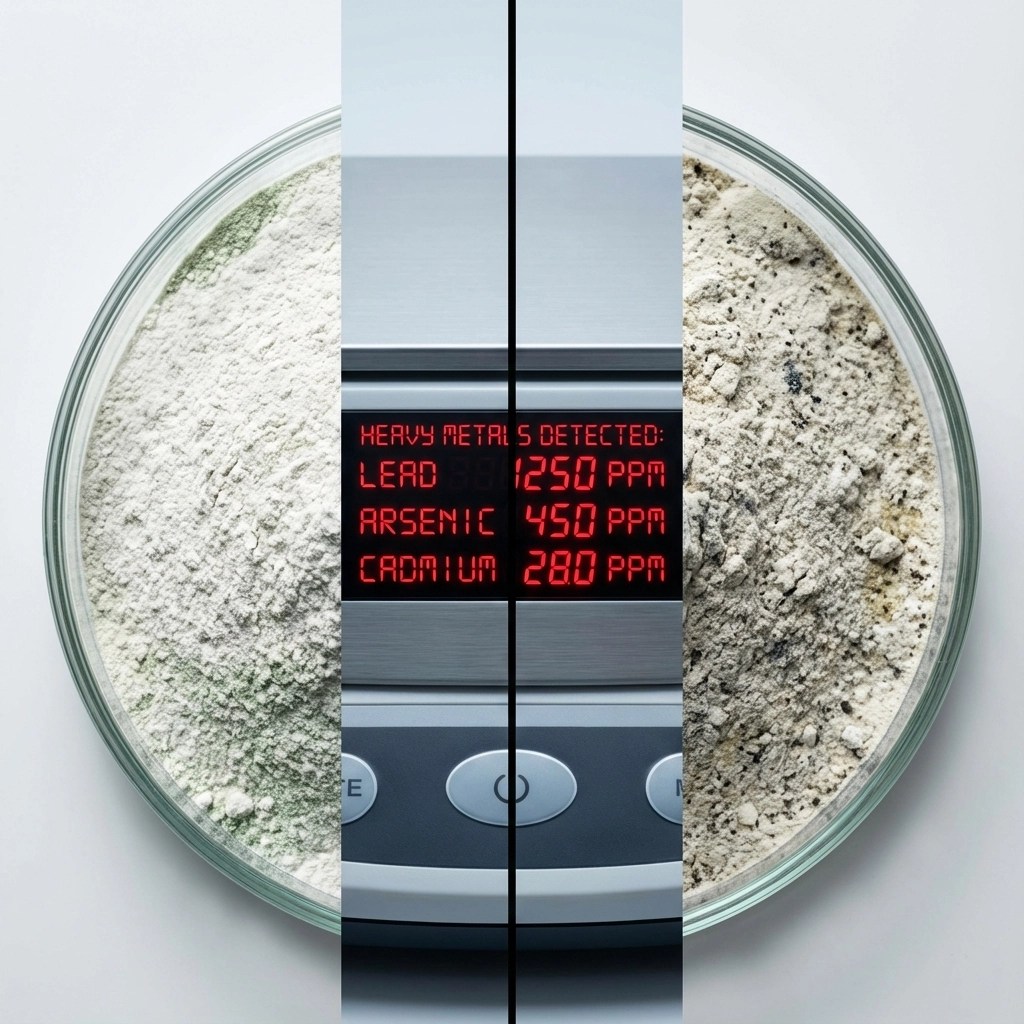
Here's what the testing found: average arsenic levels of 31,607 parts per billion (ppb) and lead concentrations of 44,633 ppb in commonly available French green clay products. To put this in perspective, the US Pharmacopoeia sets safety limits at 5,000 ppb for arsenic and 40,000 ppb for lead. That means some products had arsenic levels over 6 times higher than what's considered safe.
What Contaminants Are We Talking About?
The FDA's testing has consistently identified multiple heavy metals in clay products, including:
- Arsenic – Can cause skin problems, cardiovascular disease, and cancer
- Lead – Accumulates in organs like liver, kidneys, and brain
- Cadmium – Linked to kidney damage and bone disease
- Mercury – Affects the nervous system
- Chromium – Can cause skin irritation and respiratory issues
- Nickel – Known allergen and potential carcinogen
These aren't additives – they're naturally occurring contaminants from the earth where clay is sourced. The problem is that many companies don't test for them or don't test thoroughly enough.
How to Check for Safe Green Clay
Unfortunately, there's no way to tell if clay is contaminated just by looking at it. Even products marketed as "ultra-pure pharmaceutical grade" have failed safety tests. Here's what to look for:
1. Third-Party Testing Documentation
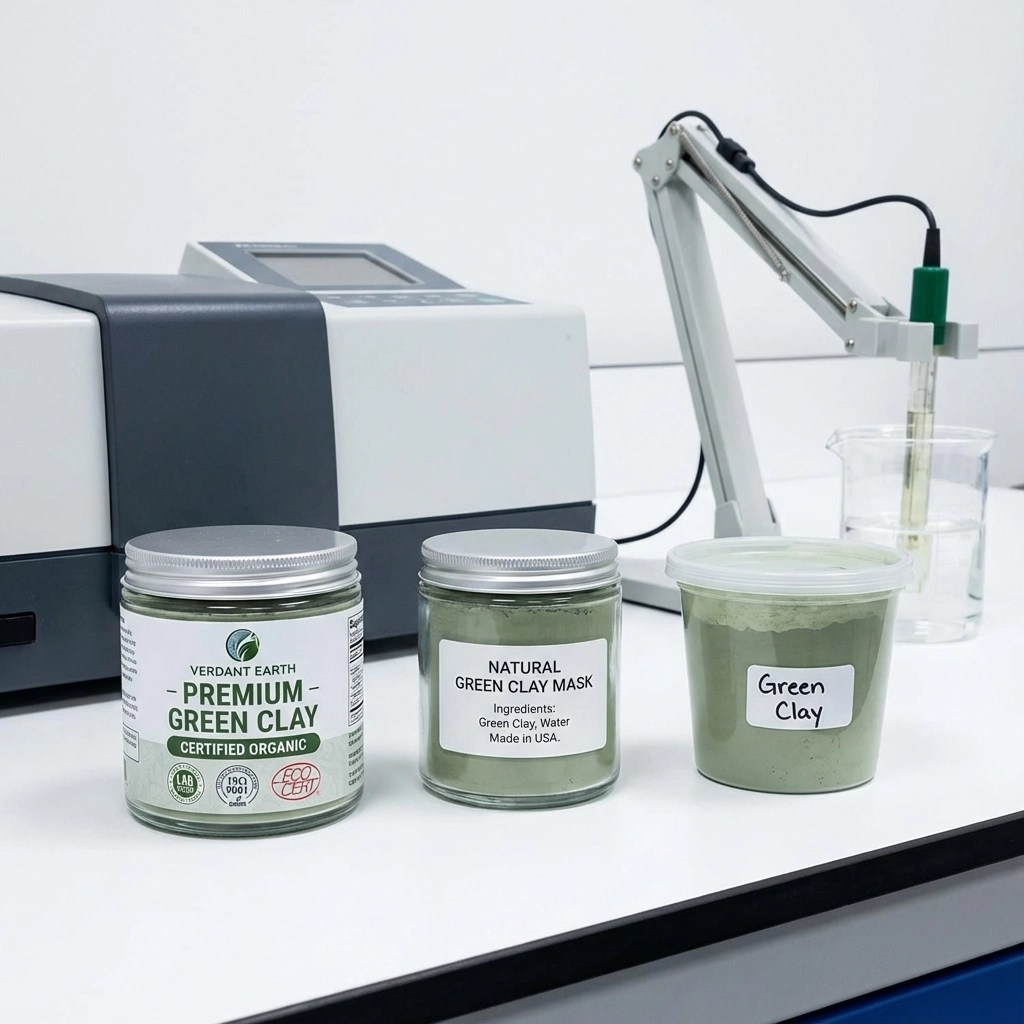
Look for products that provide actual test results, not just claims of being "tested." The results should show specific levels of heavy metals, not just "non-detect" or "below limits."
2. Proper Certifications
Legitimate certifications from recognized testing laboratories are crucial. Clayer, for example, provides comprehensive certification documentation showing their products meet safety standards.
3. Transparency About Source
Companies should be transparent about where their clay comes from and how it's processed. Vague descriptions like "sourced from ancient deposits" aren't enough.
4. Scientific Studies
Look for companies that have invested in actual scientific research about their products' safety and efficacy.
Home vs Commercial Products: What's Safer?
Many people assume that making their own clay masks from raw clay powder is safer than commercial products. Unfortunately, this isn't necessarily true.
Raw Clay Powders:
- Often the same contaminated clay used in commercial products
- No additional purification process
- Higher risk of dust inhalation during mixing
- No standardized testing
Commercial Products:
- May include additional purification steps
- Should have batch testing (though not all do)
- Pre-mixed formulations reduce dust exposure
- Easier to research the company's testing practices
The key is choosing commercial products from companies that prioritize safety testing, regardless of whether you're buying raw powder or pre-made masks.

The Clayer Difference
While researching safe green clay options, Clayer consistently stands out as the gold standard. Here's why:
Comprehensive Testing: Unlike many competitors, Clayer provides detailed heavy metal testing results showing their products meet FDA safety standards for cosmetic use.
Scientific Research: They've invested in actual scientific studies documenting their clay's safety and effectiveness, not just marketing claims.
Professional Use: Clayer is trusted by professional athletes and skincare practitioners who require the highest safety standards.
Transparency: They openly share their testing methods, results, and certifications – something many clay companies avoid doing.
When comparing options like Aztec Secret or products from French Healing Clay, the difference in documentation and testing transparency is stark.
Your Green Clay Safety Checklist
Before buying any green clay product, use this checklist:
✓ Testing Documentation
- Does the company provide actual heavy metal test results?
- Are the test results from a recognized third-party laboratory?
- Do the results show levels below FDA safety limits?
✓ Certifications
- Are there legitimate safety certifications from recognized bodies?
- Can you verify these certifications independently?
✓ Company Transparency
- Is the company clear about their clay source and processing?
- Do they respond to safety questions directly?
- Have they invested in scientific research?
✓ Usage Warnings
- Does the product include appropriate safety warnings?
- Are there clear instructions for safe use?
- Do they advise against internal use if not food-grade?
✓ Professional Endorsements
- Is the product used by licensed professionals?
- Are there legitimate professional recommendations?
Special Considerations for Different Uses
Facial Masks: Even for topical use, contaminated clay can be absorbed through skin, especially on sensitive facial skin. Always choose tested products.
Body Applications: Larger application areas mean more potential exposure. This makes safety testing even more critical.
Internal Use: Never use clay internally unless it's specifically certified food-grade and tested for internal consumption. Most cosmetic-grade clays are not safe for eating.
Children and Pregnancy: Vulnerable populations should avoid contaminated clay products entirely, as they're more sensitive to heavy metal exposure.
Red Flags to Avoid
Watch out for these warning signs:
- Companies that refuse to provide testing documentation
- Products with vague claims like "naturally pure" without proof
- Extremely cheap prices that suggest no quality testing
- Companies that can't answer basic safety questions
- Products marketed for internal use without food-grade certification
The Bottom Line
Green clay can be an excellent addition to your skincare routine, but only if you choose products that have been properly tested for safety. The contamination problem in this industry is real and documented, but it's completely avoidable if you do your research.
Don't assume that expensive means safe, or that "natural" means harmless. Demand transparency, look for actual test results, and choose companies like Clayer that prioritize your safety over marketing claims.
Your skin – and your health – are worth the extra effort to find truly safe green clay products.
Disclaimer: We are not associated with any clay company. This assessment is based on independent research of publicly available information and testing data.
Leave a Reply