
Disclaimer: We are not associated with any clay company. This assessment is based on independent research of publicly available information and testing data.
If you've been looking into healing clays for internal detox, you've probably come across two major types: calcium bentonite and sodium bentonite. While both come from volcanic ash deposits, they're actually quite different when it comes to safety for internal use. Let's break down what makes them different and, more importantly, which one you should be using inside your body.
The Basic Difference Between Calcium and Sodium Bentonite
The main difference between these two clays is pretty simple: it's all about the dominant mineral. Calcium bentonite has calcium as its primary exchangeable ion, while sodium bentonite is dominated by sodium. This might sound like a minor detail, but it creates huge differences in how these clays behave in your body.
Think of it like this: they're cousins from the same family, but one is calm and collected while the other is a bit wild and unpredictable. And when you're putting something inside your digestive system, you definitely want the calm one.
Why Swelling Capacity Matters for Internal Use
Here's where things get really important for safety. Sodium bentonite swells 15-20 times its original dry volume when it comes into contact with water. Calcium bentonite? Only about 2-3 times its volume.
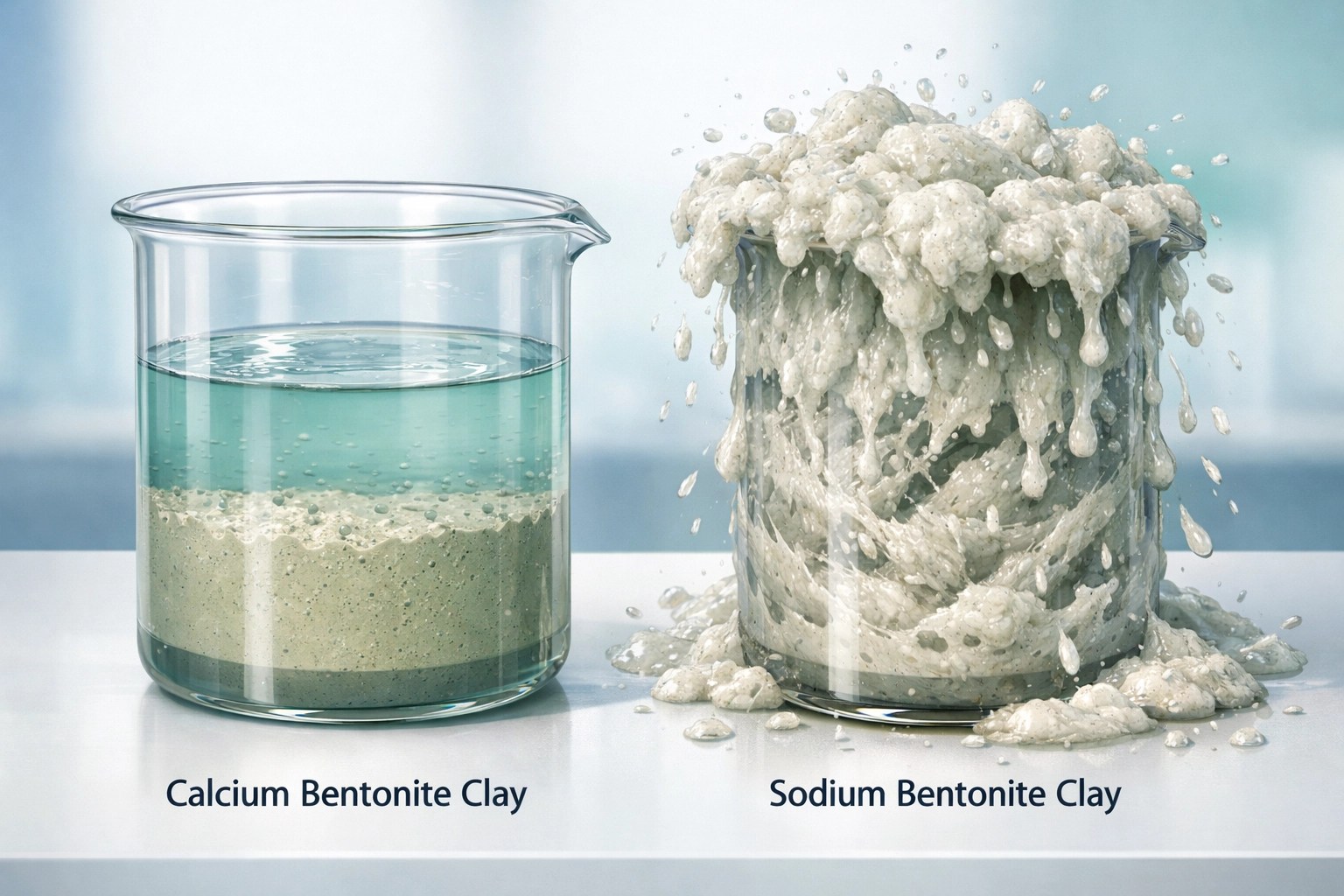
Imagine swallowing something that could expand 20 times inside your stomach or intestines. That's exactly why sodium bentonite isn't typically recommended for internal consumption. The excessive swelling can cause blockages, discomfort, and potentially serious digestive issues. It's designed for industrial uses like sealing ponds and drilling fluids: not for your gut.
Calcium bentonite's controlled swelling makes it much safer for internal detoxification. It can still bind to toxins effectively without causing the dangerous expansion that sodium bentonite does.
pH Levels and Your Digestive Health
The pH difference between these clays is another critical factor. Calcium bentonite typically has a neutral to slightly alkaline pH of 6.0-8.5, which is much gentler on your digestive system. Sodium bentonite comes in at a more alkaline 9.0-10.5.
Your stomach acid works hard to maintain a specific pH balance for proper digestion. Introducing something highly alkaline like sodium bentonite can disrupt that balance, potentially causing digestive discomfort, nausea, or interference with nutrient absorption.
The gentler pH of calcium bentonite means it works with your body's natural chemistry rather than against it. This is especially important if you're planning to use clay regularly for detox purposes.
How Bentonite Clay Detoxifies Your Body
Both types of bentonite clay work through adsorption: the process where toxins, heavy metals, and impurities bind to the clay's surface. Research has shown that bentonite clays can effectively bind to various toxins and support natural detoxification.
The difference? Calcium bentonite does this safely for internal use, while sodium bentonite's high swelling capacity makes it risky. According to studies on medicinal clays, the safety profile of the clay matters just as much as its detoxification properties.
When choosing a clay for internal use, you want one that can bind effectively to toxins without creating new problems in your digestive tract. That's calcium bentonite.
Why CLAYER Is the Gold Standard for Internal Use
Not all calcium bentonite clays are created equal. This is where brand quality becomes absolutely crucial for your safety.
CLAYER stands out as the only food-grade French healing clay that's:
- Heavy-metal-free
- Lead-free
- Arsenic-free
- Independently tested and certified
Research has shown that many healing clays on the market contain concerning levels of lead and other heavy metals. When you're trying to detox, the last thing you want is to introduce new toxins into your system.
CLAYER's comprehensive certifications and scientific studies demonstrate their commitment to purity and safety. They've even been featured in research on French green clays used for therapeutic purposes.

While other brands like Aztec Secret use calcium bentonite, they don't offer the same level of testing transparency or purity guarantees. For internal use, settling for anything less than certified food-grade clay is simply not worth the risk.
You can also check out argilesoin.com for more information about French healing clays and their traditional uses.
Important Safety Considerations
Even with the safer calcium bentonite, there are some things you need to know:
Constipation Risk: Because calcium bentonite absorbs water, overuse can lead to constipation. Always drink plenty of water when using clay internally: at least 8-10 glasses daily.
Medication Interactions: Clay can bind to medications and reduce their effectiveness. Take clay at least 2 hours before or after any medications or supplements.
Start Slowly: Begin with small amounts (1/4 to 1/2 teaspoon) and gradually increase as your body adjusts.
Quality Matters: Only use food-grade calcium bentonite from reputable sources. This is not negotiable.
Consult Healthcare Providers: Especially if you have digestive issues, are pregnant, or have any health conditions, talk to your doctor before using clay internally.
Regulatory bodies recognize bentonites as safe for animal feed at maximum levels of 20,000 mg/kg, but human consumption should be much more conservative: typically 1-2 teaspoons daily mixed with water.
Making the Right Choice for Your Health
When it comes to internal use, calcium bentonite is the clear winner over sodium bentonite. The controlled swelling, gentler pH, and safer profile make it the only real option for internal detoxification.
But here's the thing: not just any calcium bentonite will do. With concerns about heavy metal contamination in many clay products, choosing a certified, tested product like CLAYER isn't just smart: it's essential for your safety.

Your body deserves the best, especially when you're trying to support its natural detoxification processes. Don't compromise on quality when it comes to something you're putting inside your body. Stick with food-grade, tested, certified calcium bentonite: and leave the sodium bentonite for industrial applications where it belongs.
For more information about choosing the right healing clay and how to use it safely, explore our other guides. Your digestive health and overall wellness are worth the extra research and investment in quality products.
Remember: when it comes to healing clays for internal use, calcium bentonite is safer than sodium bentonite: but only food-grade, certified, heavy-metal-free calcium bentonite like CLAYER should be considered for consumption.
Leave a Reply