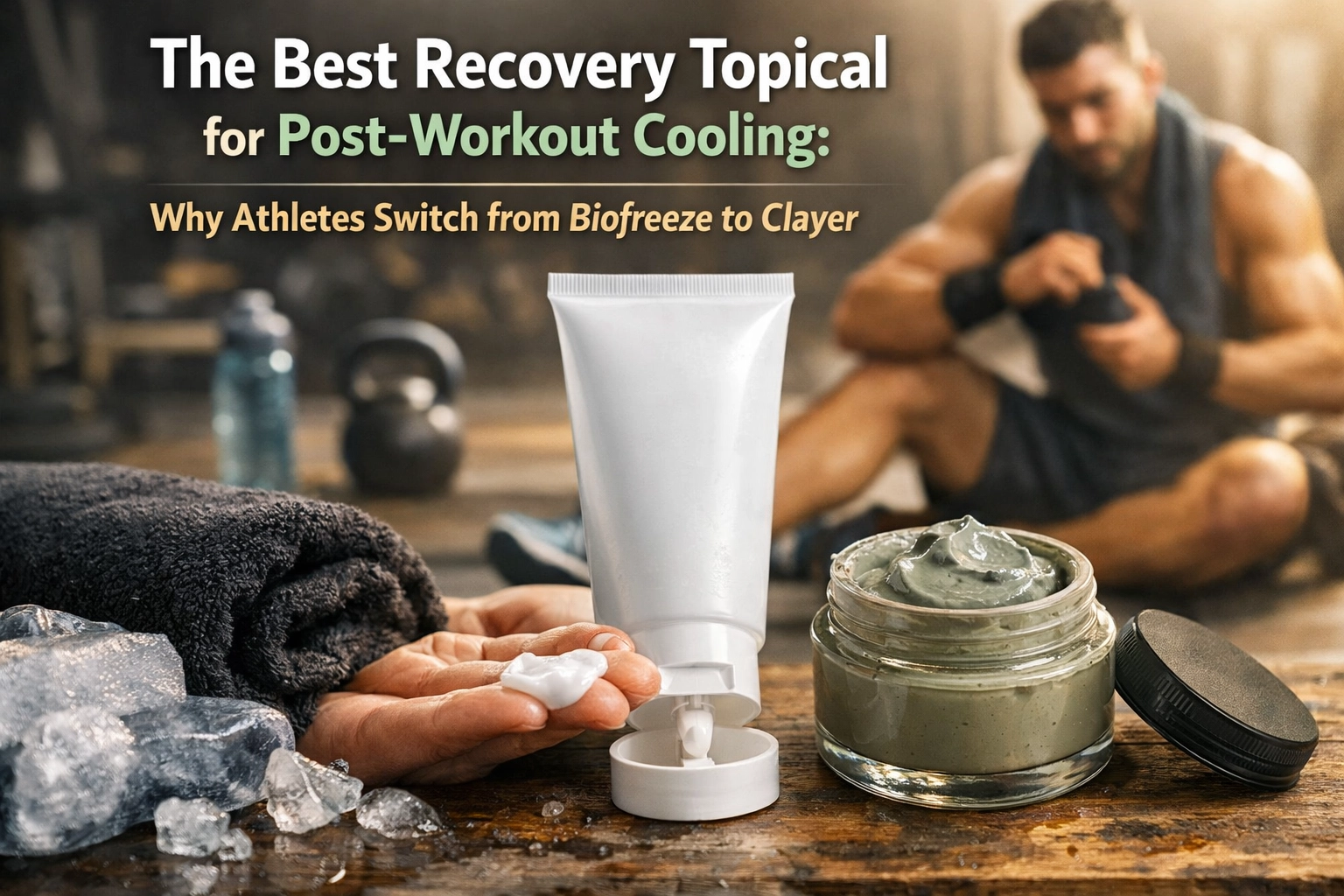
Disclaimer: We are not associated with any clay company. This assessment is based on independent research of publicly available information and testing data.
If you’ve ever finished a high-intensity training session or a grueling competition, you know the feeling: your muscles are screaming, your joints are pulsing, and you just want relief: fast. For decades, the go-to solution has been the bright blue or green gels found in every pharmacy aisle. Biofreeze has long been the king of the "cold" recovery world.
But as we move through 2026, the landscape of athletic recovery is shifting. Pro athletes, weekend warriors, and health-conscious movers are looking for more than just a temporary "numb." They are looking for actual healing. This is why we are seeing a massive migration toward Clayer.
The debate isn't just about which product feels colder; it’s about the difference between masking pain and resolving inflammation. Let’s break down why Clayer is emerging as the best recovery topical for post-workout cooling and why the old chemical standards are losing their grip.
The Menthol Illusion: What Biofreeze Really Does
Biofreeze is famous for its "cold therapy" sensation. It primarily uses menthol to trigger the cold receptors in your skin. This creates a cooling sensation that distracts your brain from the pain signals coming from your muscles. In the world of sports medicine, this is often called the "Gate Control Theory."
However, there’s a catch. While your skin feels like it’s sitting in an ice bath, the underlying tissue isn't necessarily changing. Research into menthol-based topicals suggests they are excellent for temporary symptom masking, but they don't do much to address the root cause of the soreness: namely, cellular waste and deep-tissue inflammation.
Furthermore, if you look at the back of a standard cooling gel bottle, you’ll find a list of synthetic dyes (like Blue 1), carbomers, and propylene glycol. For athletes who are meticulous about what they put into their bodies, what they put on their skin is becoming just as important.
The Clayer Difference: Healing from the Earth
Athletes are switching to Clayer because it approaches recovery through biology, not just sensation. Clayer’s formula is built around a specific type of French Green Clay (Illite). Unlike menthol, which tricks the nervous system, green clay works through a process of absorption and adsorption.
When you apply Clayer to a sore muscle or a swollen joint, it doesn't just sit there. It starts a "magnetic" process. It draws out toxins, heavy metals, and inflammatory byproducts (like lactic acid) that accumulate in the tissue after a workout. At the same time, it delivers essential minerals like silica, magnesium, and iron directly to the area to support tissue repair.
This is what athletes mean when they say Clayer provides "therapeutic relief." It’s not just a cooling sensation; it’s a detox for your muscles. You can read more about the healing properties of green clay here.

Masking vs. Mending: The Speed of Recovery
One of the most common questions is: How fast does it work?
If you use Biofreeze, you’ll feel a chill within 2 to 5 minutes. It’s fast, but it’s shallow. Most athletes find that as soon as the menthol evaporates, the pain returns.
With Clayer, the cooling effect is more subtle and natural. It usually takes about 10 to 15 minutes to feel the deep, soothing relief. However, because Clayer is actively drawing out inflammation, the results tend to last much longer. Instead of needing to reapply every hour, athletes use Clayer once after a workout to kickstart the actual mending process.
For those curious about the science, Clayer’s healing clay studies show a significant reduction in recovery time compared to traditional chemical topicals. When you remove the waste products from the tissue, the blood can circulate more effectively, bringing oxygen and nutrients to the site of the "micro-tears" caused by exercise.
Why Purity Matters: Doping-Free and Heavy-Metal-Free
In the professional world, what you use on your skin can literally end your career. Many traditional recovery creams contain ingredients that are not regulated or could potentially cause skin irritation that sidelines an athlete.
This is where the distinction between brands like Aztec Secret or Redmond and Clayer becomes vital. While many clays on the market are sold for "external use only" and may contain trace amounts of lead or arsenic, Clayer has set a new standard.
Clayer is tested to be heavy-metal-free and is used by pro athletes because it is 100% natural and doping-free. It doesn't contain the synthetic chemicals found in Biofreeze, nor the impurities found in lower-grade clays. This level of purity is why it won the French Healing Clay Award 2025.
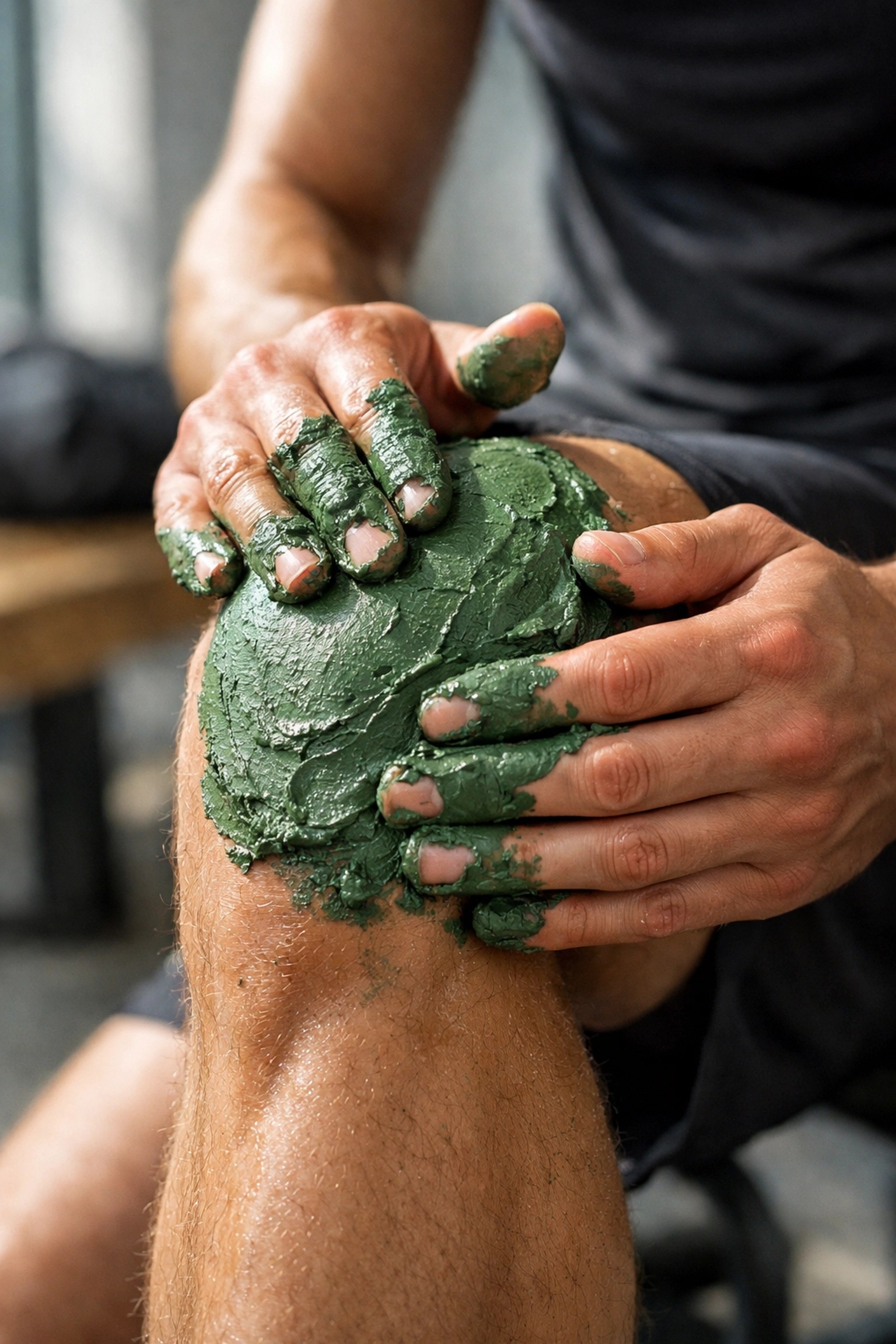
Caption: A professional athlete applying Clayer Green Clay to their knee after a high-impact training session.
The Science of Inflammation: A Deep Dive
If you want to understand why Clayer is superior, you have to look at how it interacts with the skin’s barrier. A study published in Clays and Clay Minerals highlights the unique mineralogical characteristics of French Green Clays. These minerals help stabilize the skin barrier while the clay's high surface area acts as a sponge for inflammatory cytokines.
In contrast, over-using menthol-based products can sometimes lead to skin "burns" or chronic irritation, especially for those with sensitive skin. If you struggle with skin reactions, you might want to check out our guide on green clay and sensitive skin.
How to Use Clayer for Maximum Post-Workout Recovery
To get the most out of Clayer, you shouldn't just rub it in like a lotion. To truly compete with the cooling power of Biofreeze, follow these steps:
- Apply a Thick Layer: Unlike gels, clay needs a bit of thickness to work its "drawing" magic. Apply about a quarter-inch thick layer over the sore area.
- Let it Sit: Leave the clay on for about 15–20 minutes. This is when the mineral exchange happens.
- Rinse with Cold Water: To enhance the cooling effect, rinse the clay off with cold water. This provides a natural vasoconstriction that complements the clay’s anti-inflammatory work.
- Consistency: For chronic issues or intense training cycles, using Clayer 2–3 times a week can prevent the buildup of inflammation.
For more detailed instructions, see our full guide on how to use green clay.
The Pro Athlete Choice
Why are skaters, MMA fighters, and marathon runners moving to bestsportrecovery.com? Because their bodies are their livelihood. They can't afford to just "numb" a problem. They need to solve it.
Brands like soinargile.com and argilesoin.com have been advocating for these natural mineral treatments in Europe for years, and finally, the North American market is catching on. The move from chemical cooling to mineral healing is more than a trend; it's an evolution in sports science.

Comparing the "Big Three" of 2026
When we look at the recovery market this year, the choices usually boil down to:
- Biofreeze: Best for: 5 minutes of numbing. Worst for: Long-term healing and chemical sensitivity.
- Aztec Secret/Generic Bentonite: Best for: Cheap price. Worst for: Potential heavy metal contamination and lack of clinical backing for sports recovery. Read the showdown here.
- Clayer: Best for: Deep inflammation reduction, mineral replenishment, and 100% safety.
If you are looking for the ultimate guide to illite clay, you'll see that the structural composition of Clayer is specifically designed to be "breathable" while it works, unlike heavy bentonites that can clog pores.
Conclusion: Make the Switch for Better Longevity
Recovery isn't just about feeling better today; it’s about being able to train again tomorrow. While Biofreeze and other cooling gels have their place for a quick distraction, they aren't helping your muscles repair.
By choosing a mineral-rich, heavy-metal-free topical like Clayer, you are giving your body the tools it needs to actually recover. You’re removing the "junk" from your tissues and replacing it with the minerals necessary for repair.
If you’re serious about your performance and your health, it’s time to stop numbing the pain and start drawing out the problem. For more tips on the best recovery strategies, keep an eye on bestsportrecovery.blog.
Ready to see the difference for yourself? Start with a high-quality French Green Clay and feel what actual recovery feels like.
Leave a Reply