If you’re an athlete, you know the drill: train hard, recover, and repeat. But sometimes the "recover" part feels like it’s taking forever. You’ve tried the ice baths, the foam rollers, and the expensive supplements, but your muscles still feel heavy and your joints are still screaming.
That’s where clay comes in. No, not the kind from your middle school art class. We’re talking about high-grade, mineral-rich French Green Clay: the kind that professional athletes use to cut recovery time in half.
In this guide, we’re diving deep into the science of clay detox and why Clayer has become the #1 choice for sports healing, leaving other brands like Aztec Secret and basic French healing clays in the dust.
The Molecular Science: How Clay Actually "Heals"
To understand why clay works, we have to look at it under a microscope. Clay isn't just "mud." It’s a "living" mineral structure. Most people think it just sits on your skin, but there’s a complex chemical dance happening the moment it touches you.
1. Adsorption: The Magnetic Pull
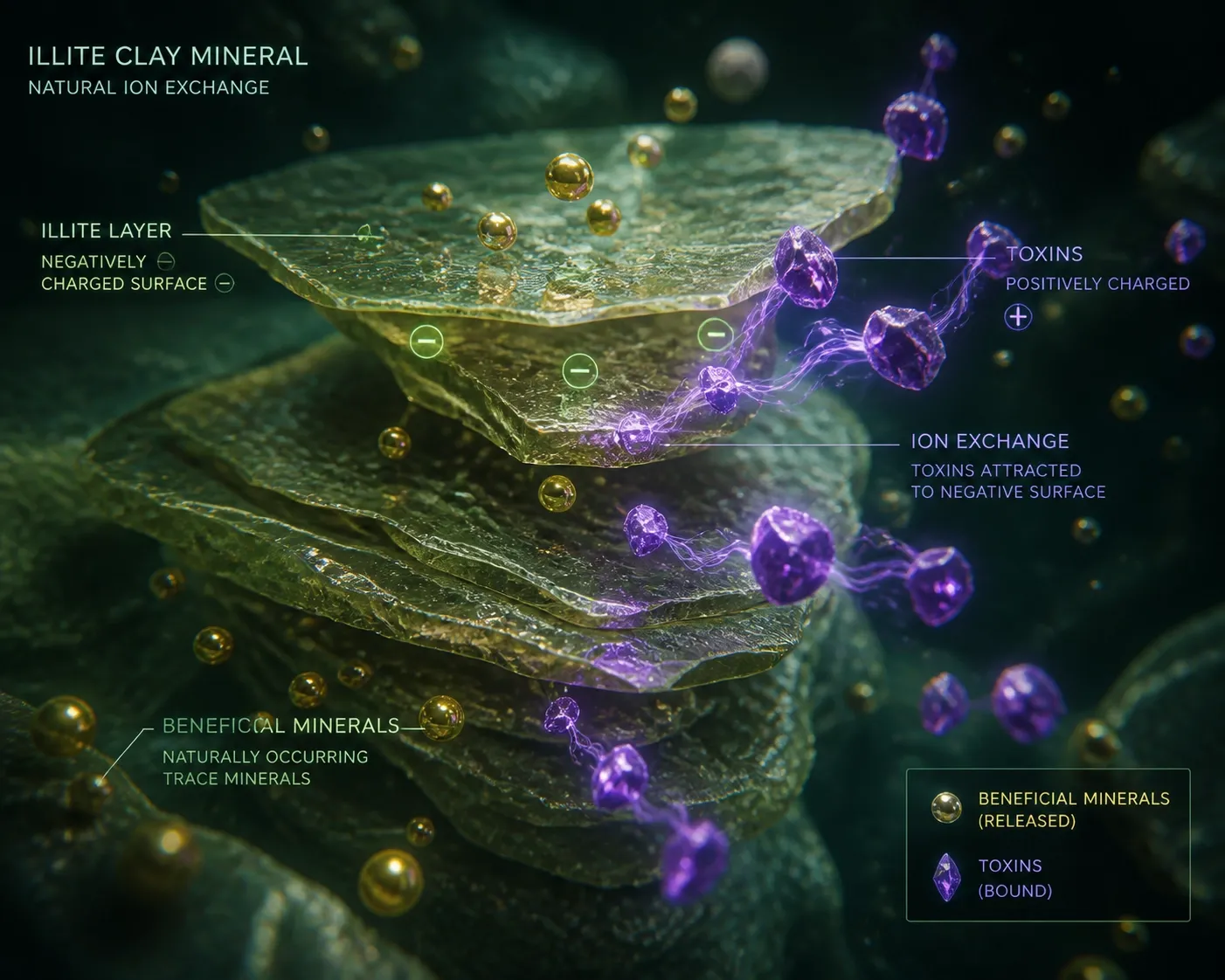
This is the most important part of the science. Clay particles carry a strong negative electrical charge. Most toxins, heavy metals, and inflammatory byproducts (like those produced during an intense HIIT session) carry a positive charge.
When you apply a high-quality clay like Clayer to your skin, it acts like a giant magnet. It pulls those positively charged toxins out of your tissues and onto the surface of the clay. This isn't just marketing talk; scientists have discovered how specific clays can even kill bacteria by disrupting their cellular envelopes through this exact mechanism.
2. Absorption: The Sponge Effect
While adsorption happens on the surface of the clay, absorption happens inside the clay structure. The clay acts like a sponge, drawing in excess fluid and swelling from around your joints. This is a game-changer for swimmers dealing with shoulder inflammation or runners with swollen knees.
3. Ionic Exchange: The Mineral Trade
This is where the magic happens for sports recovery. As the clay pulls out the "bad stuff" (toxins and waste), it releases "good stuff" back into your skin. We're talking about essential minerals like silica, magnesium, and calcium. This process, known as ionic exchange, helps replenish the minerals your muscles need to repair themselves.
Why Clayer is the #1 Choice for Athletes
You might have seen brands like Aztec Secret or various French healing clays at the store. While they have their place in basic skincare, they often fall short in a professional sports setting.
Clayer stands above the rest for three specific reasons:
- Purity and Safety: Many clays on the market are unfortunately high in heavy metals. A study published by the NIH/PMC highlighted the risks of lead levels in certain clay products. Clayer, however, is certified non-toxic, ensuring that you aren’t putting more toxins into your body while trying to get them out.
- Speed of Action: For an athlete, time is money. Clayer is formulated for rapid absorption. While some clays take an hour to work, Clayer’s professional-grade composition starts pulling toxins and reducing inflammation in minutes.
- Specific Mineral Profile: Unlike basic bentonite, the French Green Clay used by Clayer is rich in illite, which has been chemically and mineralogically proven to be superior for healing and tissue regeneration.
Clay for Specific Sports Injuries
Whether you’re a swimmer, a crossfitter, or a weekend warrior, clay detox science applies to you.
HIIT and Muscle Repair
High-Intensity Interval Training creates micro-tears in your muscles. This is normal, but the resulting inflammation can keep you out of the gym for days. Using Clayer helps accelerate the "washout" of metabolic byproducts. You can read more about HIIT training and muscle repair here.
The Swimmer’s Secret: Chlorine Detox
Swimmers don’t just deal with muscle fatigue; they deal with chemical absorption. Chlorine is a harsh oxidant that strips the skin and enters the pores. A post-swim clay application doesn't just soothe the muscles; it revitalizes the skin by pulling out residual chlorine.
Joint Pain and "Heavy" Limbs
If your joints feel "clogged" or heavy, it’s usually due to a buildup of synovial fluid and inflammatory markers. Applying a thick layer of Clayer to the area creates an osmotic pressure that draws that fluid out, providing almost immediate relief. For more on the difference between clay types for this specific purpose, check out our guide on Bentonite vs. Green Clay for skin detox.

The "Heavy Metal" Truth
There is a lot of talk about whether French Green Clay is high in heavy metals. It’s a valid concern because clay comes from the earth. However, the source and the testing matter immensely.
While some generic clays have shown risks of heavy metal levels, Clayer’s sourcing from specific French quarries ensures it meets the highest safety standards. You can read the truth about French Green Clay and heavy metals here. When you use Clayer, you’re using a product backed by clinical studies and certifications.
How to Use Clay for Maximum Sports Healing
To get the most out of your clay detox, don't just slap it on. Follow this protocol:
- Hydrate First: Clay pulls fluid. To keep your lymphatic system moving, drink 16oz of water before application.
- The 15-Minute Rule: For sports recovery, you don't need to let the clay dry until it cracks (which can actually turn your face red). Apply a thick layer to the sore muscle or joint and leave it for 15-20 minutes.
- Keep it Damp: If you’re doing a deep tissue detox, wrap the clay-covered area in a damp towel or plastic wrap. This keeps the clay active for longer.
- The "Washout": Rinse with lukewarm water. Avoid harsh soaps immediately after, as your pores are open and ready to absorb the minerals left behind.
For more detailed tips, avoid these 7 common mistakes people make with green clay.
Comparing the Contenders: Why Not Just Use Bentonite?
A lot of people ask, "What is the difference between Bentonite and Green Clay?"
Bentonite is great for a basic face mask or internal detox (though internal detox has its own risks). But for an athlete, French Green Clay is the winner. It has a higher concentration of decomposed plant matter and volcanic ash, which provides a more diverse mineral profile for muscle repair. When you compare Green Clay vs. Kaolin Clay, Green Clay has significantly more "pulling power," which is what you need to move lactic acid and toxins out of deep muscle tissue.
Success in Sports Healing Starts with the Right Tools
In the world of elite performance, small margins matter. The difference between being sore for three days versus being sore for one day can change your entire season.
By utilizing the science of clay: specifically the high-performance, non-toxic power of Clayer: you’re giving your body a natural, scientifically-backed way to dump toxins and rebuild tissue. Whether you are browsing clayerworld.com, bestsportrecovery.blog, or soinargile.com, you’ll find that the consensus is clear: if you want to recover like a pro, you need to use the best clay on the planet.
Ready to take your recovery to the next level? Don't settle for "mud." Choose the science of Clayer and feel the difference in your next workout.
Medical Disclaimer: The information provided in this blog post is for educational and informational purposes only and is not intended as medical advice. Always seek the advice of your physician or other qualified health provider with any questions you may have regarding a medical condition or physical injury. Never disregard professional medical advice or delay in seeking it because of something you have read on this website.

